In February 2001 the author played centre-midfield for Demon Eyes, an amateur football team formed by New Labour staffers. Andy Burnham, a standout player then, is now widely tipped to become prime minister and is expected to appoint ex-teammate James Purnell as Downing Street chief of staff. The piece argues that friendships forged on the pitch — involving figures such as David Miliband and Ed Balls — could influence the composition and character of a Burnham government.
From Market Road to Downing Street: How Demon Eyes and New Labour’s Football Team Could Shape Burnham’s Government
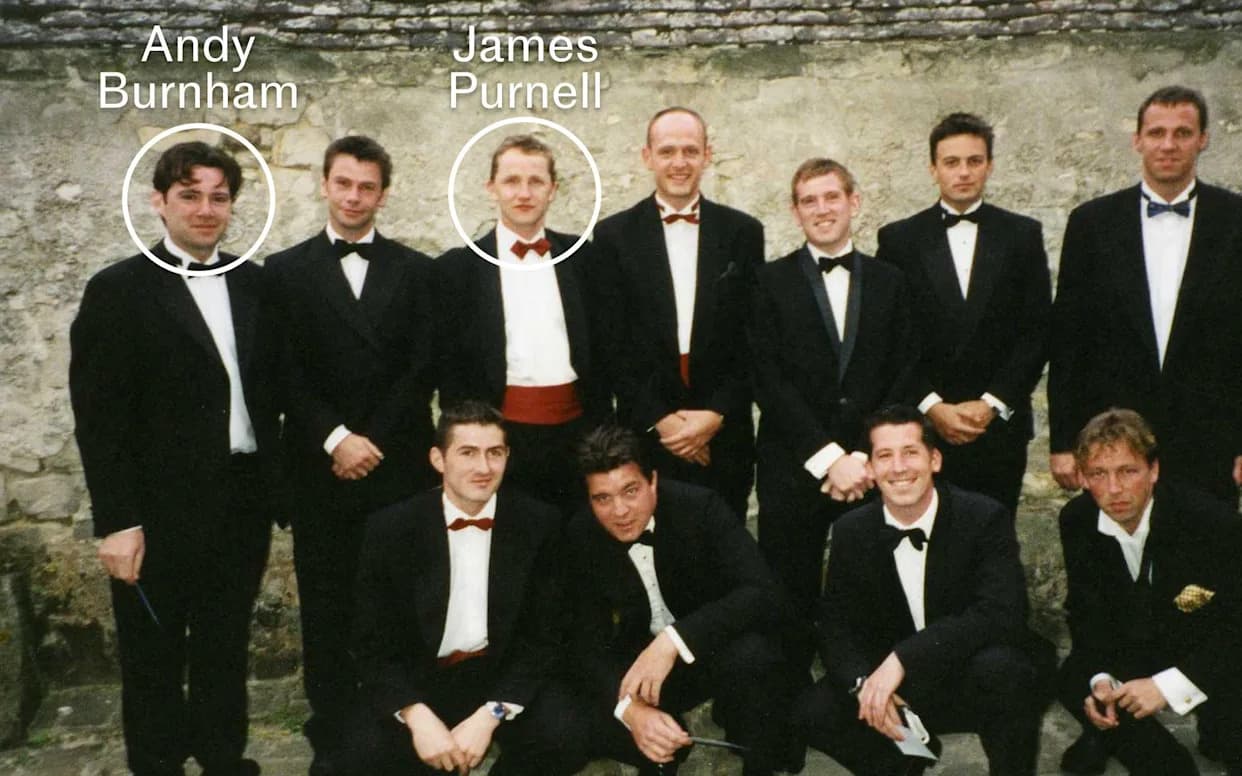
Back row from left: Andy Burnham, Simon Taylor, James Purnell, Giles Deards, Tim Allan, Dan Johnson, Phil French. Front row from left: David Leam, Liam Halligan, Ian Caufield, Philip Collins. - Liam Halligan
It is February 2001 and I am standing on a poor-quality artificial pitch at Market Road sports ground in north London, behind the derelict railway yards and the red-light area that then surrounded King’s Cross station. We are in the middle of a bruising amateur league game: a cluster of teammates in their 30s are berating a composed, patient referee.
“It’s alright, boys, let it all out. Don’t take it home with you,”
As my teammates melt away, grumbling about footballing injustice but satisfied that they have disrupted our opponents, one figure stands out in non-regulation shorts and mismatched socks: a floppy-haired Andy Burnham.
More Than a Sunday Side
A quarter of a century ago I played centre-midfield for Demon Eyes — arguably Britain’s most remarkable amateur team. It was less a Sunday side than a Cabinet-in-waiting, set up by bright young staffers working for Tony Blair, Gordon Brown and other ministers in what became New Labour.
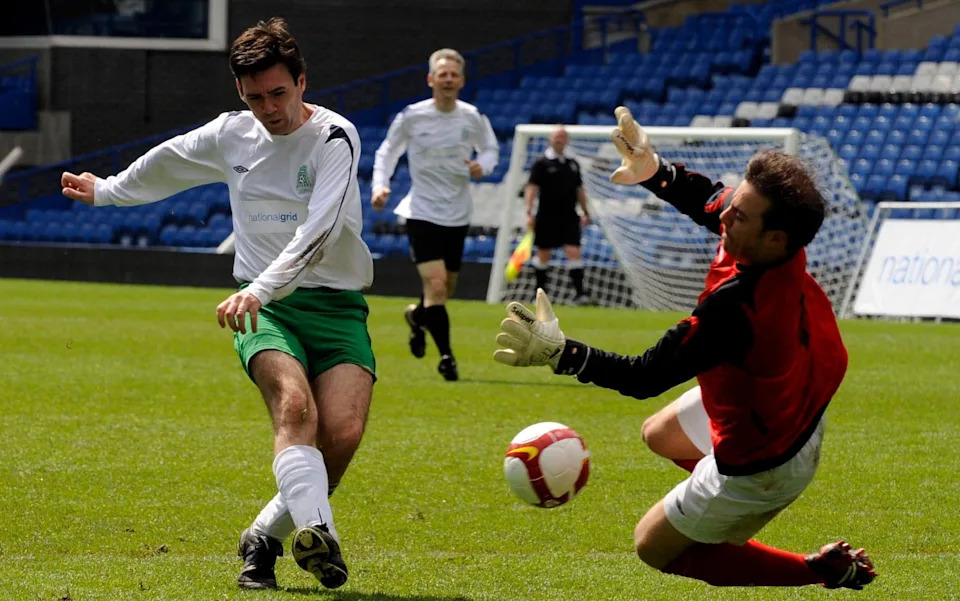
Liam Halligan remembers Andy Burnham, pictured in a 2009 charity match, as a ‘naturally talented footballer’ - Paul Grover
Demon Eyes included future senior politicians and advisers: David Miliband and James Purnell patrolled at centre-back (each later moving into Cabinet roles), Ed Balls led the attack, and Tim Allan supplied width on the wing. The squad blended high-ranking political aides with well-connected supporters from the arts and public life. As a Financial Times political reporter I once played for a press XI against them and was quickly recruited, largely for my footballing ability.
Football, Politics and New Labour
The team emerged during the 1990s, a period of big change for both Labour and English football after Euro 1996. The sport shed much of its hooligan-era image as television money reshaped the game, and cultural touchstones such as Nick Hornby’s Fever Pitch helped make football fashionable with a wider, middle-class audience. New Labour’s younger, often Oxbridge-educated aides embraced the game as part of a modernising, centrist project — and Demon Eyes was a small but telling expression of that shift.
From Pitch to Politics
Burnham, who later entered Cabinet in 2007 as chief secretary to the Treasury, served as health secretary and then became Greater Manchester mayor, was a natural on the pitch. I used to joke that his silky touch recalled Bob Latchford, the Everton forward of the late 1970s. Burnham did not cover every blade of grass, but like many effective forwards — and perhaps like many politicians — he had a knack for being in the right place at the right time.
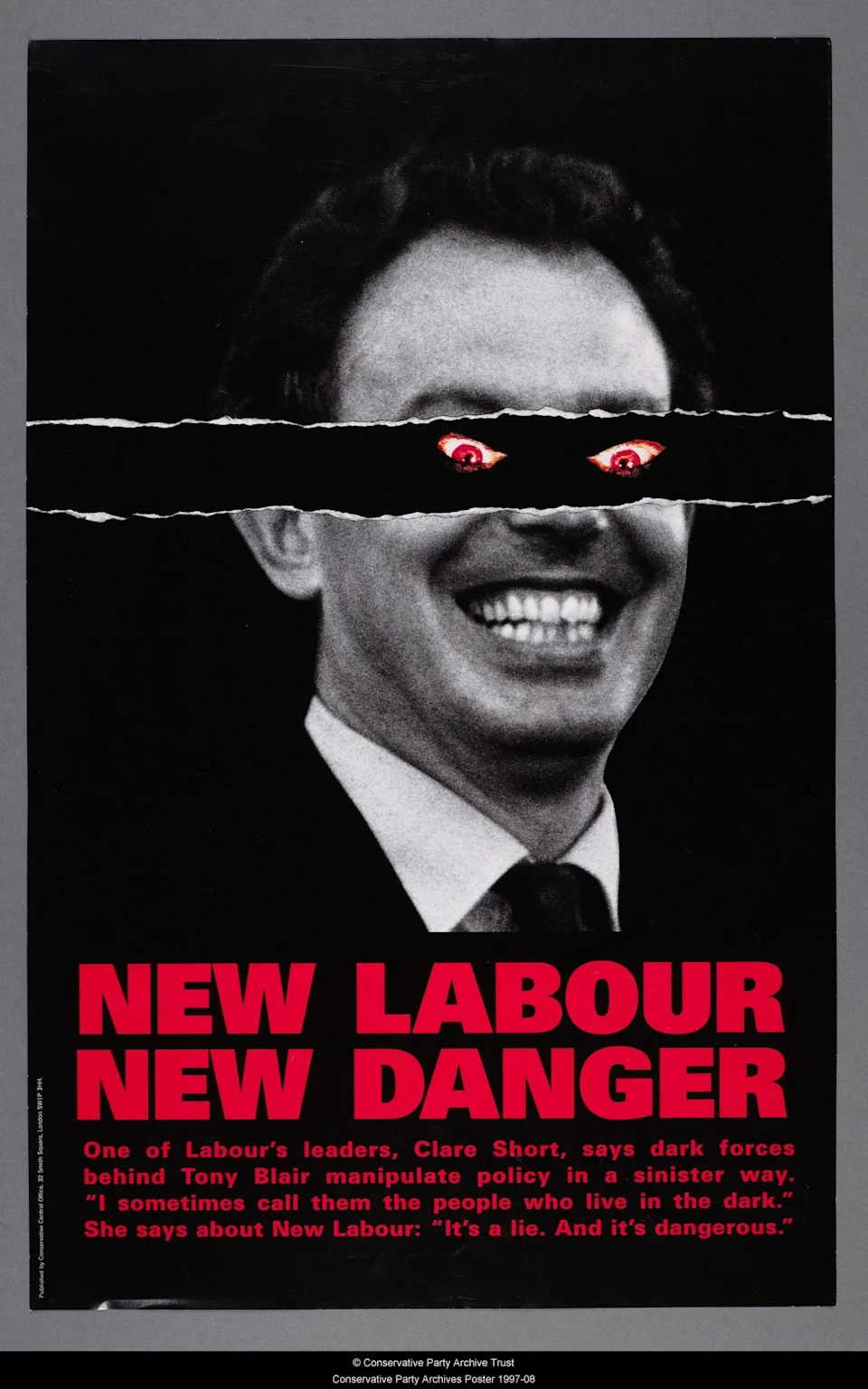
The ‘Demon Eyes’ name was a backhanded tribute to the 1997 Conservative general election poster depicting Tony Blair as Satan - The Conservative Party Archive/Getty Images
Demon Eyes won the Thames League in 2001. We succeeded less through flair than through hard work, guile and a willingness to get under opponents’ skins. Matches could be physical and refereeing standards varied; more than once I intervened to break up scuffles. Tours to Ireland and France added to the camaraderie and the lore: what happened on tour stayed on tour.
Old Bonds, New Government
Fast-forward 25 years: Burnham is widely tipped to become prime minister and is expected to move into Downing Street on July 17. He is reported to be planning to appoint his former Demon Eyes teammate James Purnell as Downing Street chief of staff — a move that has prompted speculation that other ex-New Labour figures, including David Miliband, could stage comebacks.
The informal trust and personal rapport forged in those gruelling matches could matter: political teams often rely on friendships built long before power is at stake. Whether those old bonds will shape policy as much as personnel remains to be seen, but the story of Demon Eyes is a reminder that the personal history of a political cohort can reverberate at the highest levels of government.
What this episode shows is how cultural touchstones — football, shared jokes, and late-night trips on away days — helped knit together a generation of New Labour figures whose relationships may again influence British politics in the late 2020s.
Help us improve.