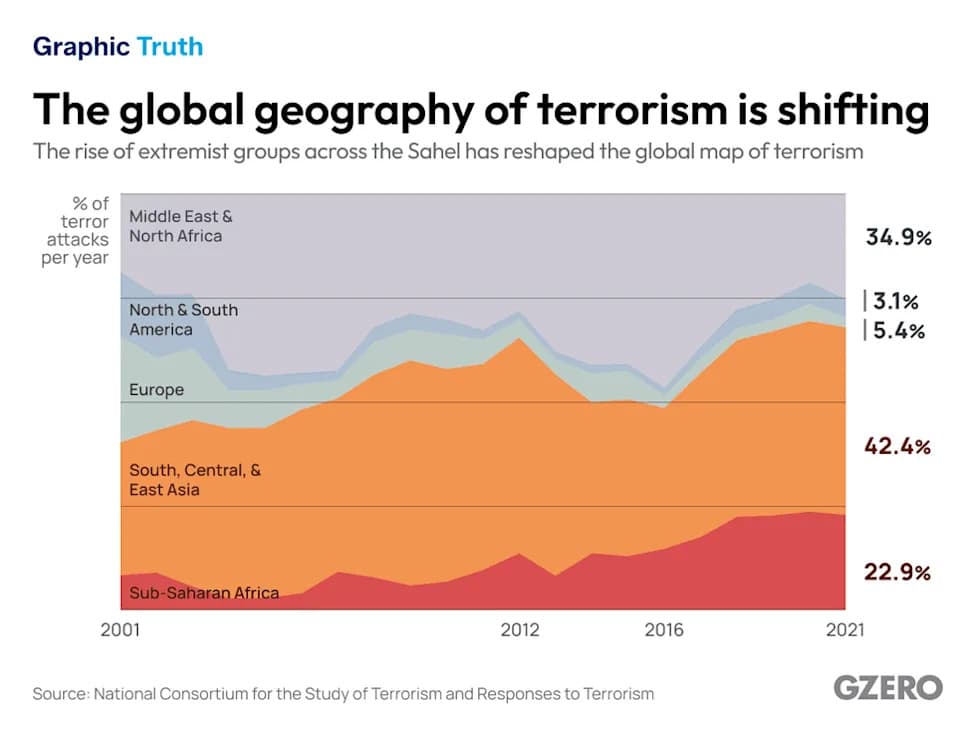
The Sahel is now the global epicentre of jihadist activity, with IS, Boko Haram and the Al‑Qaeda‑linked JNIM expanding across a semi‑arid belt from the Atlantic to the Red Sea. ACLED reports the area affected by attacks has doubled since 2020, and Africom says IS leadership is now largely based in Africa. Communities face enforced social rules, forced taxation and violence that have emptied villages and strained state authority; fractured regional cooperation and outside influence complicate coordinated responses.
New Rules, New Fear: Life Under Jihadist Control in the Sahel
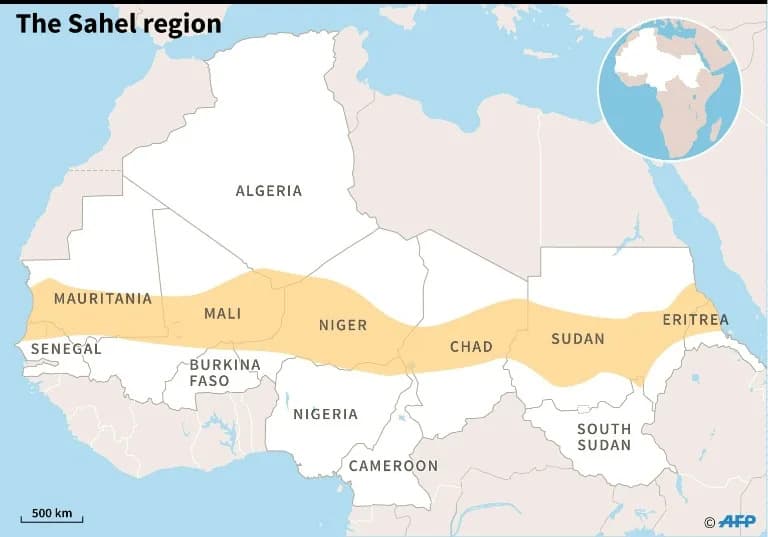
Map of the Sahel region (AFP Graphics)(AFP Graphics/AFP/AFP)
The Sahel — a semi-arid belt stretching from the Atlantic along the southern edge of the Sahara to the Red Sea — has become the new global epicentre of jihadist activity. Extremist groups that first took root in remote rural areas are now expanding their reach, enforcing social rules, collecting taxes and unleashing violence that has killed thousands and driven communities from their homes.
The Rise Of Armed Groups
Three main organisations dominate the region: the Islamic State (IS) group, Boko Haram and the Al‑Qaeda‑linked Group for the Support of Islam and Muslims (JNIM). Each uses different tactics — mass abductions and terror attacks, local political embedding and extortion — but all have profoundly weakened state authority across vast swathes of the Sahel.
"We live every day with the fear of another attack," said Mathias in Burkina Faso, who — like others quoted here — spoke to AFP on condition of anonymity for security reasons.
How Daily Life Has Changed
In towns and villages now under jihadist control, fighters dictate who can travel, how people dress and which businesses can operate. In Nioro du Sahel in Mali, residents report blockades and strict social rules: women are required to veil and avoid unrelated men in public; local leaders say levies of roughly 10 percent of harvests or income are collected in return for "protection." One resident described the town as "dying."
In other areas, militants present a veneer of order: disputes resolved quickly under their interpretation of Islamic law, courts freed from bribery — but this order is enforced by fear and violence, including public floggings and summary punishments.
Economic Strain And Displacement
Forced taxation, looting and attacks on markets and transport have strangled local economies. In Nigeria's Borno state, a transporter said his trucks were burned and he lost his livelihood; widespread attacks have emptied villages and pushed families toward larger towns and cities. Subsistence farmers, traders and fishermen report they can no longer safely work the land without paying levies or risking kidnapping and death.
Scale, Spread And Funding
Conflict monitoring group ACLED reports the area of the Sahel affected by jihadist attacks has roughly doubled since 2020. US Africa Command (Africom) officials say IS leadership has shifted to Africa, and that Al‑Qaeda‑linked networks fund themselves through extortion, kidnapping and other illicit activities. Some United Nations estimates place the number of fighters across West Africa at around 20,000. Large‑scale attacks have even struck the capitals of Niger and Mali in recent months, underscoring the groups' capability to challenge state control.
Governance Gaps And Social Tensions
Experts link the jihadists' advance to long‑standing governance deficits: neglected rural areas, unresolved land and resource disputes, and marginalisation of communities. Social fault lines — notably tensions involving Fulani herders — are exploited by militants who portray themselves as protectors of the marginalised. Observers also warn of an ideological shift: traditionally tolerant Sahelian Islam is being challenged by more rigid Salafist‑Wahhabi currents amplified online.
Regional Response And Risks
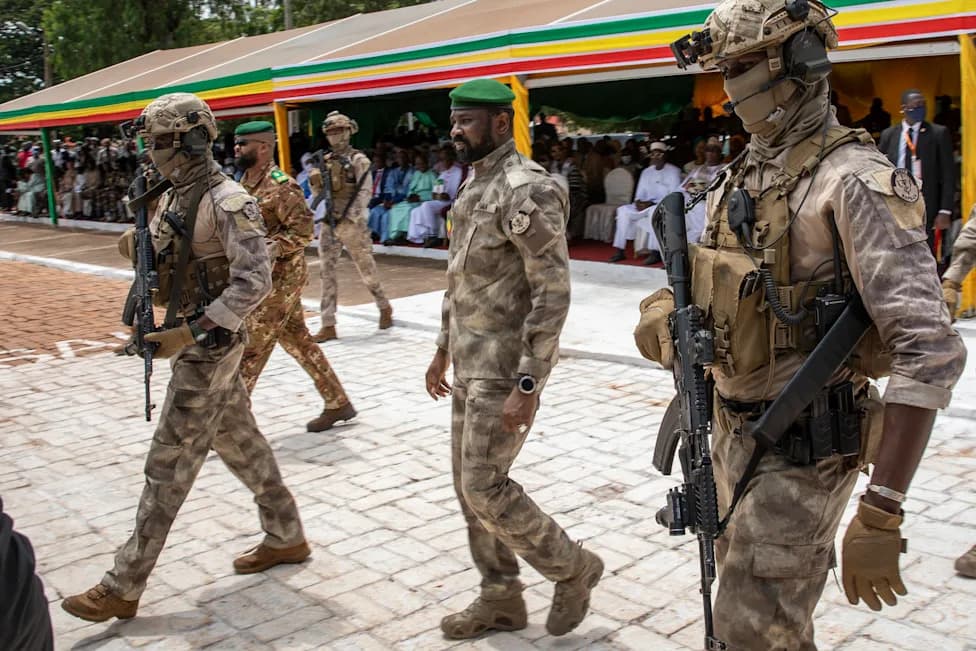
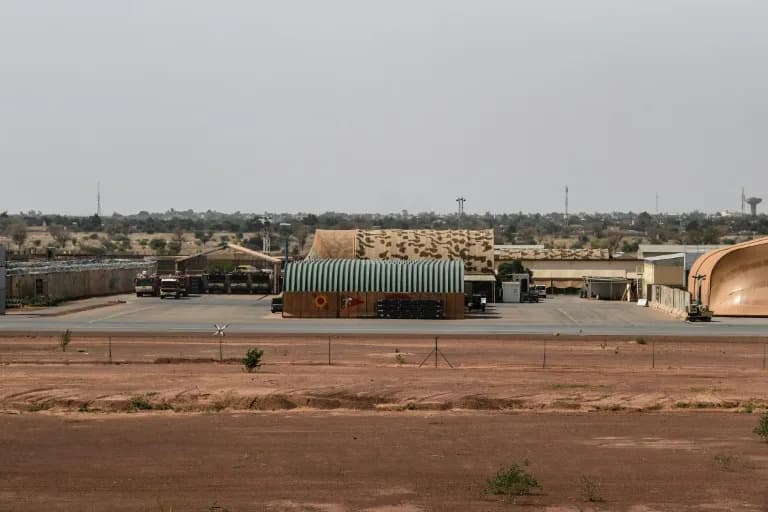
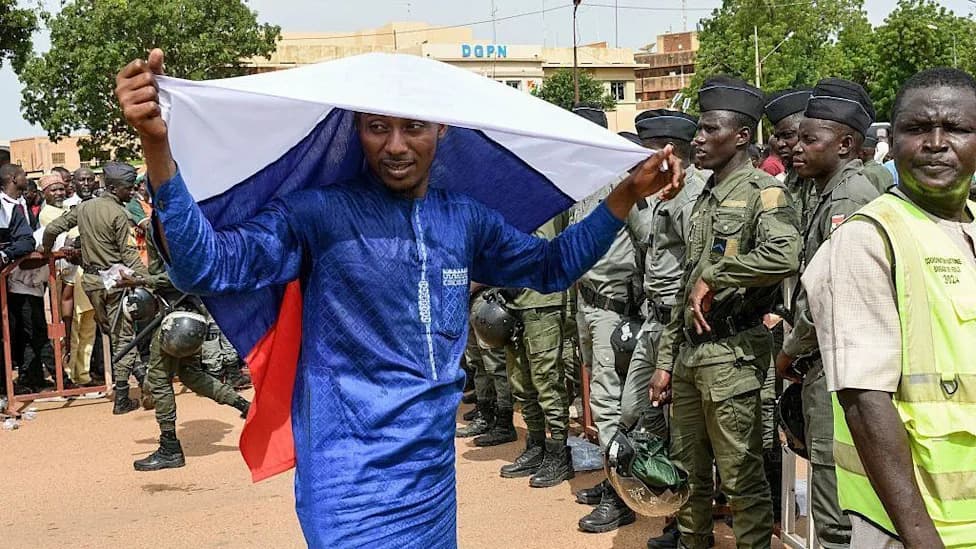
Responses remain fragmented. Military coups in Mali, Burkina Faso and Niger have strained cooperation with neighbouring states and led to those countries' withdrawal from ECOWAS, complicating joint security efforts. Western military footprints have reduced in some areas while other foreign actors have moved in without decisive results. Policymakers warn jihadists could seek to extend operations north toward Maghreb states, increasing regional risk.
Conclusion: The Sahel's resurgence as a jihadist stronghold combines physical control of territory, coercive taxation and ideological outreach. Restoring security will require coordinated regional and international action that addresses both the immediate security threat and the governance deficits that fuel it.
Help us improve.