China’s premier, Li Qiang, urged global leaders to view China’s tech expansion as “China Opportunity 2.0,” promising wider access to advanced technologies rather than a threat. He dismissed the idea that massive state subsidies are the main driver, crediting China’s large domestic market and corporate investment instead. Li cited Huawei and Unitree as examples and criticized a recent U.S. Pentagon list that restricted several Chinese tech firms.
Li Qiang Says China’s Tech Boom Is an Opportunity for the World, Not a Threat
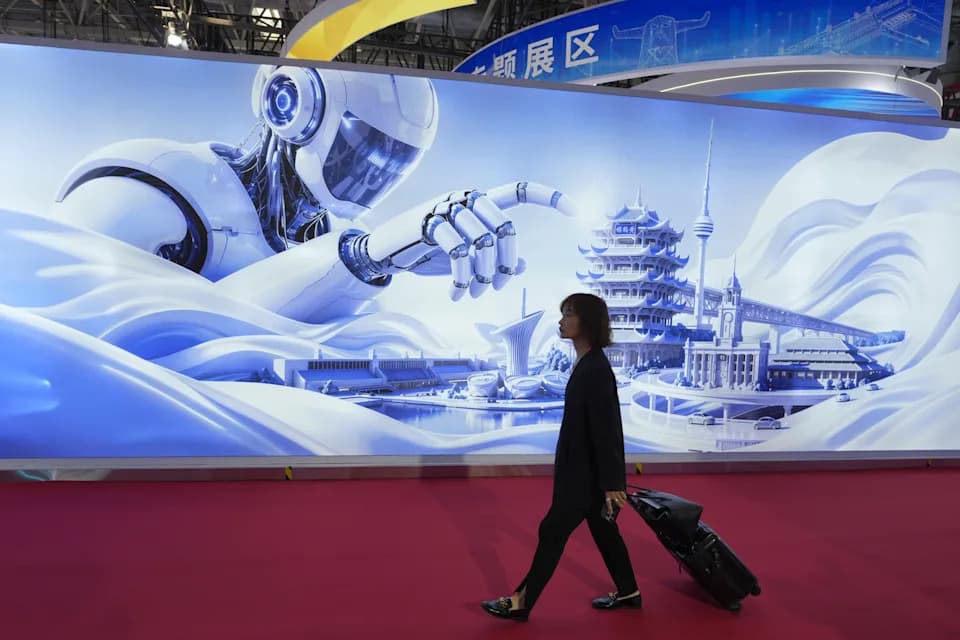
A woman passes a mural depicting a humanoid robot towering over iconic landmarks at the China International Supply Chain Expo in Beijing on Monday, June 22, 2026. (AP Photo/Ng Han Guan)(AP Photo/Ng Han Guan)
HONG KONG — China’s premier, Li Qiang, defended his nation’s rapid technological advances on Wednesday, telling attendees at the World Economic Forum’s Annual Meeting of the New Champions — commonly called “Summer Davos” — that the surge should be treated as an opportunity for the global economy, not a threat to it.
Speaking at the opening plenary in the northeastern coastal city of Dalian, Li acknowledged international unease over China’s tech rise but urged a different framing: he called for “China Opportunity 2.0” rather than “China Shock 2.0.”
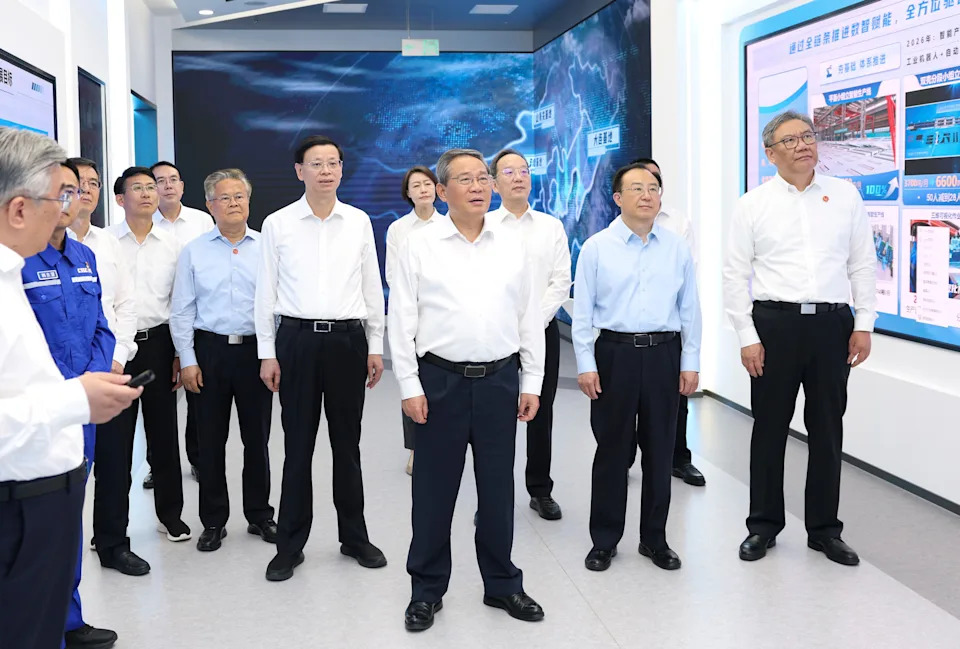
In this photo released by Xinhua News Agency, Chinese Premier Li Qiang, center, listens to enterprise introduction and report on the development of shipbuilding industry in Dalian at the Dalian Shipbuilding Industry Co., Ltd. in Dalian, northeastern China's Liaoning Province on Monday, June 22, 2026. (Huang Jingwen/Xinhua via AP)(Huang Jingwen/Xinhua via AP)
“From the global development perspective, ‘China Opportunity 2.0’ means there’ll be broader access to advanced technologies and more widely shared benefits,” Li said. “China’s emerging technologies and products are bringing to the world not shocks, but opportunities. Not threats, but empowerment.”
Li rejected claims that China’s high-tech growth is primarily driven by massive government subsidies. While Western policymakers — including officials in the U.S. and Europe — have argued that state support for sectors such as artificial intelligence and electric vehicles can create unfair advantages, Li said the country’s large domestic market and strong corporate investment are the principal engines of China’s technological expansion.
“There are some people who say that Chinese products are competitive mainly because of the Chinese government's subsidies. That’s not true. The Chinese government is not that wealthy,” he said, pointing to rapid domestic adoption of new technologies across a population of about 1.4 billion and to heavy private-sector investment.

In this photo released by Xinhua News Agency, a participant passes by a billboard promoting the Annual Meeting of the New Champions in Dalian, northeastern China's Liaoning Province, on Tuesday, June 23, 2026. (Pan Yulong/Xinhua via AP)(Pan Yulong/Xinhua via AP)
Li highlighted companies such as Huawei and robotics firm Unitree as examples of fast-growing Chinese innovators. He also pushed back on recent U.S. moves: Beijing opposed a Pentagon expansion this month that added Unitree, Huawei and other firms to a list of companies deemed military-linked, a designation that bars them from receiving U.S. defense contracts.
Analysts note that China’s exports — from electric vehicles, solar panels and batteries to semiconductor chips, AI systems and robotics — have offered lower-cost choices to global markets but have also prompted concerns about oversupply and prompted some protectionist measures. A June report by the Organization for Economic Cooperation and Development (OECD) warned that very large state subsidies, wherever they occur, can distort global markets and create unfair competitive advantages.
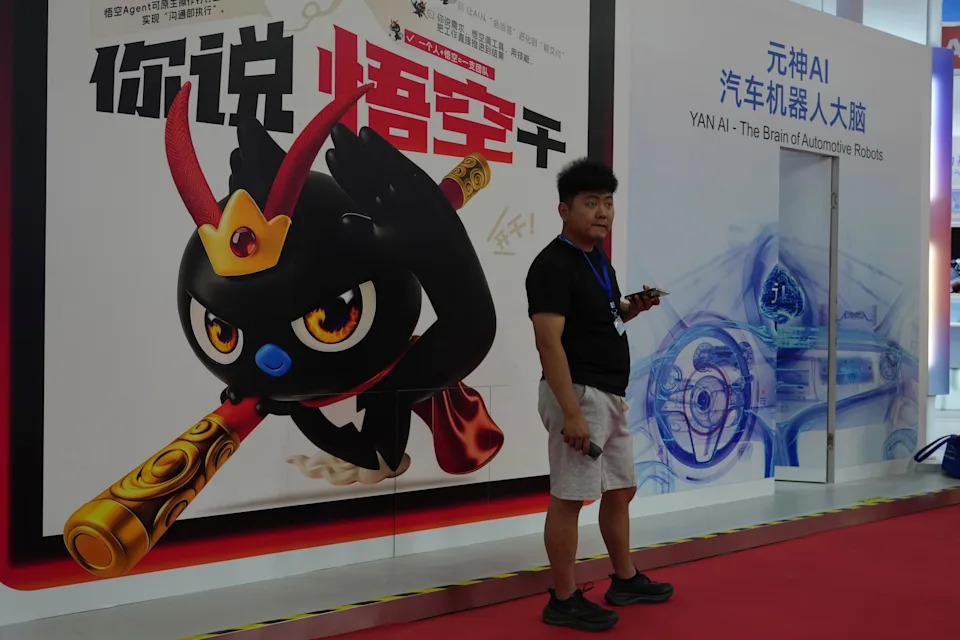
A man stands near a poster promoting the AI agent from Alibaba at the China International Supply Chain Expo in Beijing on Monday, June 22, 2026. (AP Photo/Ng Han Guan)(AP Photo/Ng Han Guan)
Li’s remarks come as debates intensify worldwide over how to balance open trade, technology cooperation and national-security concerns amid rapidly shifting technological leadership.
Associated Press reporting contributed to this article.
Help us improve.