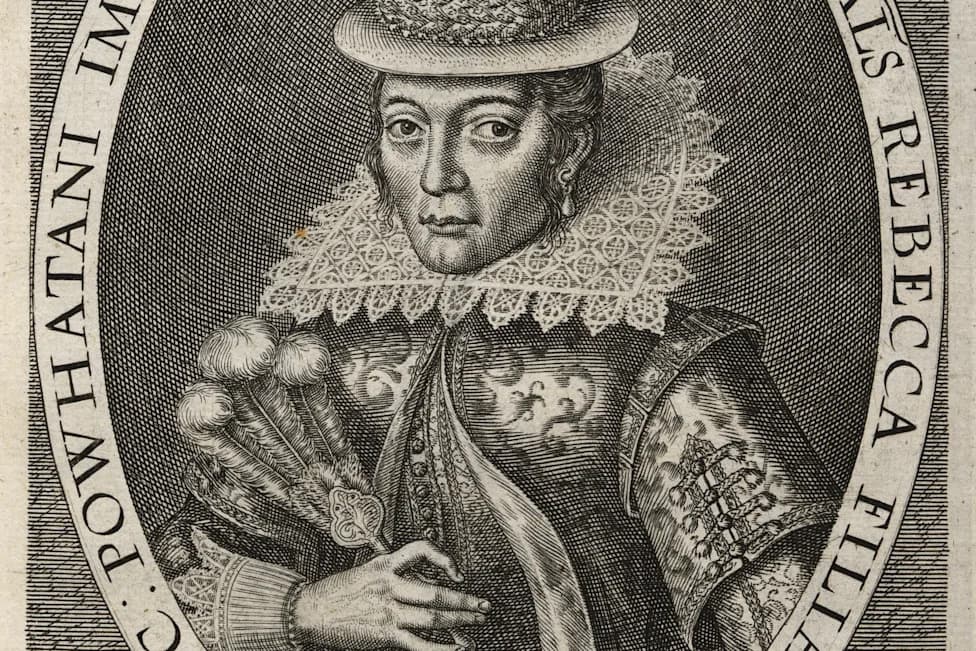
The single surviving contemporary image of Pocahontas—an engraving made in London in 1616—frames her in English elite dress and was read by contemporaries as evidence of successful cultural assimilation. Earlier engravings and reports helped promote English colonization by suggesting Indigenous peoples were malleable and could be converted to Protestant, English ways. Yet the 1622 Powhatan attack and subsequent English reprisals revealed the limits of that narrative and the tensions underlying colonization.
Beyond Disney: What Pocahontas’s 1616 London Portrait Reveals About English Views of Indigenous Peoples
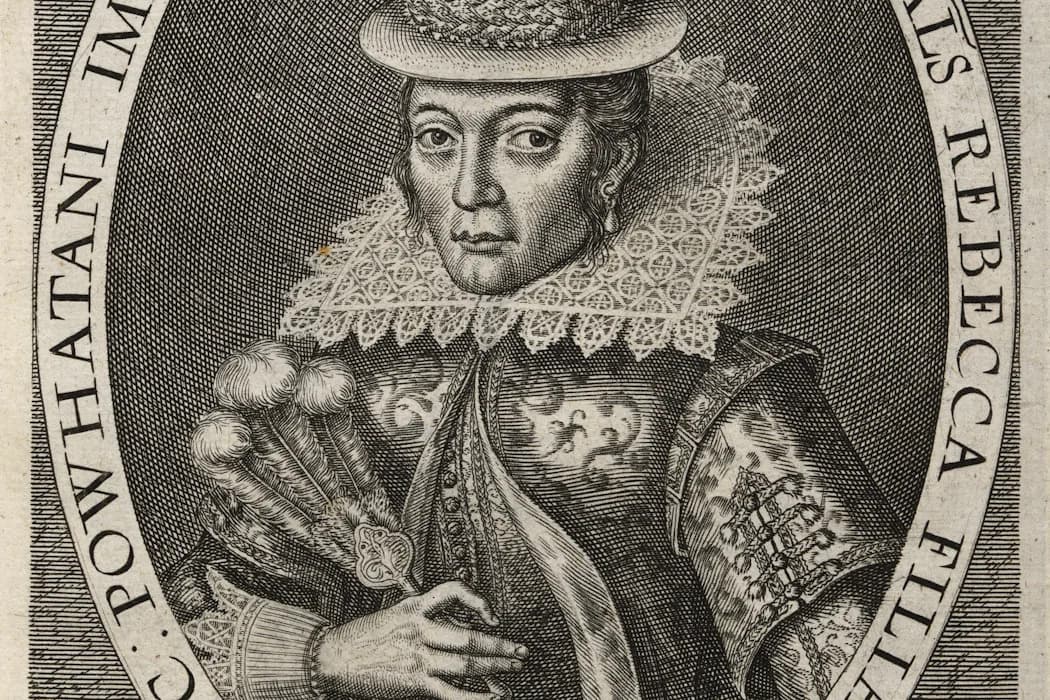
Simon van de Passe's 1616 engraving of Pocahontas is the only known portrait made during her lifetime.National Portrait Gallery/Wikimedia Commons
The Walt Disney Company’s 1995 film shaped a vivid, romantic image of Pocahontas—a young woman who sings to the wind, befriends wildlife and falls in love with Captain John Smith. That popular portrayal mixes fact and fiction. The historical record offers a very different visual: a single contemporary portrait made in London that speaks to how English colonizers imagined cultural change and their own mission in North America.
Portrait, Propaganda, and Power
In 1616 Pocahontas (also known by her personal names Matoaka and Amonute) traveled to England with her husband, John Rolfe, as part of a diplomatic effort on behalf of her father, the paramount chief Wahunsonacock—called Powhatan by the English. While in London she met King James I and sat for an engraving by the Dutch artist Simon van de Passe. The resulting image frames her within the visual language of English elite femininity: a tall stovepipe hat, an ample lace collar, a richly patterned dress and a pearl earring.
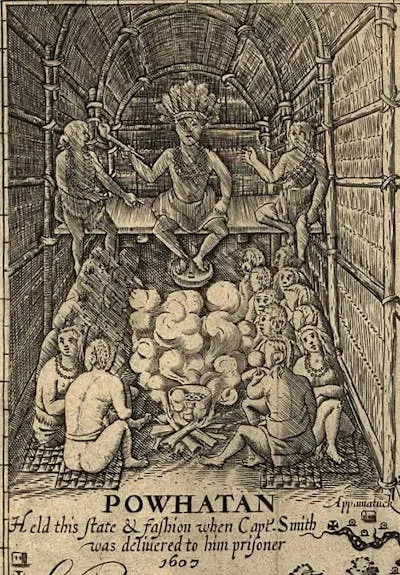
An engraving of Wahunsonacock by William Hole appeared on a map John Smith created of Virginia.Virtual Jamestown/Wikimedia Commons
Van de Passe’s engraving originally drew English viewers to one clear message: an Indigenous woman could be presented as Anglicized and Christianized. The picture’s inscription even identifies her by her married name, Rebecca Rolfe. For many contemporaries this was visual proof that Native peoples might adopt English dress, manners and religion.
Simon van de Passe’s engraving remains ambiguous about the object Pocahontas holds—scholars have alternately identified it as a feather fan or a quill pen. Either reading mattered: a fan signaled refinement, while a quill suggested literacy and access to Protestant instruction.
Earlier Images and a Promotional Narrative
The London portrait did not appear in isolation. Decades earlier, John White’s watercolors of Algonquian communities (1585) and Thomas Harriot’s ethnographic report were turned into widely circulated engravings by Theodor de Bry. Those images and texts emphasized both the exoticism of Indigenous dress and the economic opportunities of the region. By juxtaposing New World figures with grotesque portrayals of ancient Britons, engravers implied that Indigenous peoples were malleable—that under English tutelage they could be civilized and converted.
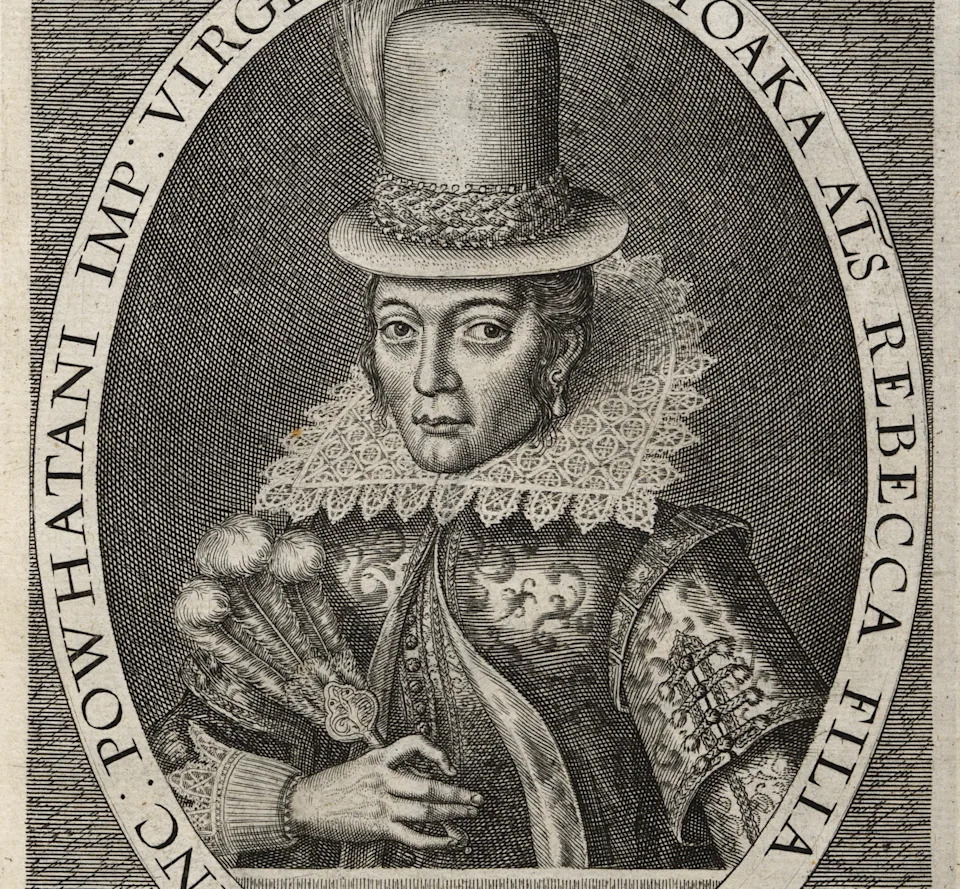
Simon van de Passe’s 1616 engraving of Pocahontas is the only known portrait made during her lifetime.National Portrait Gallery/Wikimedia Commons
Harriot himself framed Indigenous religion and customs as imperfect but improvable: "Some religion they have alreadie...there is hope it may been the easier and sooner reformed." Such rhetoric and imagery helped attract settlers, investors and public sympathy for English colonization.
Reality and Resistance
Yet the portrait’s optimism masked ongoing conflict and competing interests. Pocahontas died in 1617 shortly after leaving England, most likely of disease (Virginia oral history also suggests poisoning). Her father Wahunsonacock died in 1618, and tensions between the Powhatans and English settlers escalated.
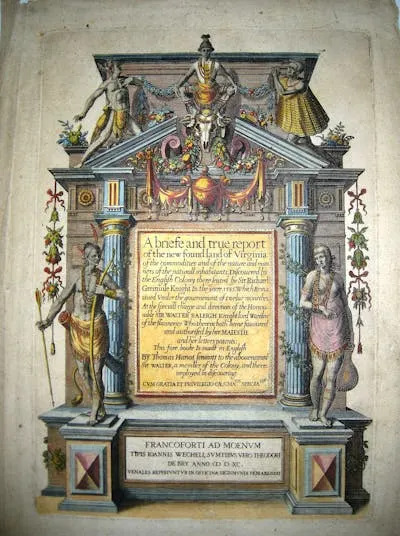
The title page of the 1590 edition of Theodor de Bry’s ‘A Briefe and True Report of the Newfound Land of Virginia.’Livinncary/Wikimedia Commons,CC BY-SA
On March 22, 1622, under the leadership of the war captain Opechancanough, the Powhatans launched a coordinated attack that killed roughly one-quarter of Virginia’s colonists. The English labeled the event a "barbarous massacre" and responded with brutal reprisals, including a 1623 mass poisoning of Powhatans—an act contemporaries recognized as violating emerging standards of war.
Viewed together, van de Passe’s engraving and the later violence highlight a central point: the image of Pocahontas in English dress reveals more about English hopes and self-perception than about a straightforward, inevitable process of cultural assimilation. The uprising of 1622 exposed the fragility of those assumptions and the limits of imagery as proof of peaceful, consensual conversion.
Author: Peter C. Mancall, USC Dornsife College of Letters, Arts and Sciences
This article has been updated to correct the description of the object Pocahontas holds in Simon van de Passe’s engraving.
Help us improve.