Mourners in Bunia, eastern Congo, buried a six-month-old girl who died of Ebola, the third child fatality at a local orphanage. The outbreak is centered in Ituri province, which accounts for more than 90% of cases, and response efforts have been complicated by clashes over burial practices. Officials say the Bundibugyo strain — for which there is no approved vaccine or treatment — has produced 933 confirmed cases and 245 deaths, with roughly 35,000 suspected contacts and spread into Uganda.
Six-Month-Old Buried as Congo's Ebola Outbreak Deepens; Third Orphanage Death Reported
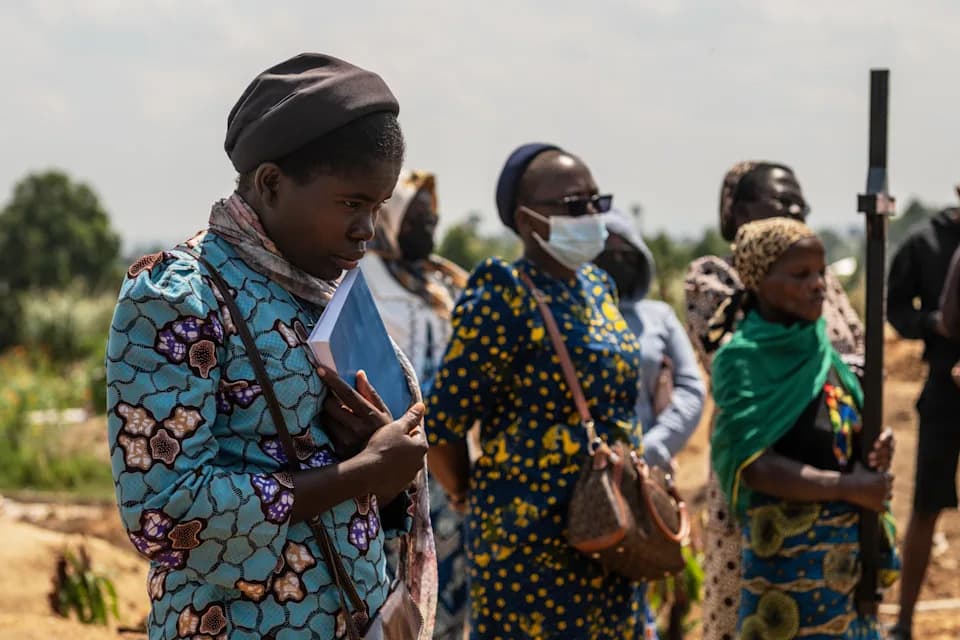
Catholic nuns from the orphanage where Vanisa Anifa, a 6-month-old orphaned girl who died of Ebola, was staying, attends her funeral in Bunia, Congo, Friday, June 19, 2026. (AP Photo/Moses Sawasawa)(AP Photo/Moses Sawasawa)
Mourners in Bunia, eastern Congo, gathered Friday to bury a six-month-old girl who died earlier this week from Ebola — the third child fatality at a local orphanage amid an escalating outbreak that has strained health services and sparked community tensions.
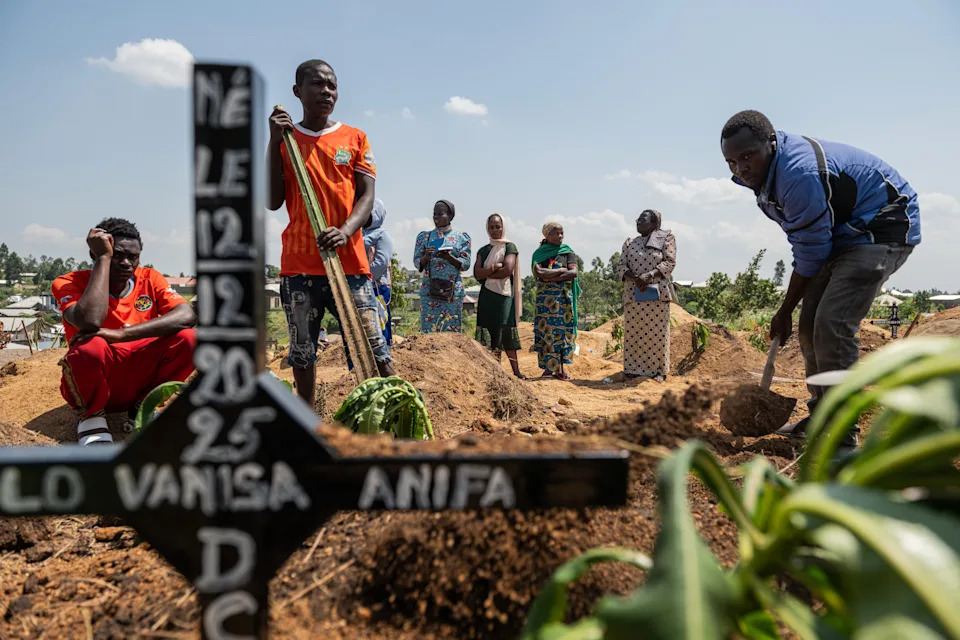
Relatives of Vanisa Anifa, a 6-month-old orphaned girl who died of Ebola, attend her burial, in Bunia, Congo, Friday, June 19, 2026. (AP Photo/Moses Sawasawa)(AP Photo/Moses Sawasawa)
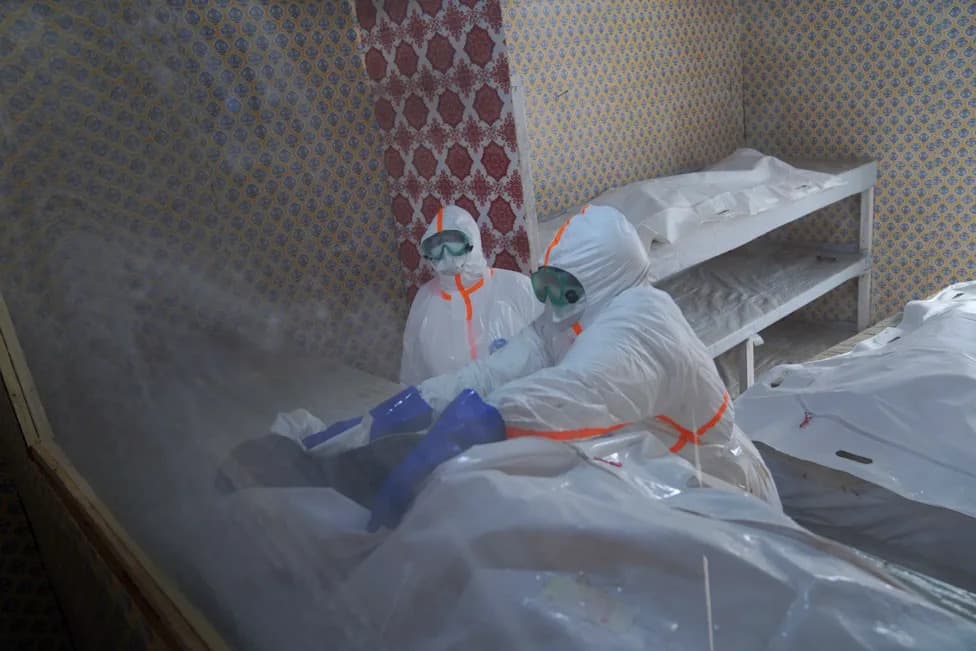
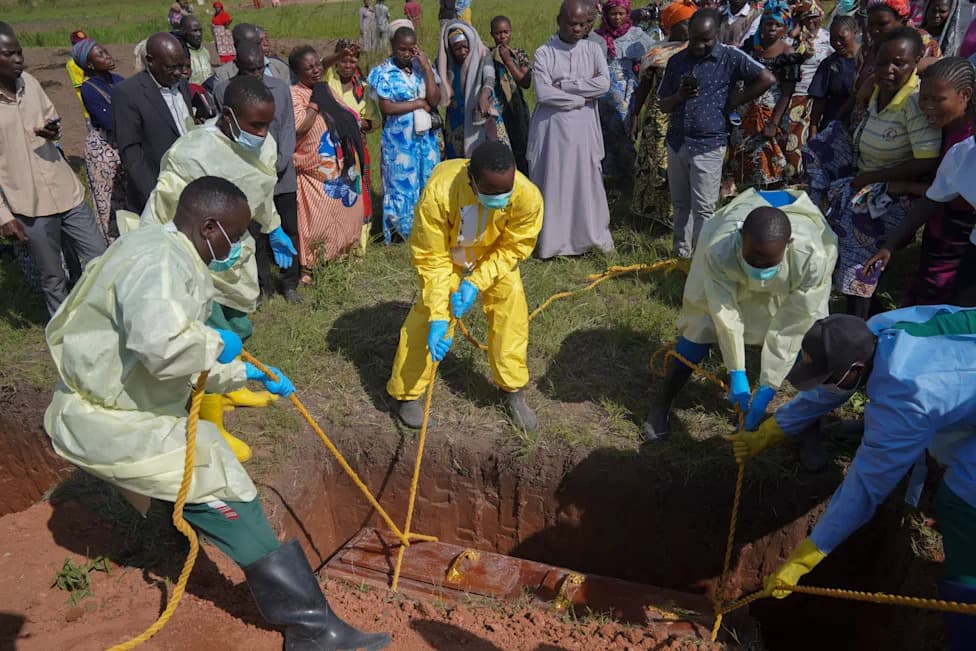
Carrying a cross, relatives kept their distance while masked and gloved health workers lowered the small coffin into the ground. A Catholic priest prayed over the infant's body as burial teams followed strict infection-control protocols.
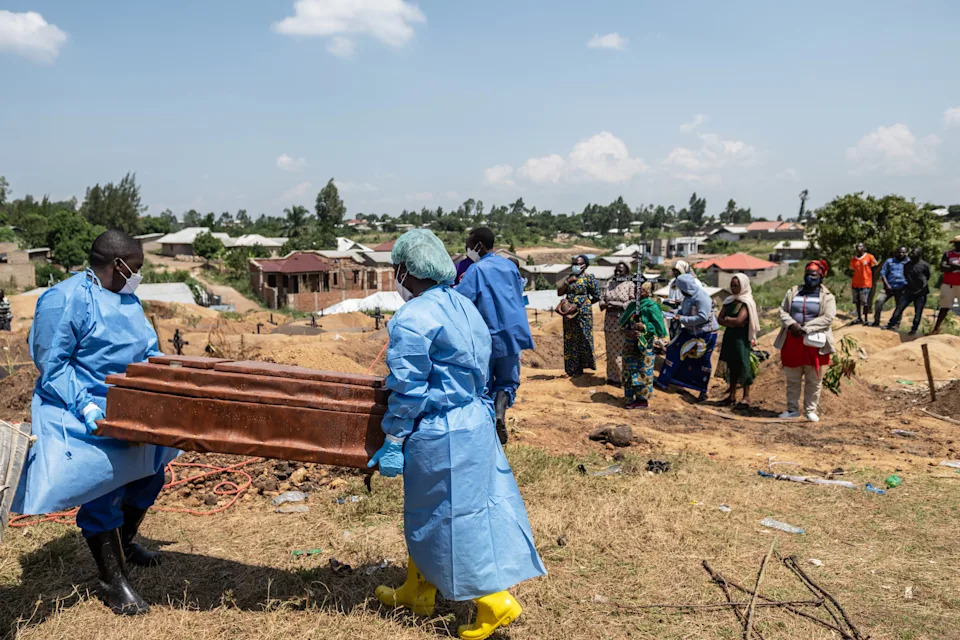
Red Cross workers prepare to bury Vanisa Anifa, a 6-month-old orphaned girl who died of Ebola, at the Bigo Cemetery, in Bunia, Congo, Friday, June 19, 2026. (AP Photo/Moses Sawasawa)(AP Photo/Moses Sawasawa)
“It’s a feeling of sadness because we have lost one of our own, a daughter of the church,” said Father Innocent Ndogo. “As we have always said, the Lord gives, and the Lord takes away.”
Ituri province remains the epicenter of the outbreak, accounting for more than 90% of confirmed cases. Authorities and aid groups say response efforts have been complicated by clashes between residents and healthcare teams over changes to traditional burial rites, and by periodic militarization of response operations.
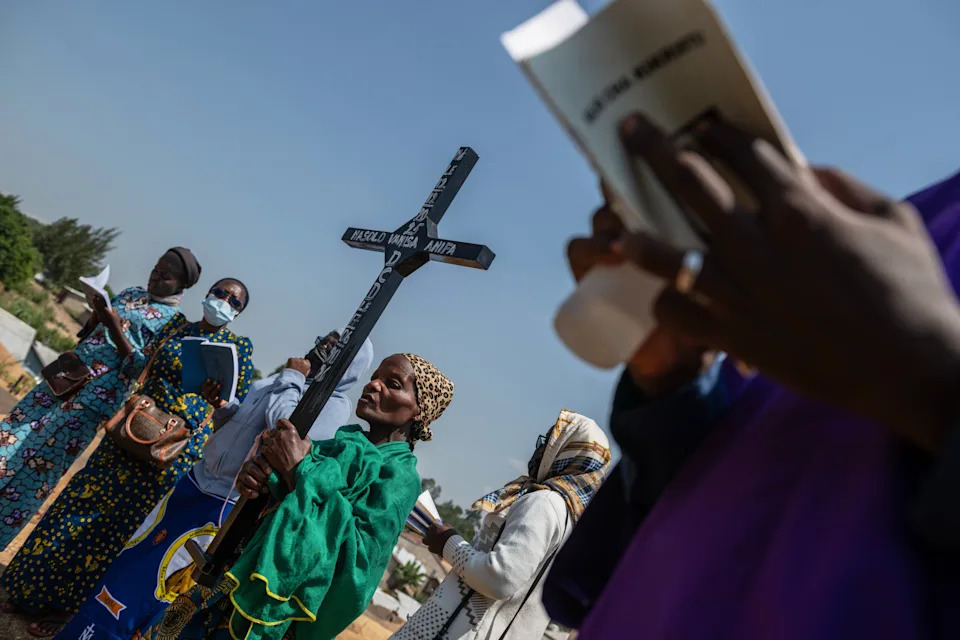
A woman holds a cross during a burial ceremony for Vanisa Anifa, a 6-month old orphaned girl who died of Ebolaat, in Bunia, Congo, Friday, June 19, 2026. (AP Photo/Moses Sawasawa)(AP Photo/Moses Sawasawa)
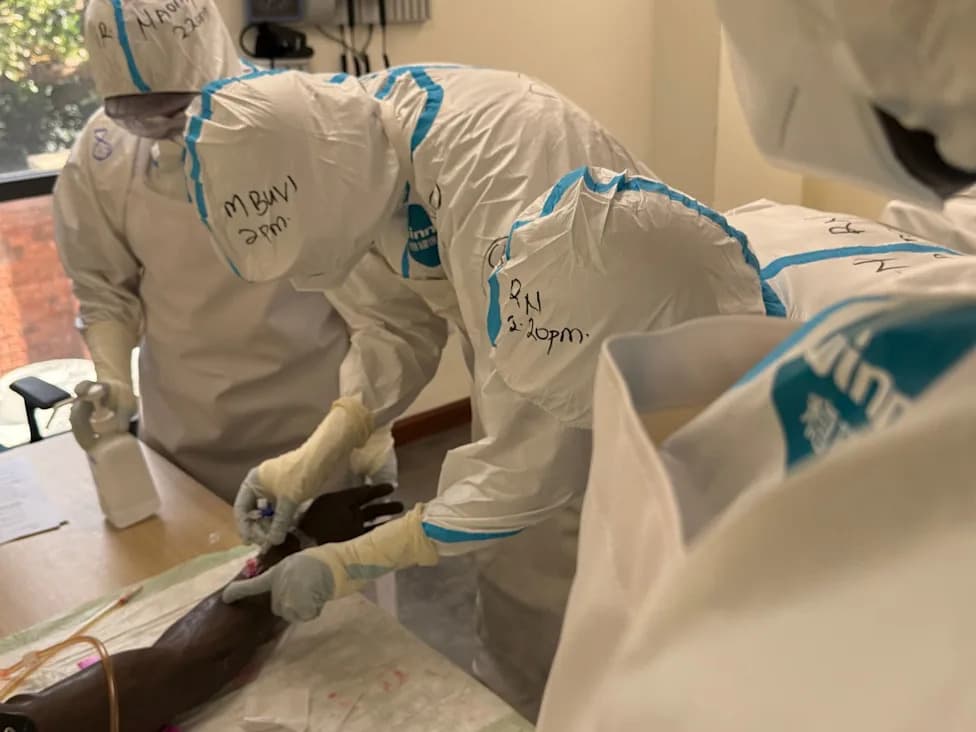
The virus identified in the current outbreak is the Bundibugyo strain of Ebola. Unlike the Zaire strain — which is covered by an available vaccine and has caused the majority of Congo's past outbreaks — Bundibugyo has no approved vaccine or specific antiviral treatment. Some health workers have also reported shortages of personal protective equipment such as masks and gloves.
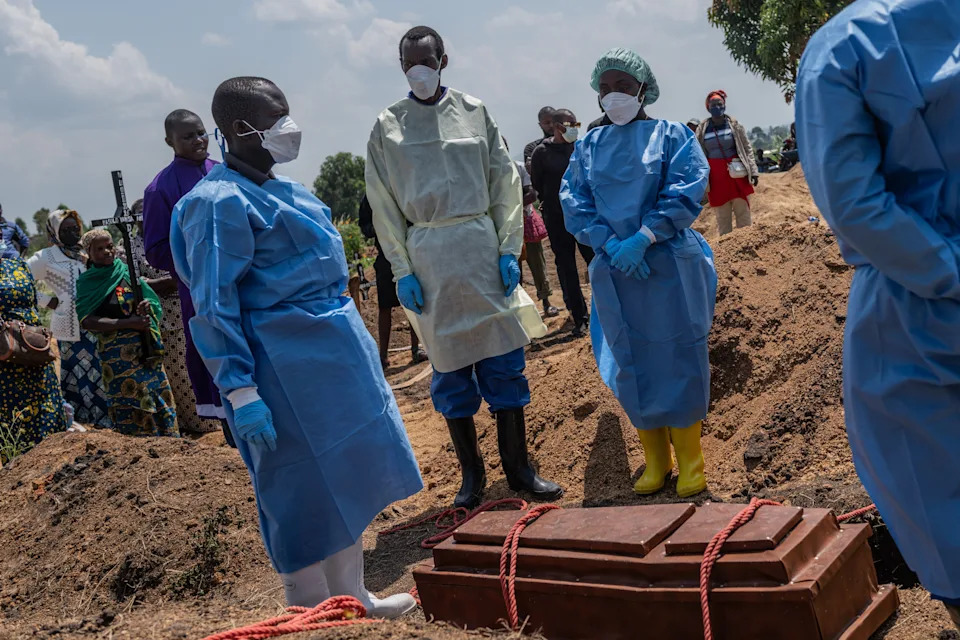
Red Cross workers prepare to bury Vanisa Anifa, a 6-month-old orphaned girl who died of Ebola, at the Bigo Cemetery, in Bunia, Congo, Friday, June 19, 2026. (AP Photo/Moses Sawasawa)(AP Photo/Moses Sawasawa)
During a visit to Bunia on Friday, Congolese Health Minister Roger Kamba said there were 933 confirmed cases and 245 deaths linked to the outbreak. He announced that all health centers in Ituri would provide free care and that bonuses for healthcare workers would be doubled.
Africa's Centres for Disease Control and Prevention reported roughly 35,000 suspected potential contacts under monitoring. While the outbreak remains concentrated in Ituri, cases have also been recorded in North Kivu and South Kivu provinces and have crossed into neighboring Uganda, where authorities have reported 19 confirmed cases and two deaths.
Although this epidemic has spread rapidly, it has not reached the scale or deadliness of the 2014 West Africa Ebola epidemic, which killed more than 11,000 people. Public health officials say early failures to test for Bundibugyo likely contributed to missed cases and wider transmission before detection and response efforts were escalated.
Alex Lock, communications officer at the International Federation of Red Cross and Red Crescent Societies, urged compassion: “She was a baby. She had her whole life ahead of her. Unfortunately, she was taken by the disease, a disease that, as you know, is transmitted from one person to another.”
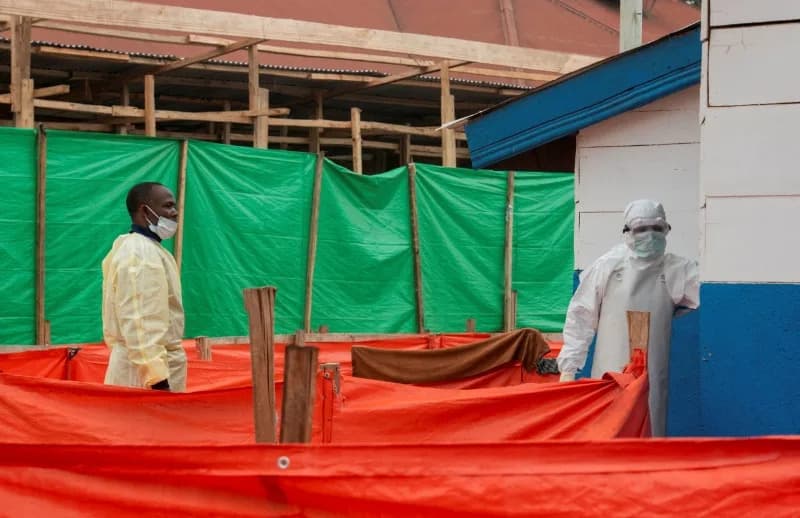
Local and international health teams continue contact tracing, community engagement, and safe-burial operations amid efforts to secure more protective equipment and expand treatment capacity.
McMakin contributed from Dakar, Senegal.
Help us improve.