Virginia Tech researchers combined DNA from living millipedes with fossil anatomy to build the first complete evolutionary tree covering every living millipede order. Their analysis dates the origin of millipedes to about 460 million years ago, suggesting these arthropods colonized land roughly 80 million years before vertebrates. Locating two tiny, previously unplaceable lineages during fieldwork in Mexico and the Canary Islands was essential to completing the family tree. Millipedes’ long-standing role as decomposers helped shape early terrestrial ecosystems and continues to support soils today.
Tiny Pioneers: Millipedes Colonized Land ~460 Million Years Ago, 80 Million Years Before Vertebrates
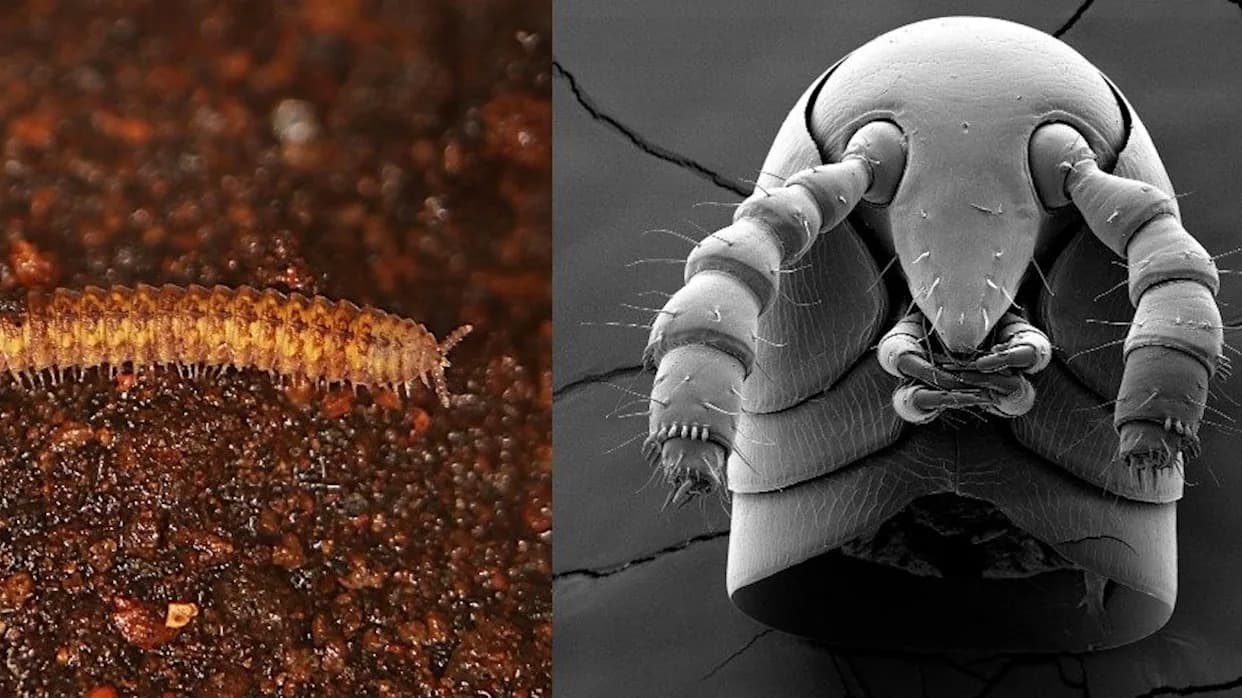
Photo Credit: Rafael Garcia and Paul Marek for Virginia Tech
New research led by Virginia Tech suggests millipedes colonized terrestrial environments far earlier than the fossil record alone indicates. By combining DNA from living species with anatomical evidence from fossils, the team produced the first complete evolutionary tree that includes every living millipede order and dated their origin to roughly 460 million years ago.
Filling a Long-Standing Gap
The study resolves a persistent gap in the evolutionary history of these ancient arthropods. Integrating genetic sequences and fossil anatomy allowed the researchers to apply molecular dating methods calibrated by physical specimens, producing a timeline that places millipedes on land more than 80 million years before vertebrates made the transition to terrestrial life.
Chasing Elusive Lineages
A major hurdle was two tiny, hard-to-find millipede groups that had long remained unclassified because fresh specimens were unavailable. One group is subterranean and barely a centimeter long; the other is restricted to a few isolated localities. After fieldwork in Mexico and Spain's Canary Islands, the team finally obtained the specimens needed to place these lineages into the broader millipede family tree.
"These last two were kind of like our white whales," said Paul Marek, the study's lead investigator and an associate professor in Virginia Tech's Department of Entomology. Team member Luisa "Fernanda" Vasquez-Valverde recalled that "It took 10 people over a week just to find this one tiny 10-millimeter adult."
Why It Matters
Dating millipedes more precisely helps scientists reconstruct the earliest terrestrial ecosystems. Long before forests, seeds, flowers or land-dwelling vertebrates existed, millipedes were breaking down dead plant material and recycling nutrients—functions that helped shape soils and supported subsequent waves of life on land.
That ecological role continues today: millipedes remain important decomposers that consume decaying vegetation and return nutrients to soils, supporting forests, gardens and other landscapes people rely on.
Study Note: The research combined genetic data from living species with fossil anatomical evidence to produce a comprehensive phylogeny and a calibrated timeline for millipede evolution.
Help us improve.