New analyses in Science Advances use molecular-clock methods to suggest animals may have originated between roughly 800 and 700 million years ago—well before the oldest confirmed body fossils at ~574 million years. The study argues that treating the ~590-million-year-old Weng'an Biota as a maximum-age anchor may bias results and that older microfossil-rich deposits push the origin back into the Tonian–Cryogenian interval. Genetic-only and broadly calibrated models converge on an origin near ~800 million years ago, though uncertainties remain. The authors recommend expanded fossil, trace-fossil, and biomarker searches to test these predictions.
New Study Pushes Animal Origins Back to ~700–800 Million Years Ago
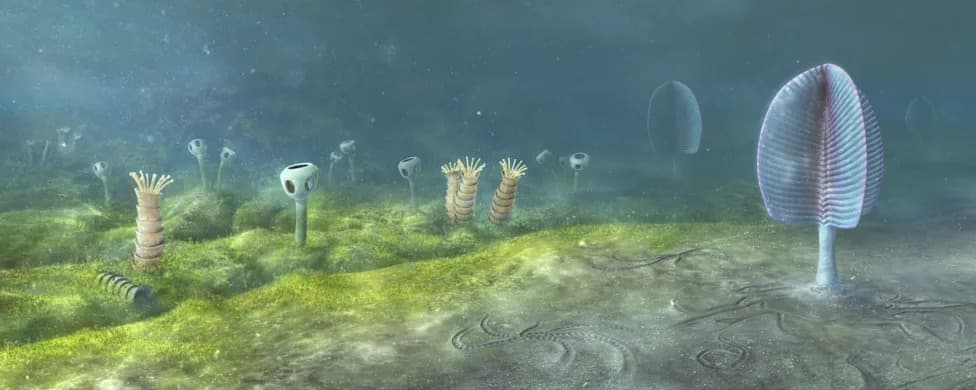
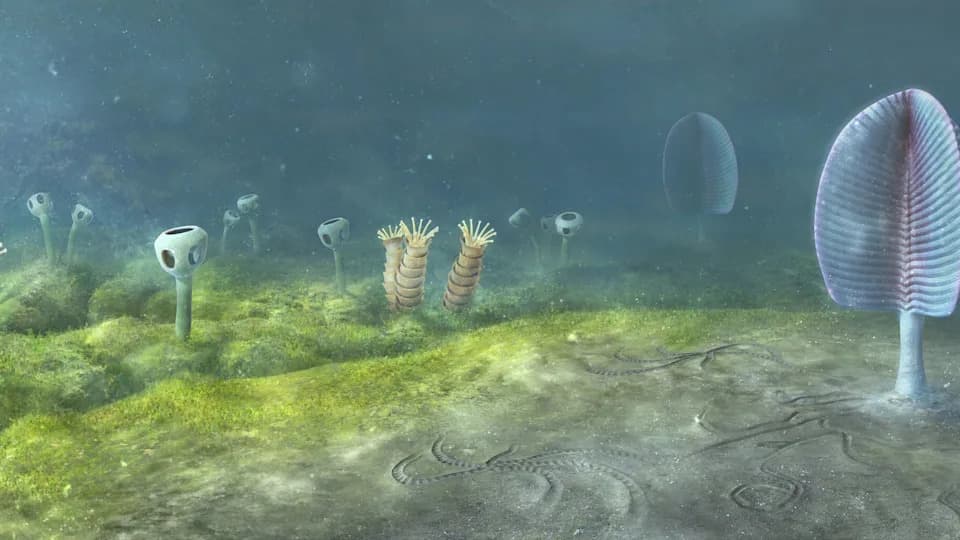
Ediacaran sea floor, Namibia, Southwest Africa - 543 million years ago.Image credit: Museum of Natural History, University of Oxford / Mighty Fossils
New molecular-clock analyses published October 2 in Science Advances suggest that animals may have originated far earlier than their oldest known body fossils indicate—possibly between about 800 and 700 million years ago. That timing would put the first animals 100–200 million years before the Ediacaran fossils and potentially before the Cryogenian 'Snowball Earth' glaciations.
Background
The oldest unambiguous animal body fossils belong to the Ediacara Biota, dated to roughly 574 million years ago, which provides a firm minimum date for animal existence. Chemical biomarkers in older rocks hint that sponges—or sponge-like animals—may have been present by ~650 million years ago, but body fossils from that interval are currently lacking.
Why Molecular Clocks Matter
Molecular clocks use genetic differences among living organisms to estimate when their lineages diverged. To convert genetic distances into calendar dates, models require calibration points: minimum ages (firm fossils) and maximum ages (rock deposits that preserve fossils well but show no sign of animals). A commonly used maximum-age anchor has been the ~590-million-year-old Weng'an Biota in China, a site rich in exquisitely preserved microfossils but lacking clear animal remains.
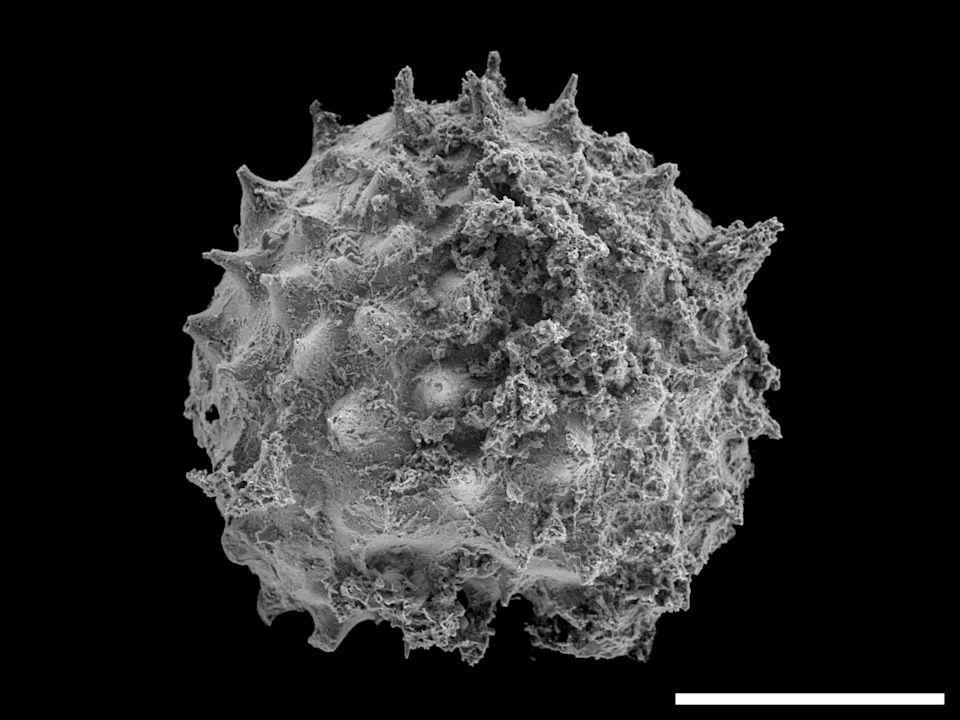
Asterocapsoides wenganensis, a spiny, single-celled acritarch from the Kheseen Biota in Mongolia. Scale bar: 0.1 mm.Image credit: Yale News/Derek Briggs
New Tests of Calibration Assumptions
An Oxford-led team with collaborators from UC Berkeley, ETH Zürich, and Yale re-examined the logic behind using deposits such as Weng'an as a hard ceiling. They analyzed 143 samples from the Kheseen Biota in Mongolia (deposited ~534–526 million years ago), a time when animals were already established elsewhere. The Kheseen assemblage included diverse acritarchs (spiny microfossils), embryo-like fossils with cellular structure, and eight acritarch species new for the site—yet no specimens could be confidently identified as animals.
What This Means for Maximum Ages
If local chemical or ecological conditions at Kheseen suppressed animal preservation despite animals living nearby, the same preservation bias could apply to Weng'an. That undermines the logic of treating Weng'an's lack of animals as a strict maximum-age anchor for animal origins.
Revised Molecular-Clock Results
Rerunning molecular-clock models with older, well-preserving microfossil deposits from Australia, Svalbard, and Arizona as looser maxima shifted the inferred date for the last common ancestor of all animals to roughly 746–791 million years ago, with uncertainties of about 27–54 million years. When the team tested extreme calibrations—using a ~1-billion-year-old site or the Great Oxidation Event (~2.3 billion years ago) as the maximum—the models converged on a central estimate near ~814 million years ago, albeit with larger error margins (~±90 million years). In short, both calibration-sensitive and nearly unconstrained genetic runs point to an origin in the ~800-million-year neighborhood.
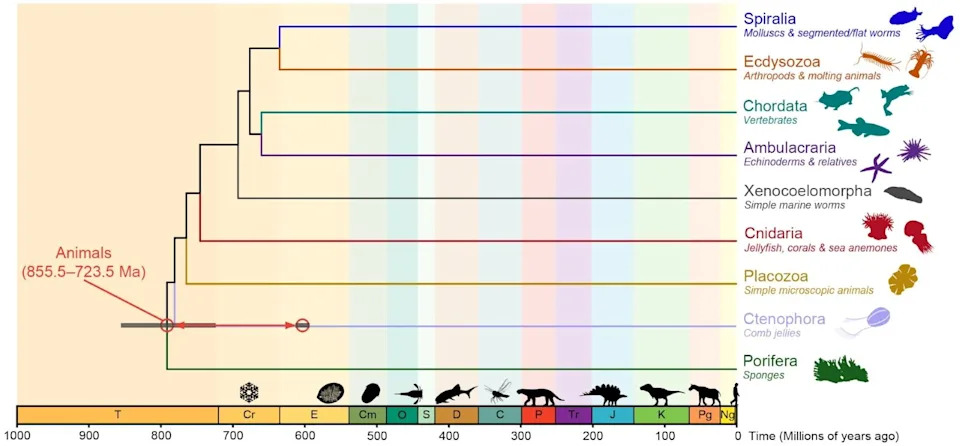
Estimated timeline for the origin of animals based on molecular clock analyses. The grey bar on the right of the image is the origin of animals based on an Ediacaran upper calibration. The grey bar to the left is the origin based on older deposits in the Tonian period, as suggested by the new study.Image credit: Yale News/Orin Lole Durbin
Implications
These dates potentially place the origin of animals in the Tonian–Cryogenian interval, overlapping the Cryogenian glaciations (Snowball Earth). The authors note that they cannot rule out a connection between glacial episodes and later animal diversification, though most branching events in the animal tree still appear to occur after the glaciations ended.
Limitations and Next Steps
Fossil evidence older than ~574 million years remains elusive. Preservation of the earliest animals—likely small, soft-bodied, and thin-bodied sponge-like organisms adapted to low-oxygen oceans—would have depended heavily on local habitat and unusual postmortem chemistry. The paper calls for broader searches across diverse rock types, improved analyses of trace fossils and chemical biomarkers, and further integration of paleontological and genomic data to refine the timeline.
Figure note: The study includes molecular-clock timelines showing older Tonian calibrations shifting the animal origin leftward relative to Weng'an-based calibrations. (Image credit: Yale News/Orin Lole Durbin)
Disclosure: Some online platforms that republish this story may earn commissions from links.
Help us improve.