Only about 30% of U.S. workers report being engaged at work, the lowest in more than a decade, and confidential conversations analyzed in the 2026 Psychological Safety Study point to three main barriers: work-life imbalance, job-performance anxiety and unclear objectives. The U.S. trend shows chronic exhaustion replacing workplace trauma as the primary employee concern, while other countries face different challenges such as limited professional development. The author argues these patterns reveal a "leadership chasm": leaders' actions often fail to match their stated commitments to psychological safety, which drives disengagement and suppresses innovation.
Most American Workers Are Checked Out — Their Bosses Often Don't Realize It
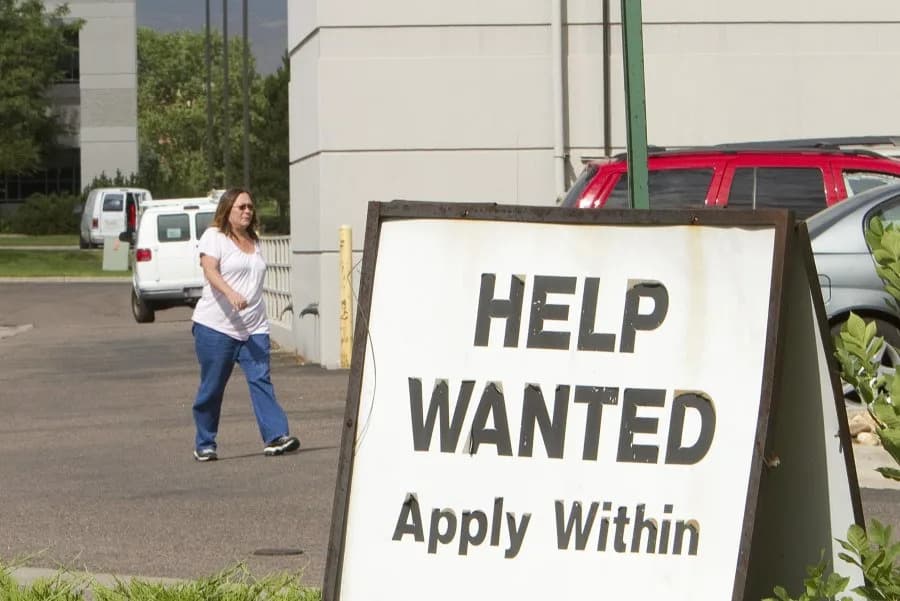
In the U.S., only about 30% of part-time and full-time employees say they are engaged at work, according to an annual Gallup survey. File Photo by Gary C. Caskey/UPI
Michael Scott, the well-meaning but oblivious regional manager at the center of the U.S. version of The Office, famously believed he was the "World's Best Boss" — he even had the mug to prove it. For much of the show's 2005–2013 run, his team endured pointless meetings, cringeworthy speeches and quietly counted the hours until they could leave. The comedy resonated because it reflected a widespread workplace truth: many managers see themselves very differently than their employees experience them.
That disconnect is no longer only sitcom fodder. In the United States, Gallup's annual survey finds that only about 30% of part- and full-time employees report being engaged at work — the lowest level in more than a decade. Engagement boils down to a simple question: does the work matter to the person doing it? Engaged employees care about outcomes; disengaged employees have largely stopped caring.
As a cultural historian who studies workplace culture, I view the fact that more than two-thirds of the workforce is effectively checked out as evidence of a broad leadership failure. One central reason is psychological safety — whether people feel they can speak up, ask questions or admit mistakes without punishment. Amy Edmondson and other scholars have shown that teams with high psychological safety consistently outperform those that lack it.
What Confidential Conversations Reveal
Most workplace research relies on surveys that capture what employees will say publicly. The 2026 Psychological Safety Study, released in March 2026 by the Center for Organizational Effectiveness, used a complementary approach: it analyzed anonymized, confidential conversations between employees and licensed counselors across more than 100,000 organizations, representing roughly 88 million workers worldwide. That confidential source reveals what employees disclose in private, not just what they write on a questionnaire.
Top Barriers To Psychological Safety
The study identified three leading obstacles to psychological safety globally:
- Work-Life Imbalance: Job demands frequently exceed the time and energy workers have, producing chronic exhaustion.
- Job-Performance Anxiety: Stress from trying to meet vague, inconsistent or shifting supervisor expectations.
- Unclear Objectives: Many workers do not know what they are aiming for, what their priorities should be, or where the organization is headed.
These findings align with Gallup's results: only 46% of American workers now say they clearly know what their employers expect from them, down from 56% in 2020.
How The Problem Varies Internationally
The study also shows different patterns across countries. In the United States, chronic overwork and exhaustion have replaced workplace trauma (harassment, violence or sustained high stress) as the primary concern. Many American employees report being continually stretched thin — whether in an office or working from home — and fears about job loss from automation or a weak economy exacerbate the imbalance.
In France, by contrast, the dominant complaint is limited professional development: strict labor rules keep workdays short but can also restrict learning opportunities and career mobility. In 11 countries, including the Philippines, Vietnam, Brazil and Mexico, workers ranked unclear performance expectations among their top concerns.
The Leadership Chasm
Employers are not necessarily unaware of these issues, but they often misread them. Executives and managers generally have good intentions, yet their everyday behaviors — which employees watch far more closely than mission statements — often tell a different story. I call this gap a leadership chasm: the distance between what leaders believe they are communicating and what employees actually experience.
"Psychological safety doesn't exist in isolation," says Donald Thompson, managing director of the Center for Organizational Effectiveness and author of The Employee Engagement Handbook. "It's built on the daily realities of how people experience work."
When workers see a colleague rebuked for raising a concern, they learn the real lesson — regardless of stated open-door policies. When managers set shifting priorities or fail to define what good performance looks like, employees become risk-averse, which stifles innovation and initiative. The Office captured that dynamic perfectly: Michael Scott's moods dictated priorities, and competent employees learned to hedge, freeze or stop trying.
What Leaders Can Do
Fixing the problem requires more than rhetoric. Leaders must demonstrate psychological safety through concrete actions: clarifying goals, setting consistent expectations, protecting employees who speak up and ensuring workload is sustainable. Small, visible moments — a manager acknowledging a mistake, responding openly to a difficult question, or defending an employee who raised a concern — build credibility far more than lip service.
Until employees regularly witness those behaviors, many American workers will remain too worn down or discouraged to give their best.
Bob Batchelor is an assistant professor of communication, media and culture at Coastal Carolina University. This article is republished from The Conversation under a Creative Commons license. The views expressed here are those of the author.
Help us improve.