The Science study "Home alone: Remote work, isolation, and mental health" analyzed five national surveys covering 588,322 U.S. workers (2011–2024), excluding 2020–2021. Comparing occupations that became more remote with those that stayed on site, researchers found higher psychological distress, more mental‑health visits, and increased psychiatric medication use linked to remote‑capable jobs. Effects were concentrated among people who live alone, whose emotional distress rose nearly twice as much. The authors urge intentional design of hybrid and remote work—coordinating overlap and fostering informal connection—rather than mandating office returns.
Working From Home Tied To Rising Isolation And Mental‑Health Strains, Large Study Finds
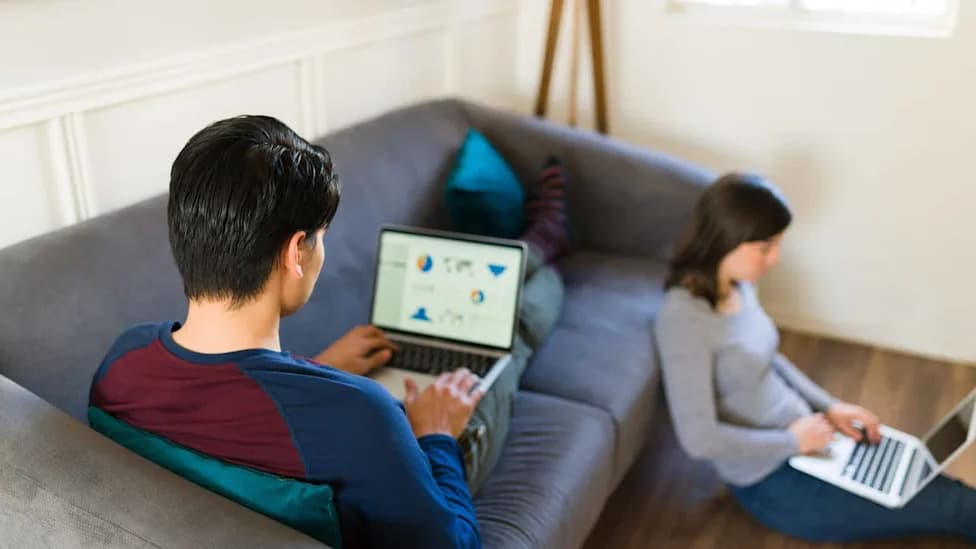
Remote Worker
For years, debates about remote work focused on productivity and supervision. A major study published in Science on June 4, 2026, shifts attention to a quieter consequence: how remote work has reshaped everyday social life and mental well‑being.
The paper, "Home alone: Remote work, isolation, and mental health," was led by economists Natalia Emanuel (Federal Reserve Bank of New York), Emma Harrington (University of Virginia) and Amanda Pallais (Harvard). The authors analyzed five nationally representative surveys covering 588,322 U.S. workers from 2011 through 2024. To avoid pandemic lockdown distortions, the researchers excluded 2020 and 2021 from their analysis.
How the Study Was Designed
Rather than simply comparing individuals who worked remotely with those who did not, the team compared occupations that became substantially more remote after the pandemic—such as software engineering and marketing—with jobs that largely stayed on site, including nursing and mechanical engineering. This occupational approach helps isolate the effect of the shift toward remote-capable work.
Key Findings
Across multiple measures—psychological distress, visits to mental‑health providers, and prescriptions for psychiatric medication—workers in occupations that became more remote showed worse outcomes. The researchers estimate that the expansion of remote work explains roughly one‑third of the increase in isolation and mental distress when comparing 2011–2019 with 2022–2024.

Image Credit: luzazure/123RF
Effects Were Strongest For People Who Live Alone. Solo-living workers experienced nearly twice the rise in emotional distress compared with remote workers who live with others.
The study highlights that the office historically delivered small, spontaneous social interactions—hallway chats, shared lunches, after‑work drinks—that often led to meaningful social contact. Remote work can remove those moments without anyone intentionally deciding to replace them.
Why Flexibility Still Matters
The authors and outside experts emphasize that these findings are not a call to abandon remote work. Many employees value remote and hybrid arrangements for clear reasons: less commuting, better schedule control, and essential flexibility for caregivers, people with chronic conditions, and many neurodivergent employees. A mandatory return to the office carries its own costs and tradeoffs.
What Employers Can Do
The researchers recommend designing remote work more intentionally. Practical steps include coordinating overlapping in‑office days for hybrid teams, creating structured opportunities for informal interaction (both in person and online), and building social connection into team routines so colleagues have genuine chances to interact beyond scheduled meetings.
As of May 2026, Gallup reported that among U.S. employees with remote‑capable jobs, 52% work hybrid, 26% are fully remote, and 22% are fully on site; just 6% prefer the office every day. The challenge, the study suggests, is preserving the flexibility people value while rebuilding everyday social connections that many may not have realized they were losing.
If you work remotely and live alone, have your daily social patterns changed since the pandemic? What, if anything, has helped fill the gap?
Help us improve.