Sixty Tao paddlers from Orchid Island sailed 111 miles to Batan Island in a traditional canoe called Ovayan, built by over 200 people using ancestral methods. The voyage revived a sea route tied to the Austronesian expansion and celebrated shared maritime culture with the Ivatan people. Archaeology, genetics and linguistics support Taiwan’s central role in Austronesian dispersal, though alternative origin theories persist.
Tao Seafarers Recreate Ancient Pacific Crossing, Reviving Austronesian Legacy
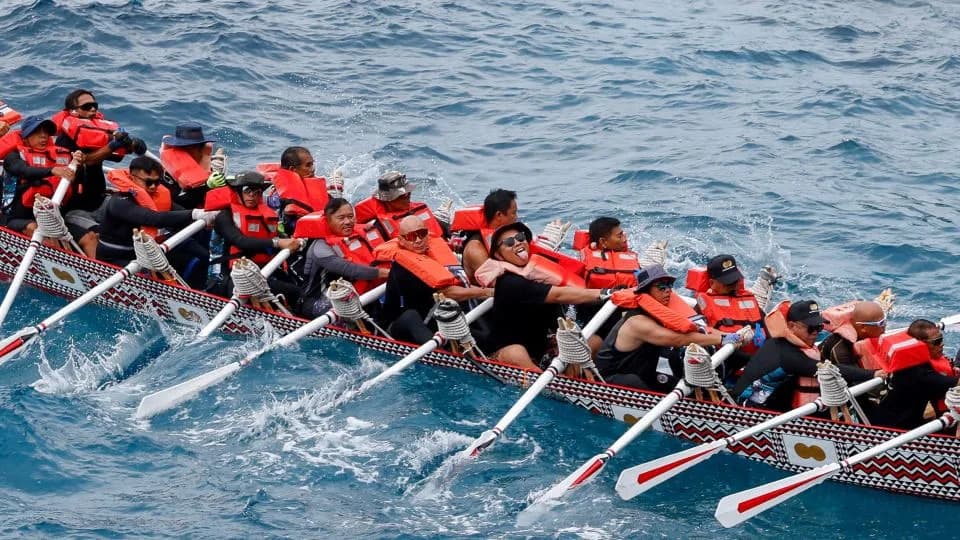
Tao indigenous rowers paddle a traditional wooden canoe named Ovayan, or "Golden Friendship," to the Philippines' Batanes Islands, on Orchid Island, Taiwan, June 15, 2026. - Ann Wang/Reuters
Sixty Tao paddlers from Taiwan’s Orchid Island completed a daring 111-mile voyage to Batan Island in the northern Philippines, navigating strong currents and using stars for guidance as they retraced an ancient maritime route linked to the Austronesian expansion.
Recreating a 4,000‑Year‑Old Passage
The wooden canoe, named Ovayan ("Golden Friendship"), was built by more than 200 people from six tribal communities using traditional techniques: specially shaped timbers lashed together without nails. The expedition took turns at the oars and sailed through the Bashi Channel, a route that had not been regularly used for roughly 300 years.
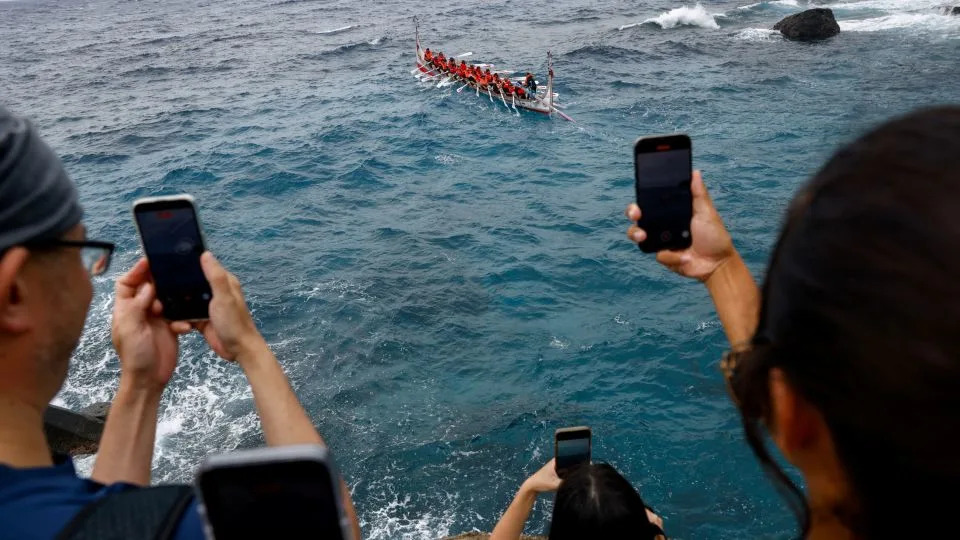
Family and friends film the beginning part of the journey with their phones. - Ann Wang/Reuters
Welcome and Cultural Significance
When the paddlers arrived, they were greeted with drums and dances by the Ivatan people of Batan Island. Maraos, chairperson of Taiwan’s Indigenous Peoples Cultural Foundation (IPCF), called the voyage a day of commemoration for Austronesian peoples and a celebration of shared maritime heritage.
“This is not only a significant day for the Pacific Ocean but also a day of commemoration for the Austronesian people,” — Maraos, IPCF
Roots of a Pacific Migration
Archaeologists, linguists and geneticists point to Taiwan as the likely starting point for the Austronesian dispersal that reached the Philippines, Indonesia, many Pacific islands, and as far as Madagascar. Emeritus Professor Peter Bellwood of the Australian National University described the migration as beginning in Taiwan thousands of years ago and spreading outward, supported by archaeological finds and DNA evidence.
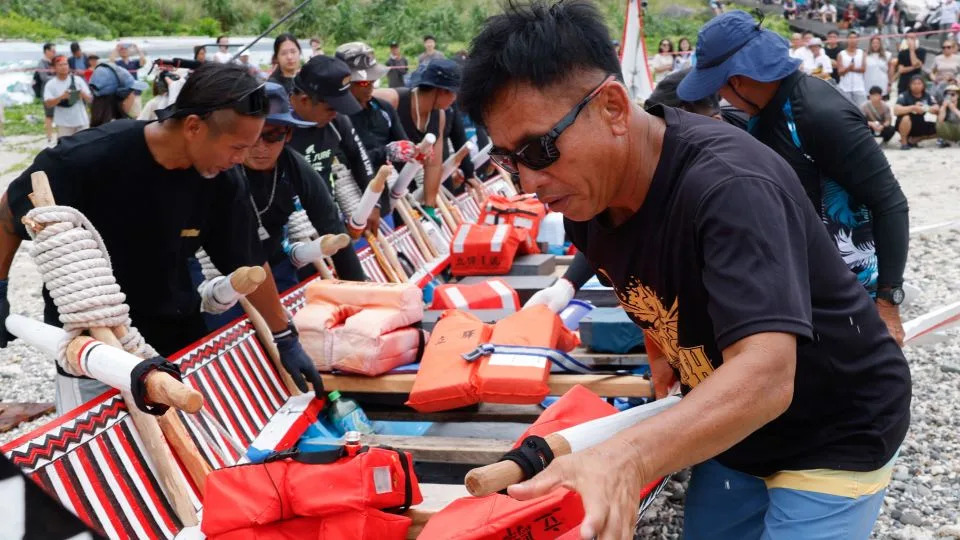
Paddlers move the canoe into the water. - Ann Wang/Reuters
Researchers note that Austronesian voyagers carried staple crops such as yams and taro and sometimes livestock to sustain new island settlements. Practical astronomical knowledge — used to navigate by stars and record directions — was an essential skill for these long sea journeys.
Language Evidence and Ongoing Debate
Linguists, including Victoria Chen of Victoria University of Wellington, say Taiwan preserves the greatest diversity of Austronesian languages, supporting the island’s role as an original dispersal point. Similar words across distant languages (for example, "lima"/"rima"/"ʻelima" for the number five) illustrate those links. However, some scholars in mainland China have recently argued for a southern China origin, a view Taipei criticizes as politically motivated.
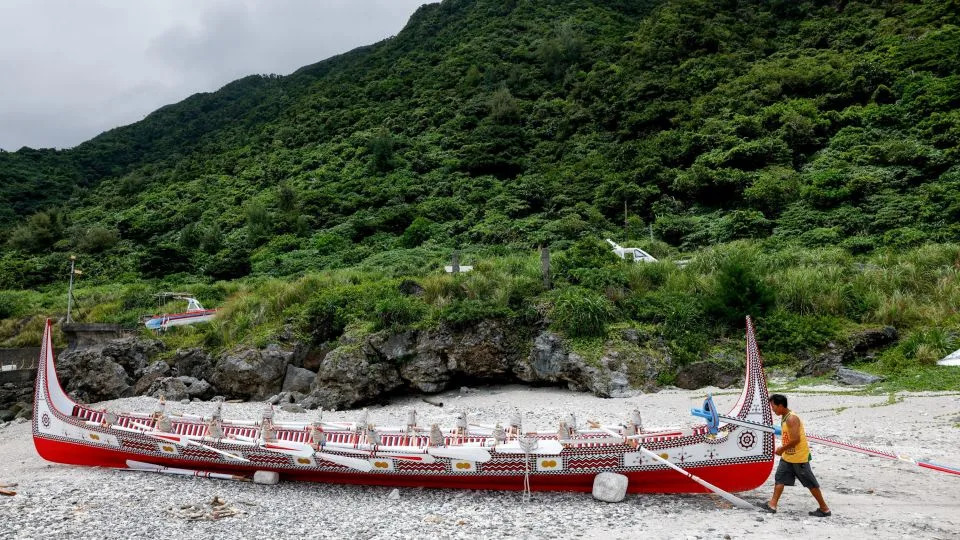
The traditional wooden canoe is named "Ovayan", or "Golden Friendship." - Ann Wang/Reuters
The project received support from the Taiwanese government and highlights both the continuing cultural resilience of Taiwan’s indigenous peoples and the broader story of human migration across the Pacific.
Context and Demographics
The Tao are one of Taiwan’s smaller indigenous groups, numbering about 5,120 people in official counts. Indigenous communities collectively make up roughly 3% of Taiwan’s population of 23 million, which is today largely descended from Han Chinese migrants from the mainland.
Help us improve.