Brazil's Supreme Court convicted former lawmaker Eduardo Bolsonaro of coercion for lobbying U.S. officials to pressure Brazilian authorities over the trial that last year sent his father to prison for an attempted coup. The court handed him a four‑year, two‑month sentence, with all five justices finding he illegally interfered. Eduardo, who has lived in Texas since February 2025, says his lawyers will contest the verdict. The case unfolds amid renewed U.S.-Brazil trade tensions and ahead of October’s presidential election, where Eduardo is campaigning for his brother Flávio.
Brazil’s Supreme Court Convicts Eduardo Bolsonaro Of Coercion; Sentenced To 4 Years, 2 Months
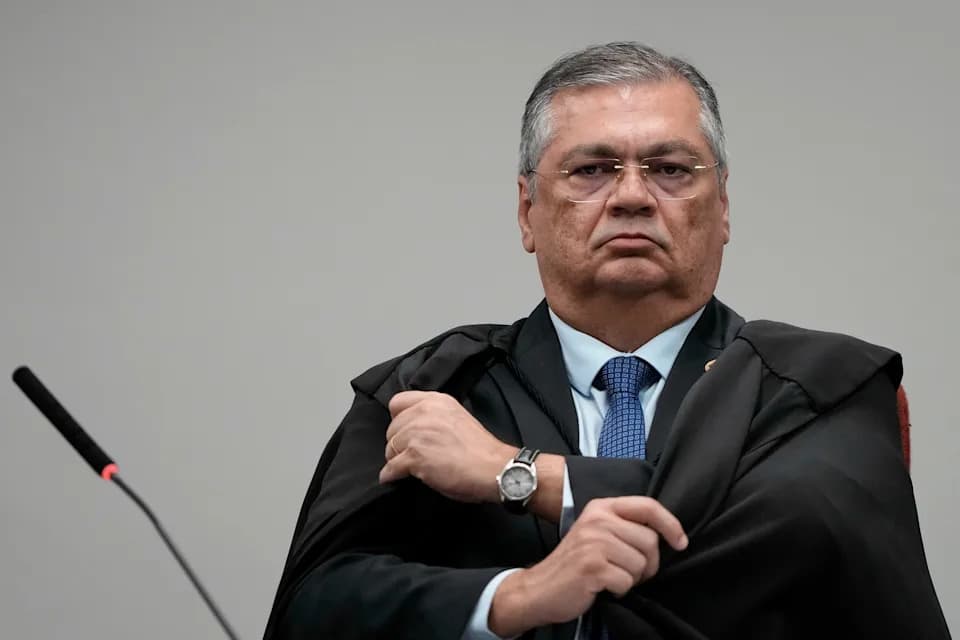
Justice Flavio Dino attends the trial of former Congressman Eduardo Bolsonaro at Brazil's Supreme Court in Brasilia, Tuesday, June 16, 2026. (AP Photo/Eraldo Peres)(AP Photo/Eraldo Peres)
Brazil's Supreme Court on Tuesday found former federal lawmaker Eduardo Bolsonaro guilty of coercion for actions linked to the trial that last year sentenced his father, ex‑President Jair Bolsonaro, to 27 years in prison over an attempted coup.
The court sentenced Eduardo Bolsonaro to four years and two months in prison. All five justices who reviewed the case concluded that he unlawfully intervened by lobbying U.S. officials and encouraging pressure on Brazilian authorities to try to stop the trial.
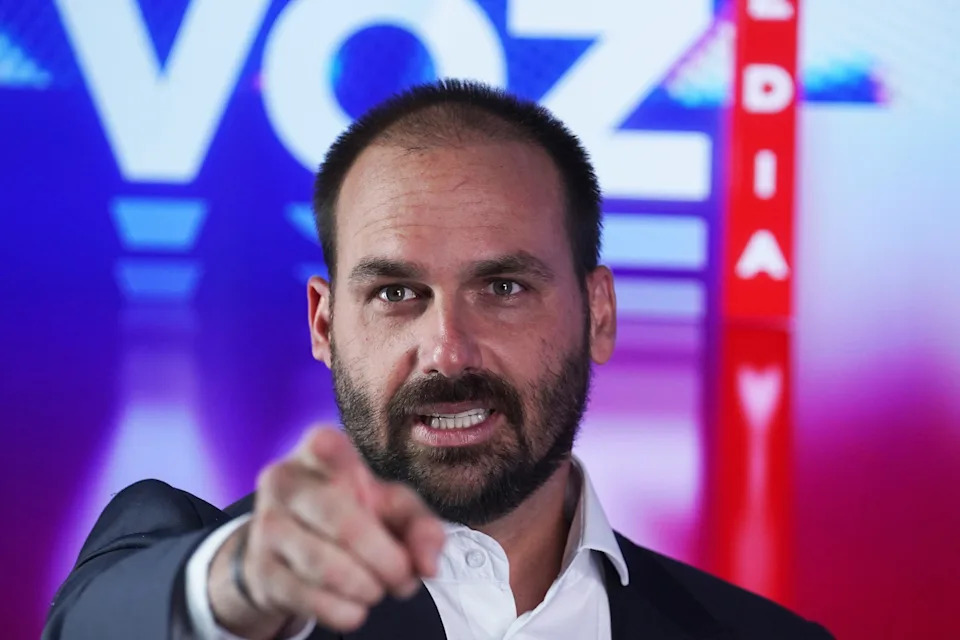
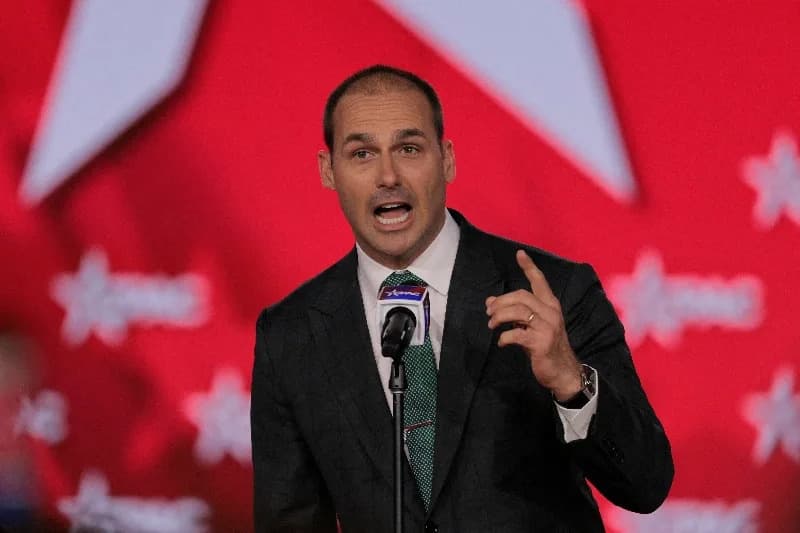
FILE - Eduardo Bolsonaro, a Brazilian lawmaker and son of President Jair Bolsonaro, speaks at a gathering of conservatives, in Mexico City, Friday, Nov. 18, 2022. (AP Photo/Marco Ugarte, File)(AP Photo/Marco Ugarte)
Justice Alexandre de Moraes, who also presided over the case against the former president, said a federal deputy’s role “is not to lobby abroad against his own country.” De Moraes and his wife were sanctioned by the U.S. government in July last year.
“A federal lawmaker’s duty is to represent Brazilians, not to enlist foreign governments against Brazil,” the court summary of Justice de Moraes’ remarks said.
Defense lawyers for Eduardo Bolsonaro rejected the verdict, arguing there was insufficient evidence to sustain a conviction. Eduardo has lived in Texas since February 2025 and declined immediate comment following the decision.
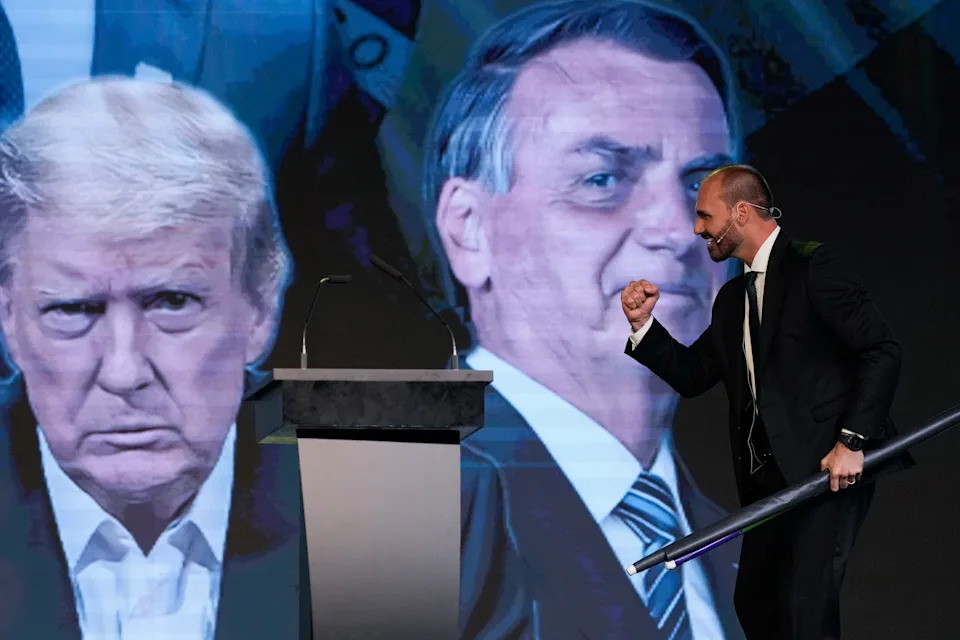
FILE - Eduardo Bolsonaro, the son of Brazil's former President Jair Bolsonaro, gestures while giving a speech during the Conservative Political Action Conference in Buenos Aires, Argentina, Dec. 4, 2024. (AP Photo/Natacha Pisarenko, File)(AP Photo/Natacha Pisarenko)
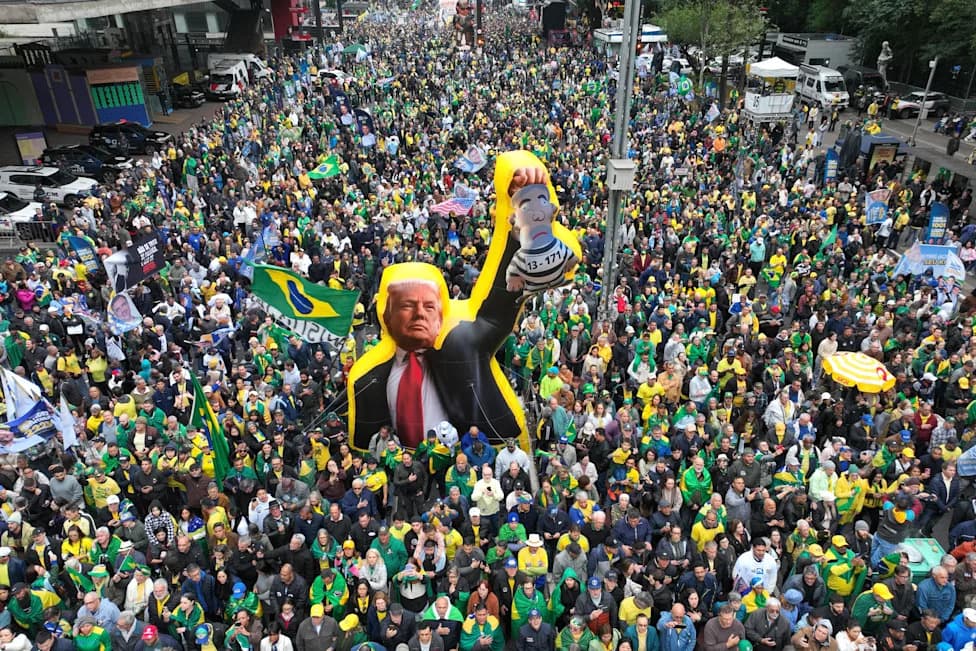
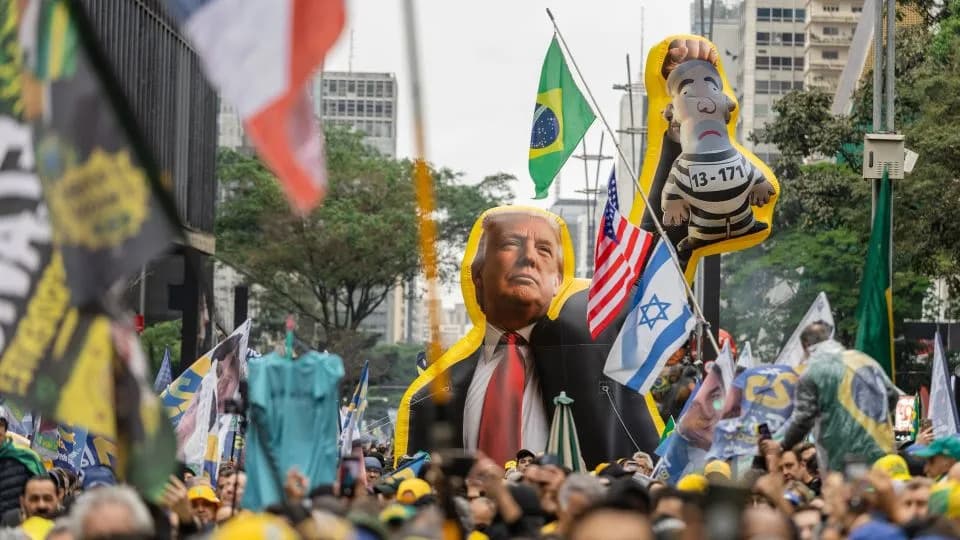
The ruling comes against a backdrop of heightened U.S.-Brazil tensions. Last year, then‑U.S. President Donald Trump imposed a 50% tariff on some Brazilian goods in protest of Jair Bolsonaro's prosecution; in June, the U.S. government also proposed a 25% tariff on imports from Brazil, citing unfair trade practices. President Luiz Inácio Lula da Silva visited the White House in early May and said he provided documents showing the United States runs a trade surplus with Brazil.
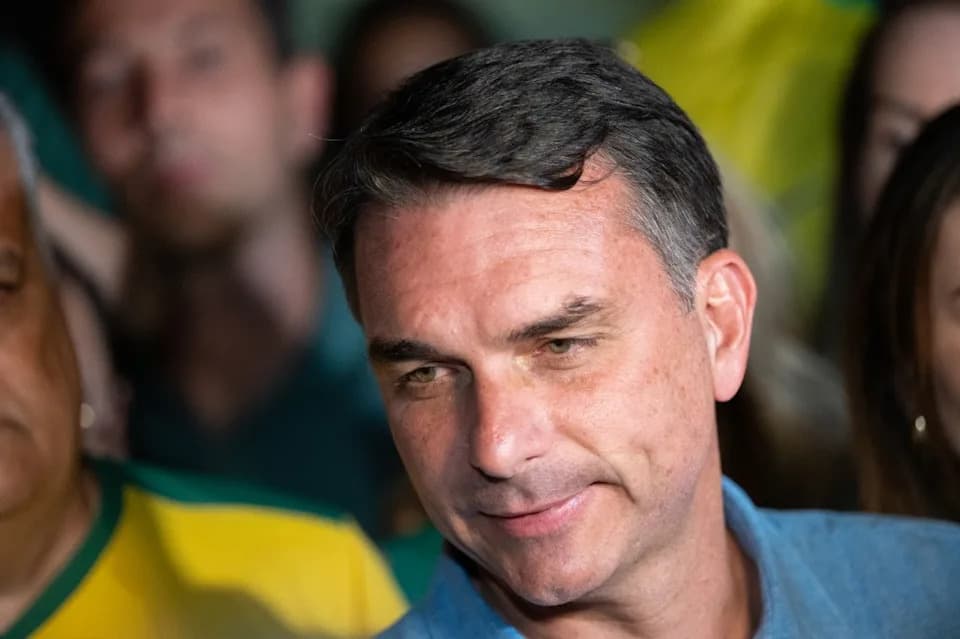
Politically, Eduardo remains active: he is campaigning for his brother, Senator Flávio Bolsonaro, who is widely expected to challenge President Lula in October’s election but has faced scrutiny over a payment linked to a disgraced banker. In recent weeks the brothers visited Washington and met with U.S. officials, including former President Trump.
What Happens Next: The conviction may prompt appeals and could affect Eduardo Bolsonaro’s political activities and travel. Legal experts expect his defense team to appeal to higher courts and possibly request urgent measures while the appeals proceed.
Help us improve.