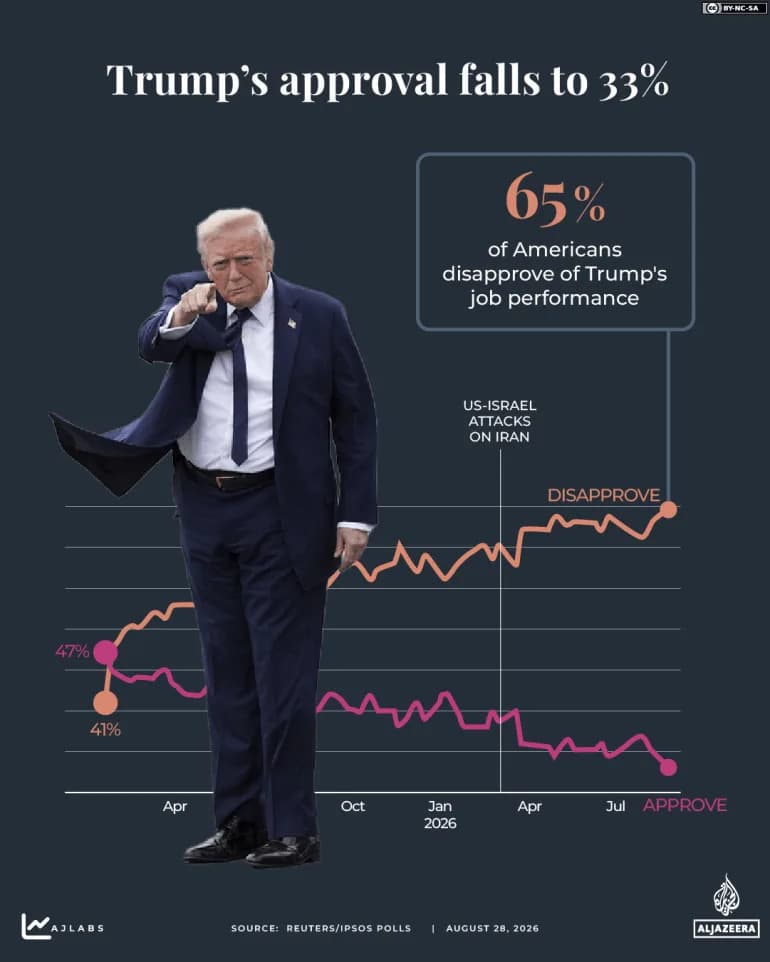
After about three and a half months of fighting, the US negotiated a temporary deal with Iran that appears to have been reached with little Israeli input. Tehran remains intact and may hold increased leverage—especially via the Strait of Hormuz—while Israel faces political backlash from across the spectrum. Analysts warn the agreement complicates Israel’s campaign in Lebanon, raises doubts about Iran’s future nuclear stockpiles, and weakens Prime Minister Benjamin Netanyahu’s standing ahead of elections.
US-Brokered Iran Deal Sidelines Israel — Netanyahu Faces Political Fallout
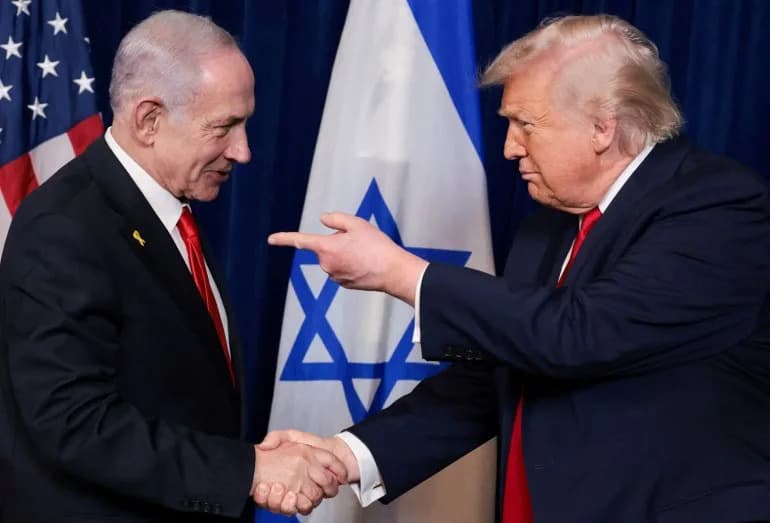
US President Donald Trump points his finger towards Israeli Prime Minister Benjamin Netanyahu as they shake hands during a press conference after meeting at Trump’s Mar-a-Lago club in Palm Beach, Florida in the US [File: Jonathan Ernst/Reuters]
The front-page headline in Haaretz on Tuesday captured a widespread feeling in Israel: “The Iran Fiasco Is Netanyahu’s Biggest Failure Since October 7.” After roughly three and a half months of uneven fighting with Iran, the United States has negotiated a temporary agreement that appears to have been reached with minimal Israeli input.
Despite decades in which many Israeli leaders portrayed Tehran as an existential threat, the Iranian state remains intact and, through its influence over the Strait of Hormuz, arguably holds greater strategic and economic leverage than before the conflict began.
Domestic Backlash and Political Fallout
Political criticism in Israel has come from across the spectrum. Centrist challenger Gadi Eisenkot condemned what he called “the dismal outcome of a failed government,” highlighting the gap between Prime Minister Benjamin Netanyahu’s promises of total victory and the apparent terms of the US-Iran outline. On the far right, National Security Minister Itamar Ben-Gvir and Finance Minister Bezalel Smotrich have rejected the deal as unacceptable, with both ministers using sharp rhetoric that may reflect upcoming electoral calculations.
Netanyahu’s Defense and Critics’ Rebuke
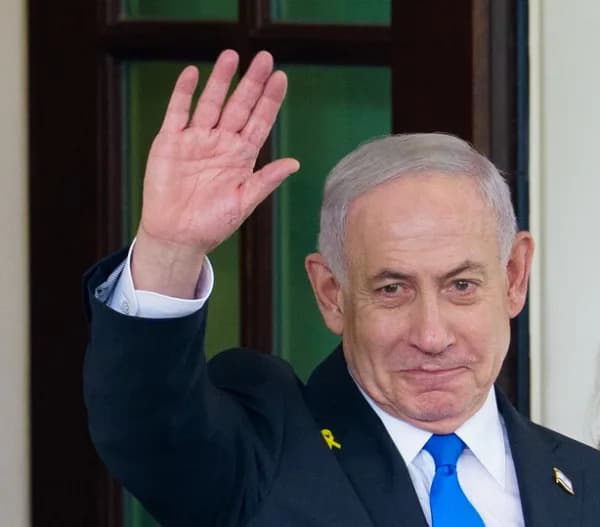
Netanyahu, who long advocated military pressure on Iran, has tried to distance himself from what he called “Trump’s decision” to end active hostilities while asserting he was a partner in the campaign. At a recent press conference he said:
“We removed, for years to come, this danger hanging over us of the elimination of Israel’s population. That is what we did. We saved the State of Israel from annihilation.”
Many analysts and former officials dispute that characterization. Former adviser Daniel Levy told Al Jazeera that Israeli expectations assumed American intervention would crush Iran — an outcome that has not materialized. Levy argued these assumptions reflected misplaced hubris about Israel’s regional influence.
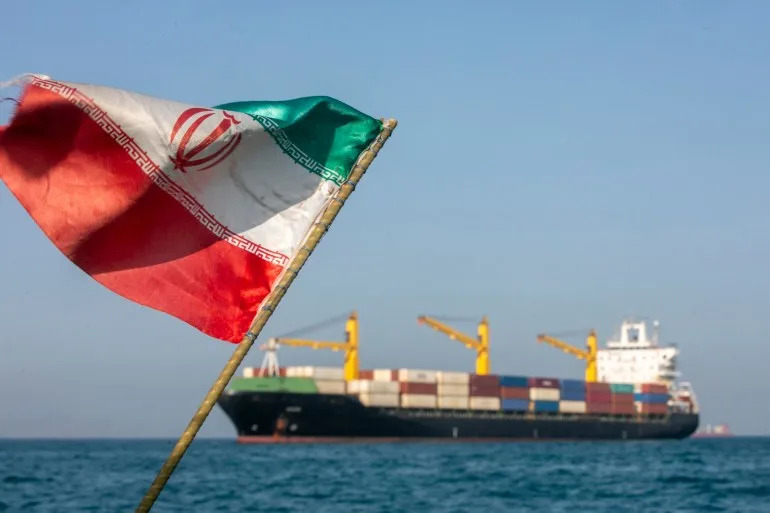
An Iranian flag flutters in the wind as ships remain anchored on May 16, 2026 in the Strait of Hormuz near Larak Island, Iran [File: Majid Saeedi/Getty Images].
Strategic Consequences and Regional Dynamics
Analysts warn the deal complicates Israel’s ongoing campaign in Lebanon. Tehran has long insisted that Israeli strikes in Lebanon be halted as part of any de-escalation. Netanyahu contends the US-Iran understanding does not constrain Israel’s freedom of action in Lebanon — a stance that could hinder ceasefire efforts and aggravate tensions with Washington.
Ahron Bregman of King’s College London called the campaign a “strategic catastrophe,” arguing Iran remains intact and may rebuild and expand its capabilities, including its missile arsenal. Observers also point to the Strait of Hormuz: Iran’s ability to restrict shipping there is an economic lever that could recur in future crises.
Nuclear Questions and U.S. Commitments
US President Donald Trump has insisted Iran will not obtain nuclear weapons, but it is unclear how Washington intends to ensure Tehran surrenders enriched-uranium stockpiles after a conflict many Iranians view as a victory. Economic disruption from temporary closures of the Strait of Hormuz has intensified concerns about Tehran’s leverage and future nuclear intent.
What This Means For Netanyahu
Netanyahu remains Israel’s longest-serving prime minister and is not yet politically finished. But commentators say his reputation has been damaged: he faces voter scrutiny over October 7, setbacks in Lebanon, and what some call a calamitous war against Iran. Alon Pinkas, a former ambassador, said Netanyahu “was given the opportunity of a lifetime and squandered it,” arguing that the prime minister failed to translate apparent advantages into a lasting strategic success.
The short-term consequences include strained Israel–US relations over Lebanon policy, renewed regional instability, and domestic political vulnerability for Netanyahu as elections approach.
Help us improve.