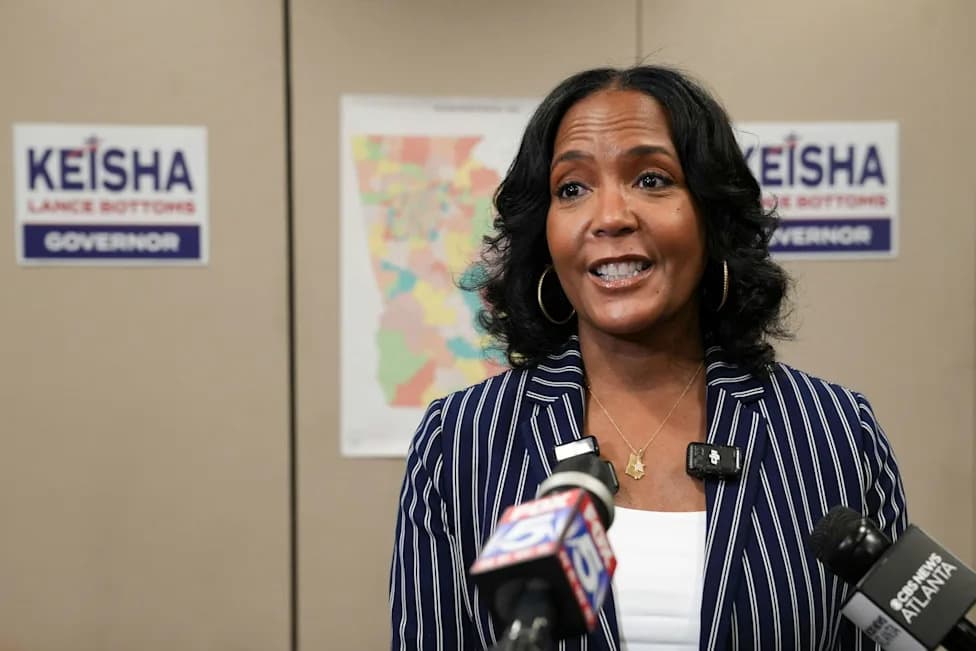
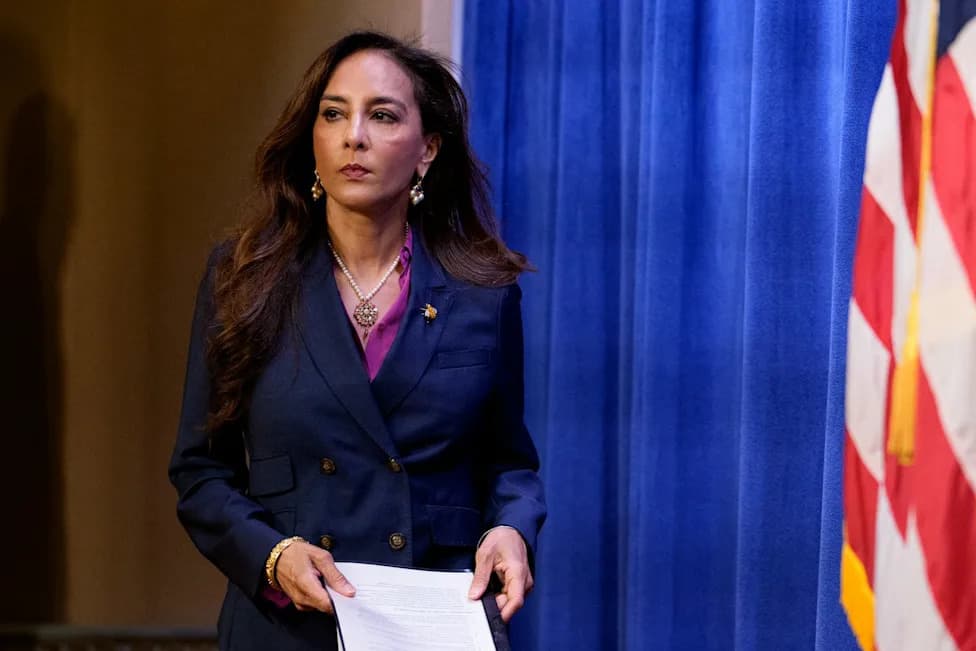
The winner of D.C.’s Democratic mayoral primary will effectively lead a school system serving nearly 100,000 students. The contest pits Kenyan McDuffie, who favors continuity with mayoral control and accountability systems like IMPACT, against Janeese Lewis George, who proposes greater autonomy for education leaders and would eliminate IMPACT. Although D.C. posted major learning gains and a rapid post-COVID recovery, the district now faces declining enrollment, chronic absenteeism affecting nearly 40% of students, high teacher turnover and a projected $1 billion budget shortfall that will shape the next administration’s decisions.
D.C. Schools at a Crossroads: Mayoral Race Forces a Choice Between Continuity and Change
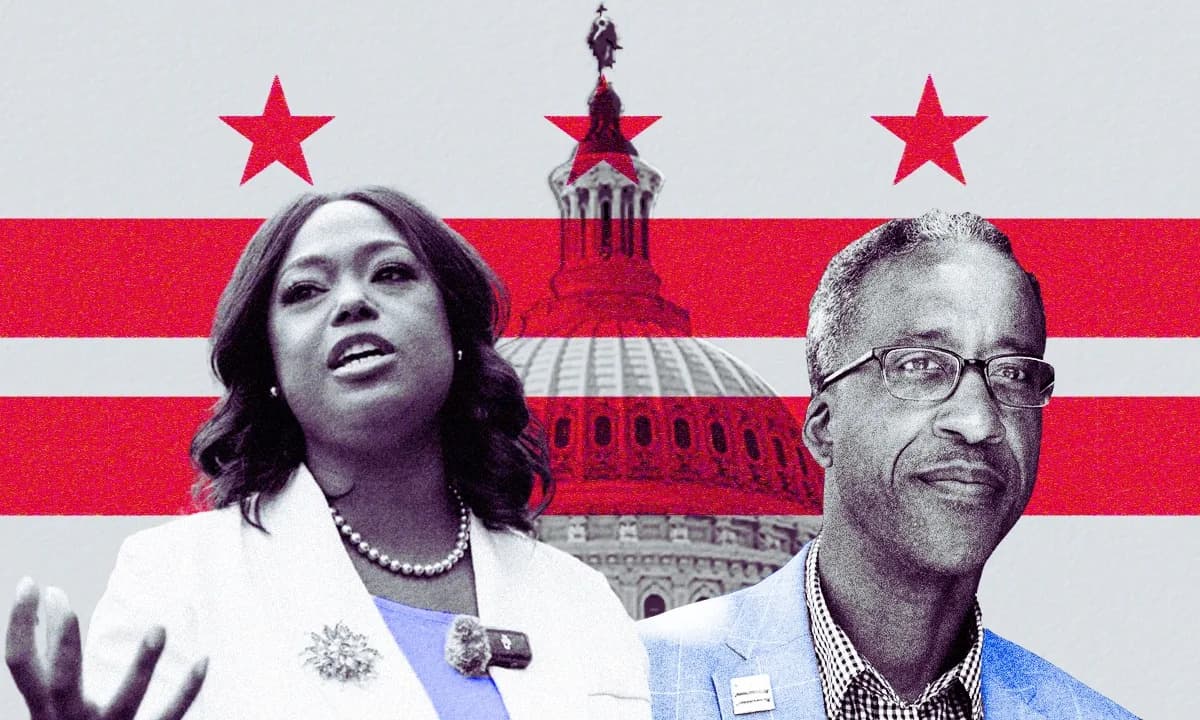
The winner of Tuesday’s Democratic mayoral primary will effectively lead a school system that serves nearly 100,000 students — a result of the city’s overwhelming Democratic registration and the likely path to City Hall this fall. But while the next mayor gains de facto control over public education in Washington, D.C., the system they inherit faces a complex mix of recent academic gains and mounting structural challenges.
Demographics and Dollars: After two decades of growth that drew tens of thousands of young families to the city, enrollment has begun to decline amid federal job cuts, pandemic-driven departures from the urban core and falling birth rates. The drop in student rolls comes as the school system confronts a projected roughly $1 billion budget shortfall and the prospect of tightened spending on capital projects, programs and pay incentives.
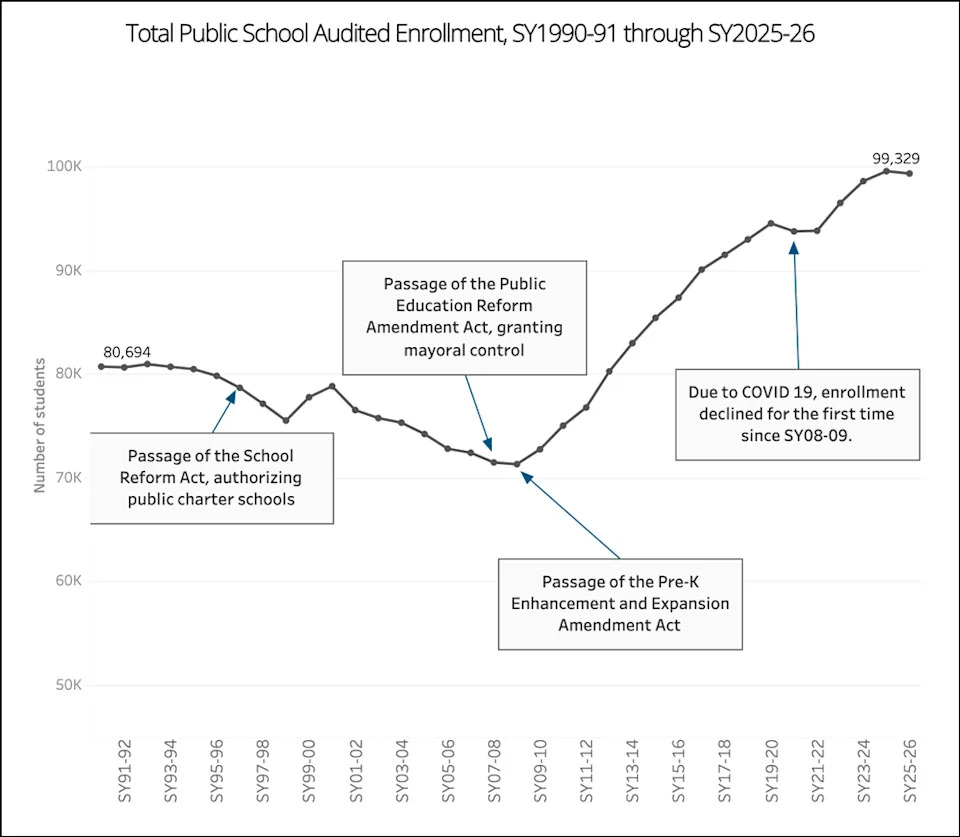
Source: OSSE Audited Enrollment
Learning and Attendance: D.C. posted unusually strong student achievement gains from 2003–2019, and local testing shows a robust post-pandemic recovery: the Education Scorecard found DCPS had the fastest academic rebound of any major city from 2022–2025. Still, the recovery is tempered by a troubling attendance crisis: nearly 40% of students miss at least one-tenth of the school year, which threatens learning recovery and long-term outcomes.
The Political Choice: The two leading candidates present sharply different visions. Attorney Kenyan McDuffie favors continuity with the mayoral-control model and accountability systems such as IMPACT, arguing those policies helped drive the district’s progress. Councilmember Janeese Lewis George — a self-described democratic socialist — proposes greater autonomy for education leaders, would eliminate the IMPACT evaluation framework and has championed expansive family supports like subsidized childcare. The Washington Teachers Union has endorsed Lewis George, saying she would produce more collaborative relations with educators.

Michelle Rhee, Washington’s outspoken former schools chancellor, established the IMPACT system of teacher evaluations in 2009. (Getty Images)
History of Reform: The modern reform era in D.C. began in 2007 under Mayor Adrian Fenty, who centralized school governance and empowered an energetic schools chancellor, Michelle Rhee. Rhee’s IMPACT teacher-evaluation system tied ratings in part to student test scores, produced pay incentives for top performers and led to hundreds of staffing changes. The reforms generated national attention and local controversy — and over time were followed by measurable gains on the National Assessment of Educational Progress and other measures.
Criticism and Complications: Critics — led by the Washington Teachers Union — blame high annual teacher turnover in some years (exceeding 20%) on IMPACT’s perceived emphasis on test-based measures and job insecurity. IMPACT has been refined since its rollout; early calculation errors in 2013 affected bonus payments and led to at least one wrongful termination, and DCPS recently commissioned a review to examine potential bias. Supporters say the evaluation data undergirds pay-for-performance, career ladders and other workforce improvements, while opponents say the system undermines teacher morale and narrows instruction.
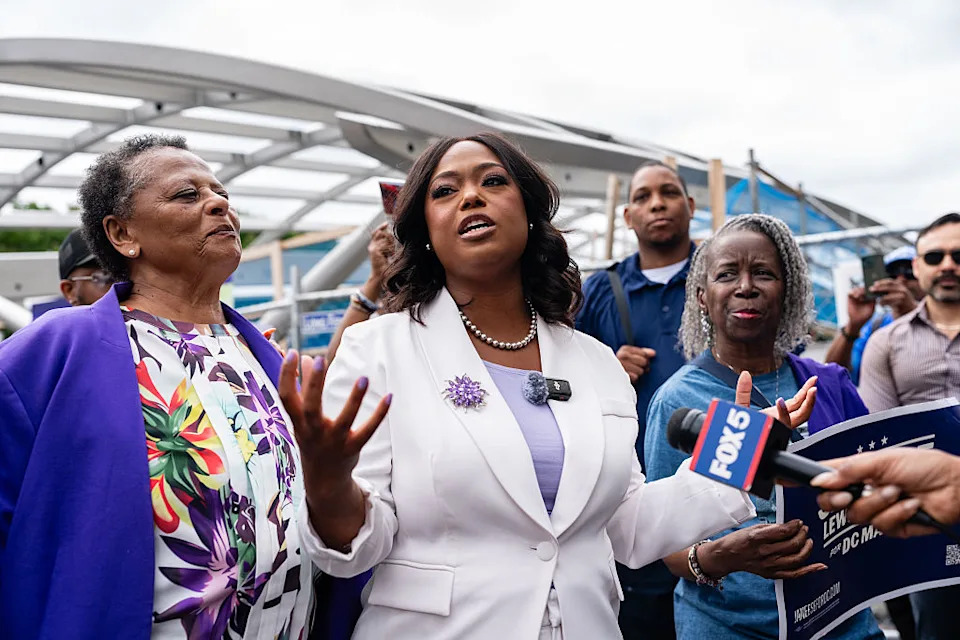
City Councillor Janeese Lewis George won the endorsement of the Washington Teachers Union, in part, by pledging to overhaul how educators are evaluated. (Getty Images)
What’s Next: Whichever candidate becomes mayor will face immediate operational tasks — including appointing a new chancellor after Lewis Ferebee’s resignation — and longer-term fiscal pressure on roughly $2 billion in annual education spending. Policy shifts, from changing governance structures to abandoning or overhauling teacher evaluation, would have substantial consequences for staffing, accountability and program funding.
“It is one of the most important reform success stories in the country,” said Thomas Toch of Georgetown’s FutureEd, warning that abandoning the district’s core accountability systems would risk losing hard-won gains. Yet others argue reforms must be balanced with stronger supports for teachers and families.
The next mayor must balance maintaining successful elements of the reform era with addressing equity, attendance and fiscal sustainability — a difficult political and administrative task that will define D.C. education for years to come.
Help us improve.