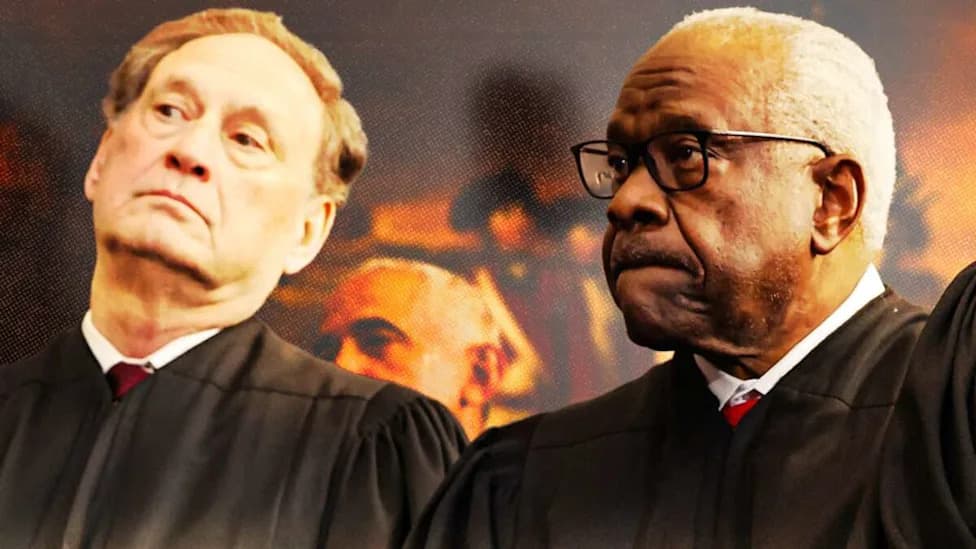
The Supreme Court will soon decide whether presidents can remove independent-agency leaders "at will" in Trump v. Slaughter, a case sparked by the asserted removal of FTC commissioner Rebecca Slaughter despite statutory "for cause" protections. A likely majority may rely on Justice Antonin Scalia’s 1988 dissent in Morrison v. Olson, which endorses a strong "unitary executive" view. If the Court sides with the president, the ruling could significantly expand presidential control over independent agencies.
How Scalia’s 'Unitary Executive' Could Decide Trump v. Slaughter — And What It Means For Agency Power
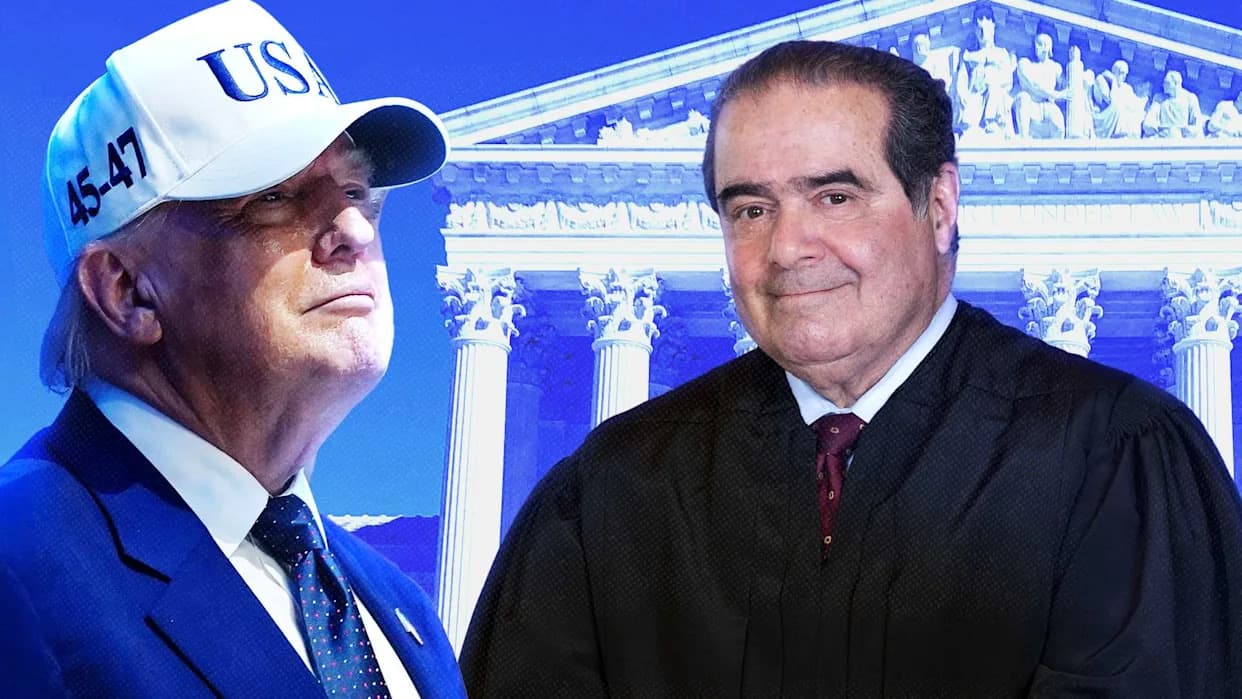
Trump, Scalia, and the Unitary Executive
Sometime in the next two or three weeks, the U.S. Supreme Court will issue a decision that could reshape the president's control over independent federal agencies. At issue in Trump v. Slaughter is whether the president may remove independent-agency leaders "at will" or remains bound by statutory "for cause" protections that now limit such removals.
What The Case Involves
The case centers on President Trump’s asserted removal of Rebecca Slaughter, a commissioner of the Federal Trade Commission (FTC). The Federal Trade Commission Act states that commissioners "may only be removed by the President for inefficiency, neglect of duty, or malfeasance in office." The question for the Court is whether that statutory restriction unconstitutionally infringes on the president’s executive authority.
Why Morrison v. Olson Matters
Many observers expect a majority of current justices to find the statute an unlawful limit on executive power. If so, the Court is likely to lean on the late Justice Antonin Scalia's lone dissent in Morrison v. Olson (1988). Scalia argued that the Constitution vests executive power exclusively in the president and wrote that this means not "some of the executive power, but all of the executive power."
"The Constitution placed the executive power in the hands of the president alone...this does not mean some of the executive power, but all of the executive power." — Justice Antonin Scalia, Morrison v. Olson (dissent)
Recent Precedents And Stakes
Scalia’s unitary-executive argument has gained traction in subsequent conservative decisions. In Seila Law v. Consumer Financial Protection Bureau (2018), the Court struck down the CFPB’s single-director structure as inconsistent with presidential control. Justice Clarence Thomas, joined by Justice Neil Gorsuch, cited Scalia’s Morrison dissent in urging even broader limits on congressional constraints of executive power. The Trump administration’s principal brief in Slaughter also repeatedly invokes Scalia’s opinion.
The practical stakes are large: a ruling for the president could weaken statutory protections for independent agencies across the government, strengthening presidential control over regulatory and enforcement officials. Conversely, upholding the "for cause" removal standard would preserve a measure of independence for agencies intended to operate apart from immediate political direction.
Bottom Line
Whichever way the Court rules, expect Scalia’s nearly 40-year-old dissent to feature prominently if the majority favours expanding removal power. The decision could realign the balance between presidential authority and agency independence for years to come.
Help us improve.