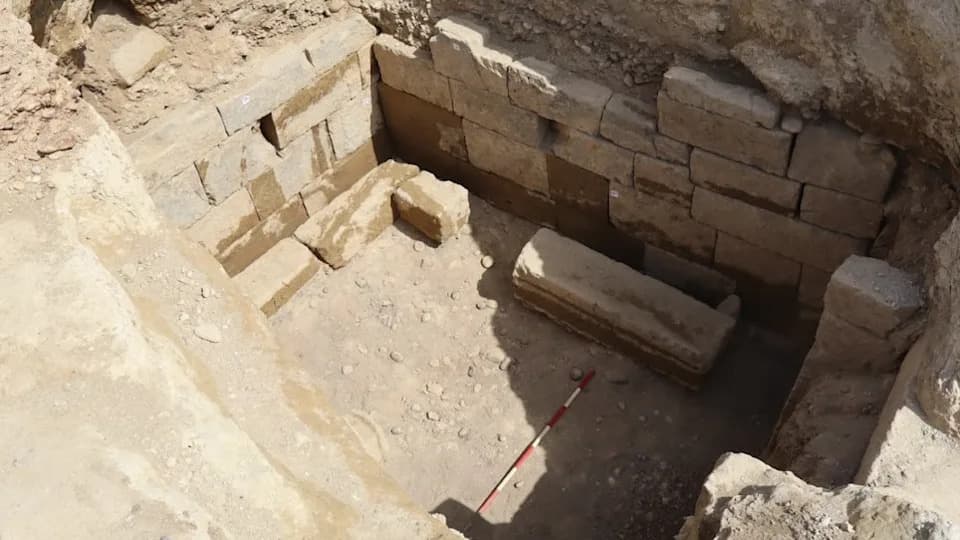
Archaeologists excavating near Bad Camberg, Hesse, have uncovered a richly furnished late Iron Age burial of a Celtic warrior dated to about 2,400 years ago. The grave contained fragments of a two‑wheeled chariot, weapons, gold jewellery and a bronze jug traced to present‑day Italy, indicating high social status and long‑distance contacts. The rare chariot burial has parallels with other central European 'princely' tombs—most notably the Prince of Glauberg—and promises new insight into elite craft, trade and burial practices.
2,400-Year-Old Celtic 'Princely' Grave With Chariot, Weapons and Gold Unearthed Near Bad Camberg
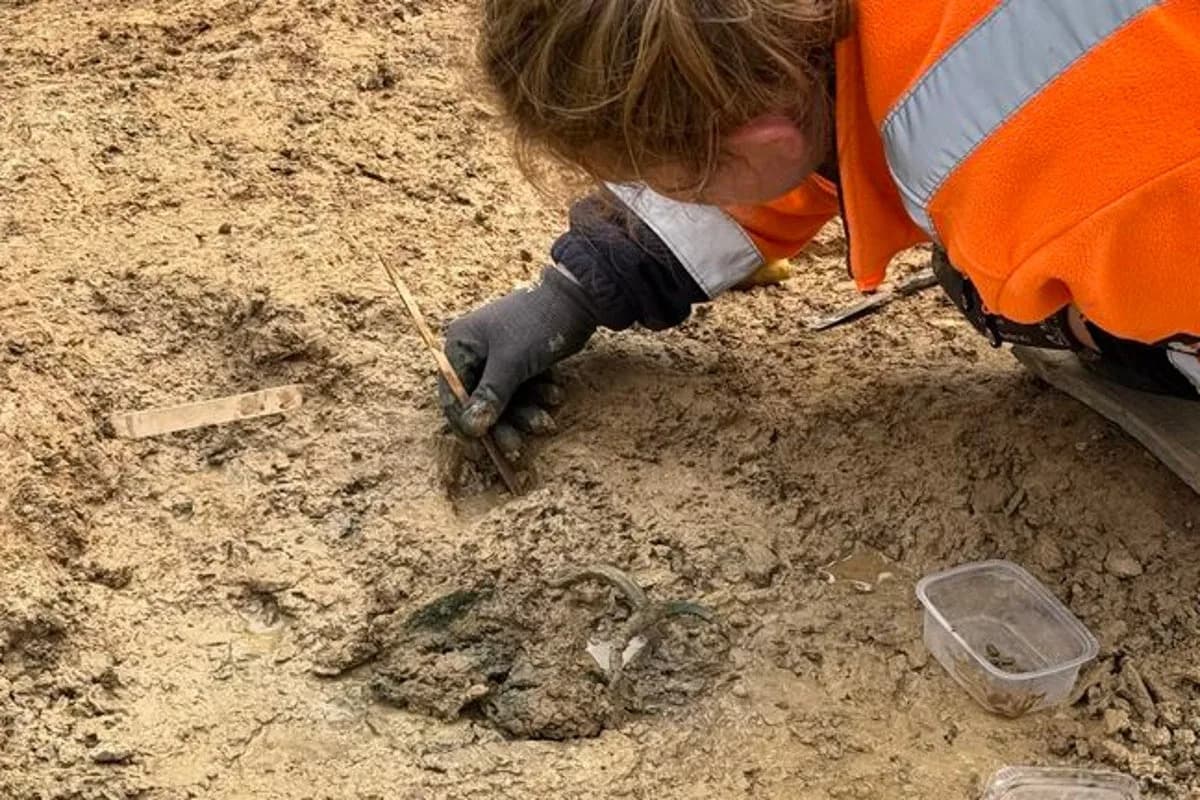
Iron Age Celtic chariot, weapons and gold unearthed at ‘princely grave’ in Germany
Archaeologists have uncovered a richly furnished Iron Age burial near Bad Camberg, Hesse, revealing the remains of a Celtic warrior dated to roughly 2,400 years ago (around 400 BCE). The grave contained fragments of a two‑wheeled chariot, weapons, gold jewelry and a bronze jug traced to present‑day Italy—evidence of wealth and long‑distance connections in the region.
Discovery and Context
The finds were made during groundwork for a solar park and followed an initial geophysical survey that suggested a significant subsurface feature. Excavations by the Limburg‑Weilburg district team confirmed a so‑called 'princely' burial, a rare and high‑status interment in the Iron Age landscape of Hesse.
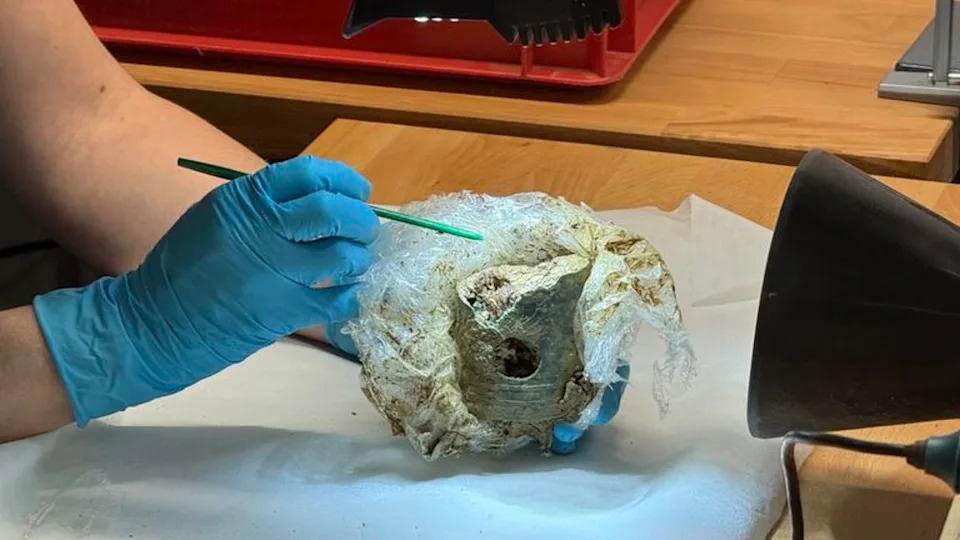
Remains found at Iron Age archaeological site in Germany (Hessian Ministry of Science and Research, Art and Culture NEWS)
'Even after the geophysical survey of the planned area, we speculated about the possible presence of a Celtic elite grave,' said district archaeologist Kai Mückenberger. 'However, nobody expected that we would ultimately find not only a princely grave, but even a chariot burial.'
What Was Found
Archaeologists documented structural fragments from a two‑wheeled chariot, including hub fittings, axle cap fittings made of non‑ferrous metal, and iron wheel tyre fittings—clear indicators of a vehicle burial. In addition, they recovered weapons, gold jewellery and a bronze jug whose composition and style link it to artisans in present‑day Italy.
Significance
Wagon and chariot burials are uncommon in Hesse and, according to the excavation team, none of the previously discovered regional examples match the quality of this find. Because of its richness and date, researchers draw comparisons with other central European Celtic princely tombs, notably the Prince of Glauberg, suggesting a local elite with wide cultural and trade connections.

Gold jewellery unearthed at Iron Age archaeological site in Germany (Hessian Ministry of Science and Research, Art and Culture)
Next Steps
Excavation continues in adjacent parts of the grave to recover further objects and contextual evidence. Conservators and specialists will analyze the materials, craft techniques and provenance of the goods to refine dating and better understand social status, trade links and burial customs in the late Iron Age.
Location: Near Bad Camberg, Limburg‑Weilburg district, Hesse, Germany.
Date: Approximately 2,400 years ago (late Iron Age, ~400 BCE).
Key Finds: Two‑wheeled chariot fragments, weapons, gold jewellery, bronze jug from Italy.
Help us improve.