The Atacama Desert’s hyperarid core may have persisted since the Mid‑ to Late‑Eocene — more than 40 million years ago — far earlier than prior estimates of 15–20 million years. Researchers measured cosmogenic neon and beryllium in quartz pebbles and found about 24% of samples show much older surface exposure ages, some approaching ~45 million years. The study implies global cooling after the Early Eocene Climate Optimum initiated long‑term drying, with later Andean uplift intensifying the aridity. These findings affect paleoclimate models and our understanding of how extreme dryness shaped regional evolution.
New Study: Atacama’s Hyperarid Core Was Dry More Than 40 Million Years Ago — Long Before The Andes
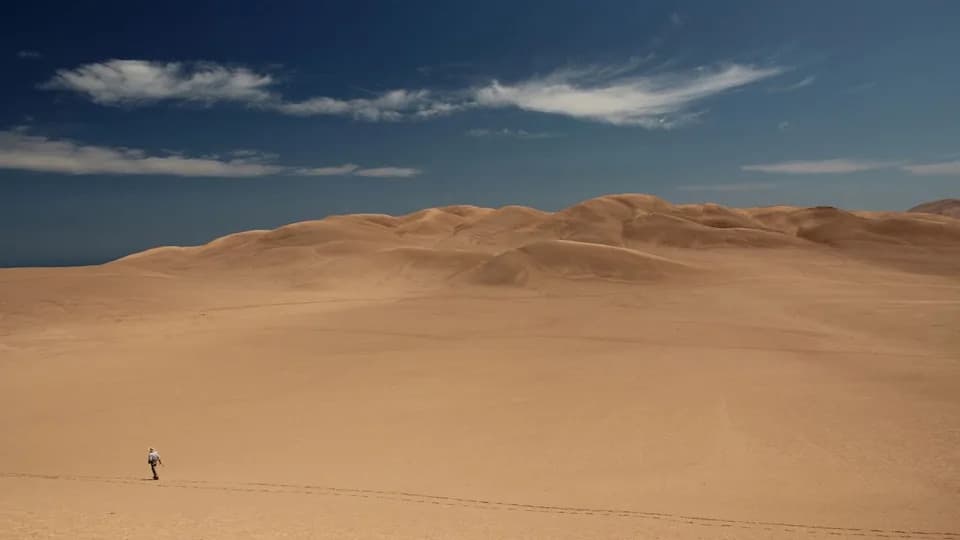
It was long thought the Atacama Desert formed at the same time as the Andes, but a new study finds that's not the case. | Credit: B. Ritter-Prinz
New research suggests the hyperarid core of Chile’s Atacama Desert formed far earlier than previously thought — more than 40 million years ago, well before the Andes rose to their present heights.
Evidence for an Ancient Desert
The study, published May 20 in Nature Communications, finds that extremely low surface activity in the desert’s center dates back to the Mid– to Late‑Eocene (about 47.8–33.9 million years ago). That timing pushes the onset of continuous hyperaridity in the Atacama back by some 20 million years compared with earlier estimates.
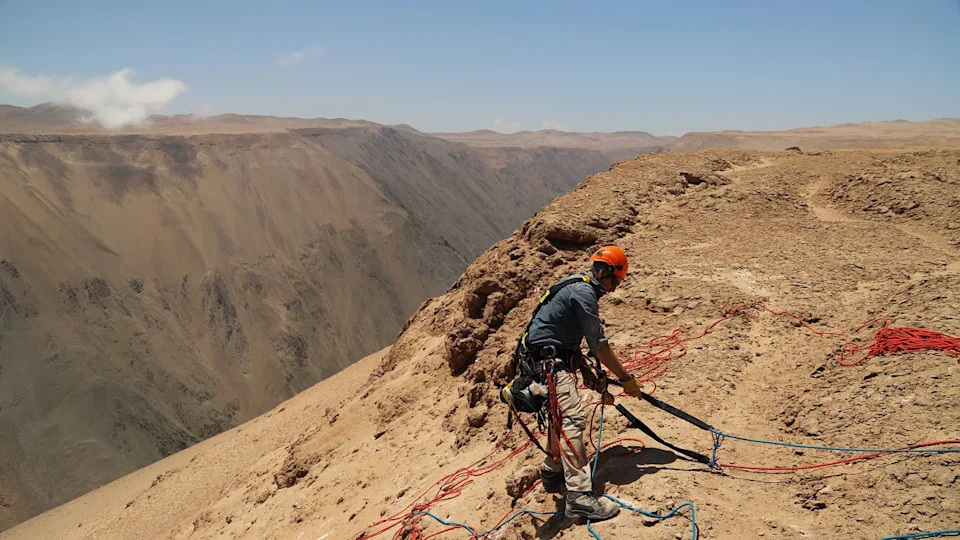
The researchers collected quartz pebbles, which resist weathering and wind erosion, from different locations in the Atacama Desert. | Credit: B. Ritter-Prinz
How the Researchers Reached This Conclusion
To estimate how long surface features have remained unchanged, the team collected quartz pebbles from multiple sites across the desert’s hyperarid core. Quartz resists weathering and wind abrasion, so pebbles can record long exposure histories. Retrieving samples required driving through deep, powdery gypsum dust that can reach nearly 2 meters (about 6.5 feet) deep and trap vehicles.
In the lab, researchers measured concentrations of cosmogenic isotopes of neon and beryllium produced when cosmic rays strike surface materials. These cosmogenic nuclides accumulate at known rates and are widely used to date how long rocks and sediments have been exposed at Earth’s surface.
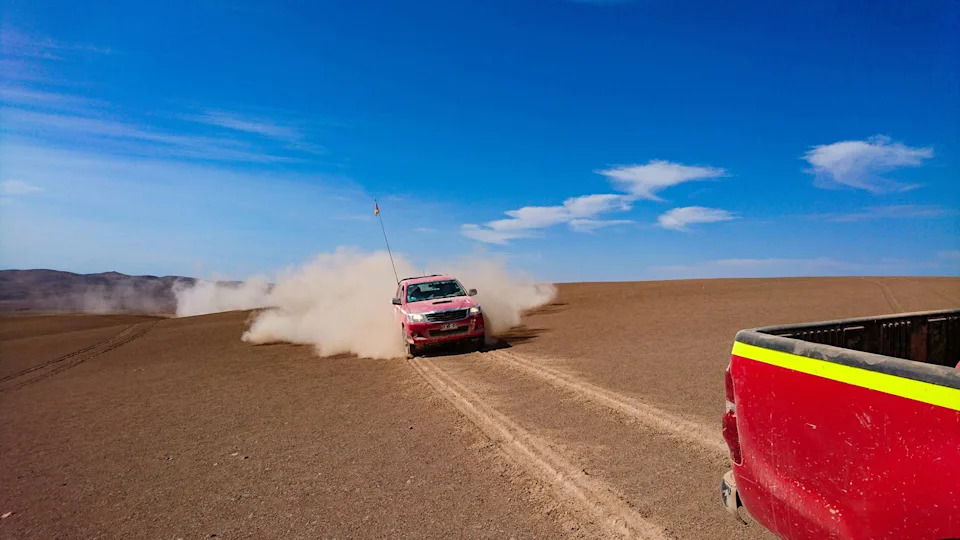
The new research suggests the Atacama Desert's core formed more than 40 million years ago, before the Andes Mountains took shape. | Credit: B. Ritter-Prinz
About 24% of the analyzed pebbles contained higher-than-expected cosmogenic nuclide concentrations, indicating they have been exposed at the surface for much longer than prior estimates. Some exposure ages approach ~45 million years, implying that hyperarid conditions were already in place during the Late Eocene.
What This Means For Climate And Evolution
Previously, scientists linked the emergence of the Atacama’s driest core to Andean uplift and the strengthening of cold Pacific currents during the Miocene (roughly 20–15 million years ago). The new findings suggest global cooling after the Early Eocene Climate Optimum (about 54–49 million years ago) may have initiated long‑term drying, with Andean uplift later amplifying the aridity rather than causing it outright.
“This makes it the longest continuously dry region on Earth and forces us to reconsider how and when such extreme environments develop,” said study co‑author Benedikt Ritter‑Prinz of the University of Cologne.
The results matter beyond geology: prolonged hyperaridity alters migration routes and habitats, which can isolate populations and drive evolutionary divergence. Future climate modeling and wider sampling will help clarify the mechanisms behind sustained aridity and its biological consequences.
At a Glance
- The Atacama covers up to about 50,000 square miles (130,000 square kilometers) in northern Chile and typically receives under 0.2 inches (5 mm) of rain per year in its central zone.
- Powdery gypsum soil that accumulates under hyperarid conditions helps preserve ancient surfaces by absorbing rare precipitation and minimizing erosion.
- Findings suggest the desert’s core is older than previously thought and highlight the role of global climate change as well as regional tectonics in creating extreme deserts.
Help us improve.