Investigation Links GPS Outages To Russian Satellites: Researchers analyzing historic GPS monitoring data identified 75 days of brief, targeted signal drops at 1,577.5 MHz across Europe. Using timing, visibility and power estimates, the team implicates the Russian satellite Cosmos 2546 and the EKS early-warning network, though the findings—posted on arXiv—are not yet peer-reviewed. Incidents clustered during business hours, suggesting deliberate testing; the EU has opened a classified inquiry.
Researchers Trace Years of Europewide GPS Outages to Suspected Russian Satellite Interference

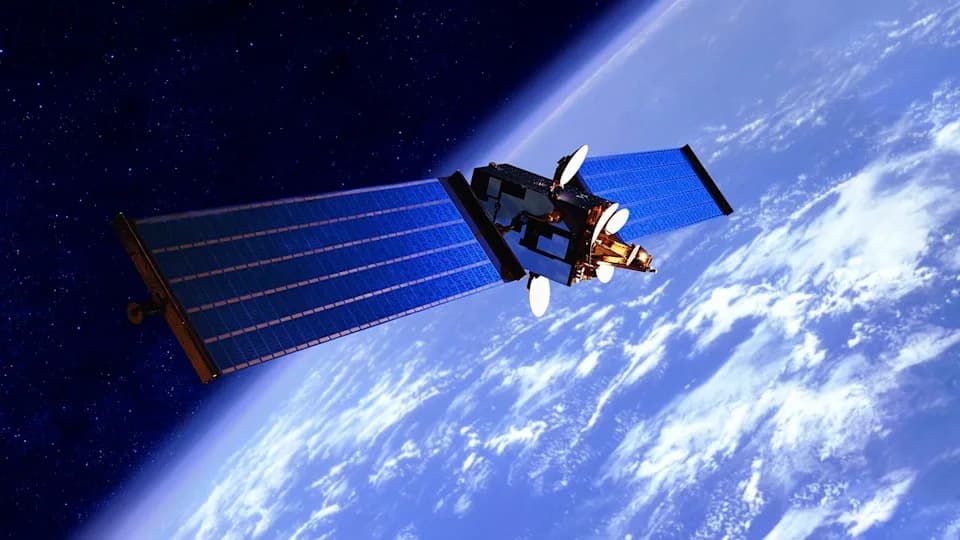
Scientists investigate GPS signal drops across Europe, tracing possible interference back to satellites in orbit. | ©Image Credit: Zelch Csaba / Pexels
For years drivers, pilots and mariners across Europe have reported sudden, unexplained GPS outages. A recent investigation led by Todd Humphreys, an aerospace engineering professor at the University of Texas at Austin, traces dozens of short, precise signal disruptions to a likely space-based source — and points to a Russian satellite network as a probable culprit.
How the Mystery Unfolded
The probe began after an anonymous tip in November 2024 urged Humphreys to examine publicly available logs from global GPS monitoring stations for select dates in 2021. At first glance the archived data — which continuously records GPS signal strength versus background radio noise — seemed unlikely to hide a major anomaly. But analysis by Humphreys and his students revealed a repeating pattern: very brief, sharp drops in signal strength that occurred at the exact same frequency across many stations.
“This effect was being felt all the way across Europe, all the way to the north, to Svalbard, to the south, to Spain, all the way to Canada in the west, as far east as eastern Poland,”
— Todd Humphreys, University of Texas at Austin
Key Technical Findings
The team identified 75 separate days when abrupt signal losses propagated across large parts of Europe. The events shared several striking characteristics:
- Each interruption lasted under 10 seconds and was narrowly centered on 1,577.5 MHz, the frequency used by civilian GPS receivers.
- Incidents were clustered during business days and business hours (UTC), especially on Tuesdays, Wednesdays and Thursdays, suggesting human scheduling rather than random natural causes.
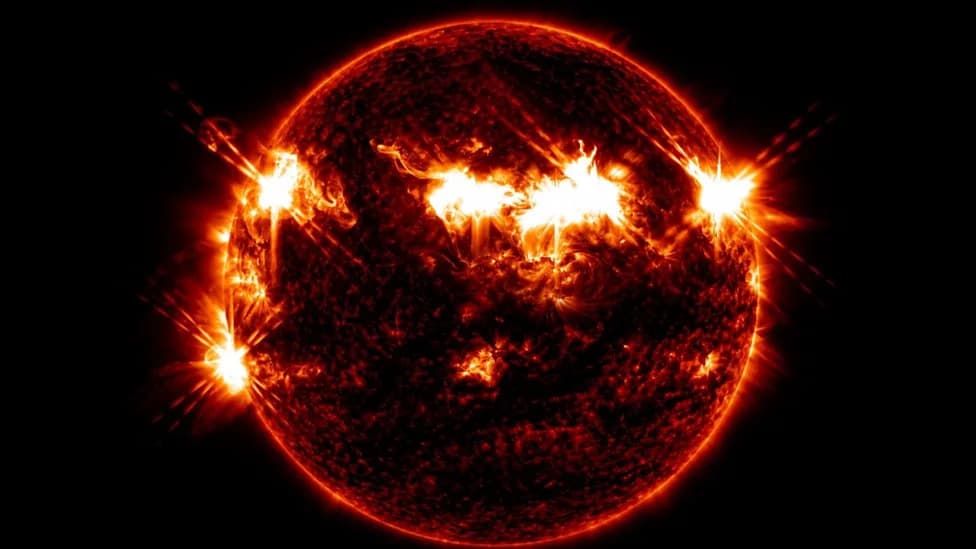
- The scale and simultaneous effect on multiple satellites ruled out a single ground-based jammer and set the pattern apart from typical solar or space-weather interference, which is broader in frequency and timing.
Tracking a Source in Orbit
To locate a possible orbital source, the researchers combined three complementary techniques: mapping which satellites were visible to affected ground stations at the event times, estimating the transmit power required to produce the observed effects, and comparing tiny timing differences in when the interference reached separate antennas on Earth. The mathematical reconstruction pointed to a specific Russian satellite, Cosmos 2546.
Further analysis linked the activity to Russia's Edinaya Kosmicheskaya Sistema (EKS), an early-warning satellite network deployed to detect ballistic missiles. Russia began launching EKS assets in 2015; Cosmos 2546 entered orbit in 2020. The team’s paper, posted on the preprint server arXiv, proposes that EKS-related activity could explain persistent GPS degradation across Europe dating back to 2019.
Unresolved Questions and Limitations
The authors stress that their conclusions are allegations based on available data and have not yet passed formal peer review. Several puzzling details remain. For example, during a 20-minute window in 2020 the geographic center of interference appeared to migrate — moving from the Baltic Sea into Germany and then toward the Norwegian Sea — which could indicate either a single satellite steering a beam or multiple assets operating in a coordinated sequence.
Real-World Implications
Even brief, ten-second outages can have outsized consequences. From orbit, a powerful transmitter can affect navigation over entire continents — a single space-based jammer could disrupt GPS from Spain to northern Norway simultaneously. That raises safety concerns for commercial aviation and maritime shipping, where crews rely heavily on satellite navigation and must revert to backups when GPS is lost, increasing workload and risk in busy corridors.
Experts quoted by the team believe these bursts may represent clandestine hardware tests rather than deliberate wartime strikes. By operating slightly off the civilian frequency, a state actor could test capabilities covertly; shifting onto the main civilian band during a crisis could rapidly degrade critical infrastructure.
Official Response and Ongoing Work
The European Union has opened a classified inquiry into the incidents. Meanwhile, scientists continue to monitor GPS signals and refine detection methods. The episode highlights how vulnerable everyday digital systems are to interference from space and underscores the need for improved detection, attribution and international norms for satellite behavior.
Sources: IFLScience, Veritasium interview, Universe Space Tech, arXiv preprint (authors’ analysis). The paper is preliminary and subject to peer review.
Help us improve.