Japan is expanding defense cooperation with European partners amid doubts about U.S. reliability driven by Russian aggression and China’s rise. Tokyo and London described their relationship as approaching a "near-alliance," centered on cooperation on a next-generation fighter jet program. Japan is also deepening ties with Germany as both nations rebuild their forces, and the G7 summit is likely to further cement these partnerships.
Japan Deepens Defense Ties With Europe as Allies Hedge Against U.S. Uncertainty
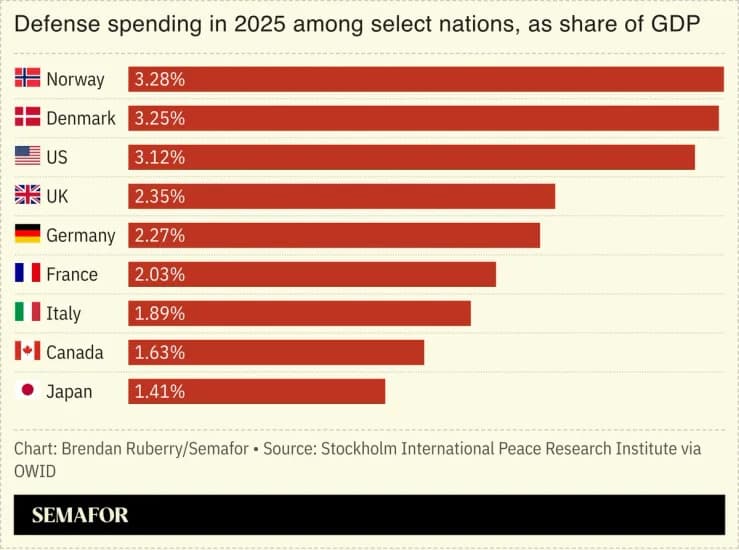
Chart showing 2025 defense spending among select nations as share of GDP
Japan is accelerating defense cooperation with several European partners as concerns grow about Washington’s long-term security commitments amid Russian aggression and China’s expanding influence.
Closer Tokyo-London Partnership
After meeting Britain’s prime minister on Sunday, Japan’s prime minister said the two countries’ relationship had reached a “near-alliance” level. The leaders highlighted renewed collaboration on a next-generation fighter jet program as a central pillar of that closer security partnership.
Strengthening Ties With Germany
Tokyo is also intensifying defense cooperation with Berlin as both capitals work to rebuild and modernize their armed forces. Officials say these moves aim to reduce dependence on an alliance with the United States that some view as increasingly unpredictable.
G7 Summit and Broader Implications
This week’s G7 summit is expected to reinforce growing Europe–Japan defense cooperation, as more countries explore diversified military partnerships beyond Washington. Policymakers cite shared concerns about regional stability, deterrence, and supply-chain resilience for critical defense technologies.
“There is this justifiable fear that the United States might sell them out,” an academic told The New York Times, reflecting wider anxieties that are driving new alignments.
What This Means: Deeper Japan–Europe defense ties could alter alliance dynamics, spur joint procurement and technology projects, and create a more networked approach to deterrence in Asia and Europe. Observers will be watching whether these partnerships lead to long-term operational cooperation or remain primarily political and industrial in scope.
Help us improve.