University of Alicante researchers have re-dated a cache of 43 helmets dredged off Benicarló, Spain: the assemblage belongs to the late 14th or early 15th century rather than to Roman times. Published in Antiquity, the collection is now the largest known group of medieval helmets recovered in the western Mediterranean and is interpreted as a single lost shipment of military gear. The find provides rare material evidence of Late Medieval arms trade and maritime networks linking the Valencia coast with northern Italian ports during a period of rising piracy and shifting military demands.
Medieval, Not Roman: 43 Helmets Dredged Off Spain Recast as Lost Late‑Medieval Arms Shipment
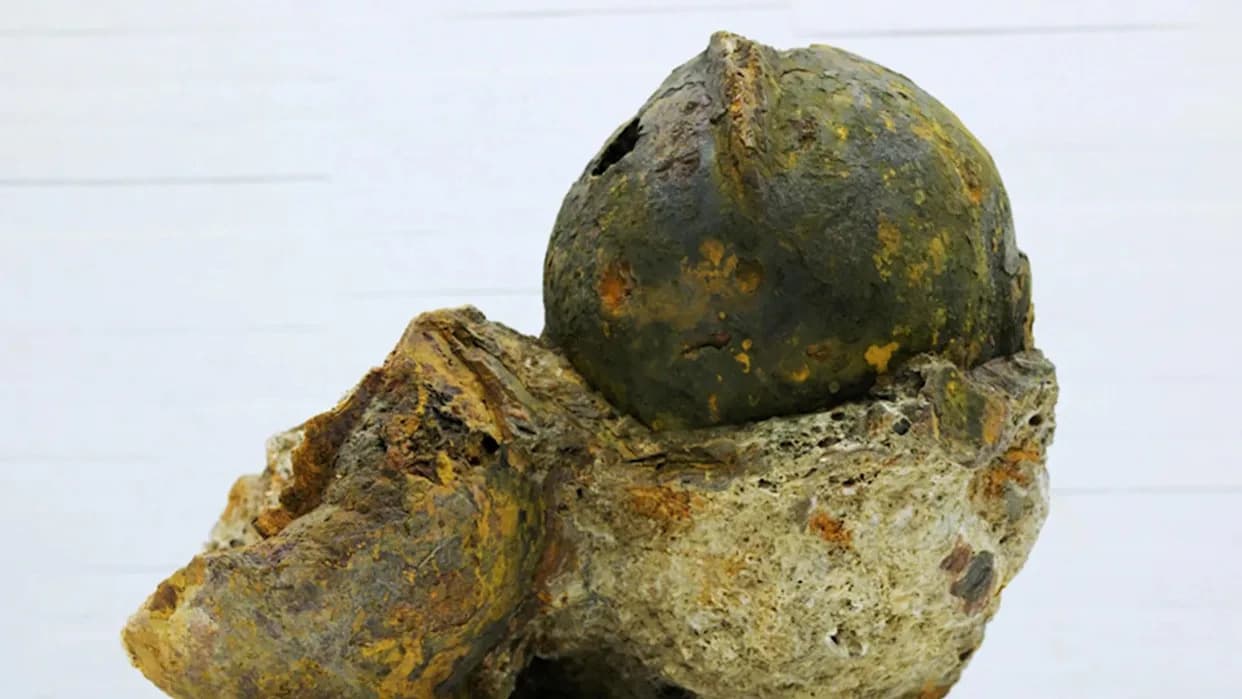
Photo Credit: University of Alicante
A long-misidentified set of helmets pulled from the seabed off Spain has been re-dated to the Late Middle Ages, overturning a decades-old assumption that the finds were Roman.
A Remarkable Reassessment
Researchers from the University of Alicante reexamined a group of 43 helmets recovered at the underwater site Piedras de la Barbada, near Benicarló on Spain's eastern coast. The items were first brought to light in 1990, when fishermen accidentally hauled up two large, heavily corroded masses of metal that had fused together over time. A new study, published in the journal Antiquity, shows the helmets belong to the late 14th or early 15th century rather than antiquity.
Why the Date Changed
Initial classification proved difficult because some features of the helmets recalled Late Roman forms while others matched medieval types that drew on classical designs. Technical and stylistic analysis led the authors to reassign the assemblage to the Late Middle Ages, roughly a millennium later than previously thought.
When I started the research, it was incredible to see that practically no known parallels existed — Manuel Frallicciardi, lead author
Implications for Trade and Warfare
The revised dating transforms the find from an archaeological curiosity into rare material evidence for arms commerce and maritime networks in the late medieval Mediterranean. The collection is now considered the largest known cache of medieval helmets recovered in the western Mediterranean. The research team argues the helmets most likely belonged to a single consignment and may have been lost while being loaded or unloaded, possibly during a period of heightened Islamic piracy and shifting regional threats.
Researchers suggest the cargo points to trade links between the Valencia coast and major northern Italian ports such as Genoa, highlighting how military equipment circulated through commercial channels. Because this transitional phase of military technology is poorly documented in the archaeological record, the find offers an unusually direct glimpse into how weapons were moved, sold and used across the Mediterranean in the Late Middle Ages.
What This Means for Archaeology
Beyond rewriting the chronology of these objects, the discovery underscores the need for careful reassessment of long-held identifications and the value of interdisciplinary technical analysis. It also reminds scholars that corroded, fused finds recovered by non-specialists can conceal important new evidence about past trade, conflict and daily life along busy medieval coastlines.
We are looking at direct evidence of large-scale arms trading — Raimon Graells, co-author
Site: Piedras de la Barbada, near Benicarló, eastern Spain
Number of Helmets: 43
Original Recovery: 1990, two fused corroded masses pulled up by fishermen
New Dating: Late 14th to early 15th century
Publication: Antiquity
Help us improve.