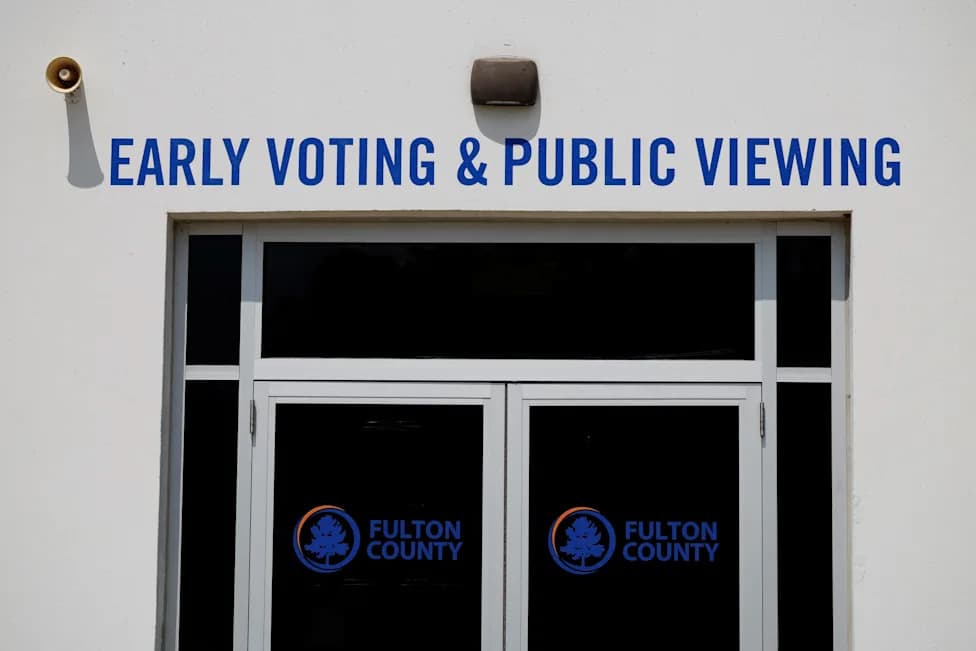
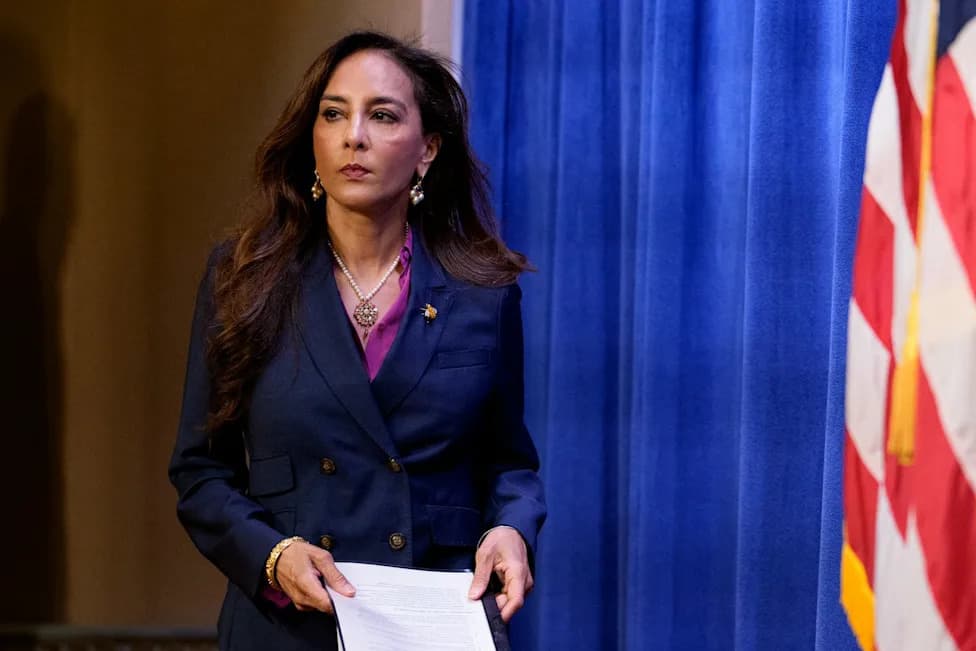
Georgia faces a looming July 1, 2026 deadline after a 2024 law banned QR-code use for official vote tabulation but left no replacement. Gov. Kemp called a special session to resolve the issue, yet the secretary of state and the State Election Board issued conflicting guidance. With a July 28 special congressional election (early voting starts July 6), counties warn confusion and legal challenges could follow unless lawmakers act quickly.
Georgia’s QR-Code Vote Tabulation Ban Looms — Lawmakers Rush To Find Fix Before July Special Election
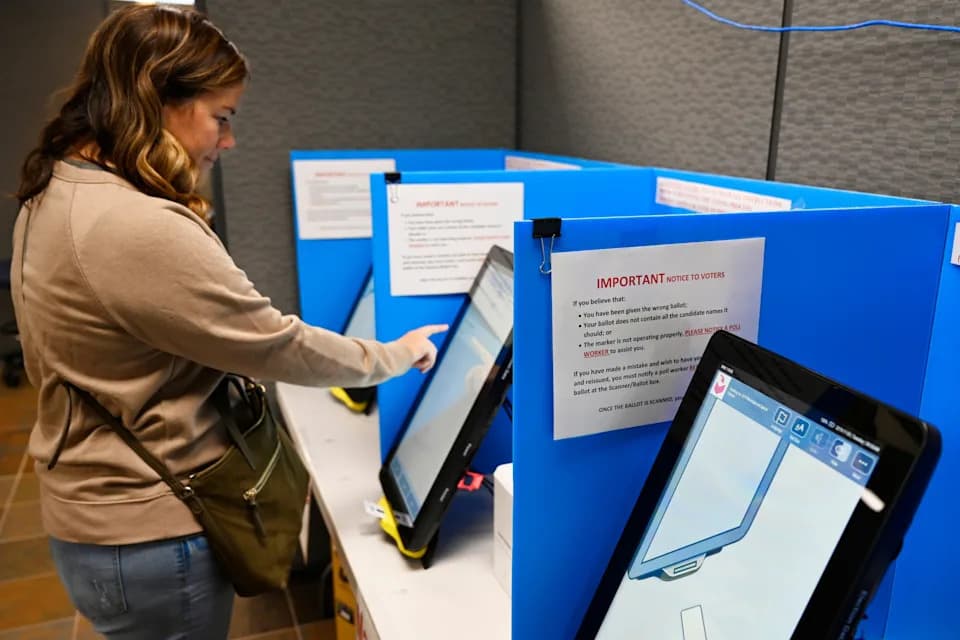
FILE- Courtney Parker votes on a new voting machine, in Dallas, Ga., Nov. 5, 2019. (AP Photo/Mike Stewart, File)(AP Photo/Mike Stewart)
ATLANTA — Georgia faces a fast-approaching deadline that could complicate elections across the state: a 2024 law bars using the QR codes printed on ballots for the official vote tabulation after July 1, 2026, but no replacement counting method has been implemented.
What’s at stake
The voting system deployed statewide in 2020 relies on touchscreen machines that print a ballot summary with a QR code. Republican lawmakers approved a law in 2024 to ban the barcode from the 'official tabulation count' starting July 1, 2026, responding to post-2020-election concerns about the machines. However, state officials and the General Assembly have not put a new system in place, leaving officials scrambling as a July 28 special congressional election approaches (early voting begins July 6).
Conflicting guidance from state agencies
Gov. Brian Kemp called a special legislative session to address the QR-code ban and redraw congressional maps. Meanwhile, the secretary of state's office and the State Election Board have issued contradictory instructions to counties. The secretary of state's preliminary guidance says counties should continue using current machines: scanners would read QR codes for an election-night tally, then electronic ballot images would be uploaded and processed with optical character recognition (OCR) to read the human-readable text; the OCR results would serve as the official tabulation.
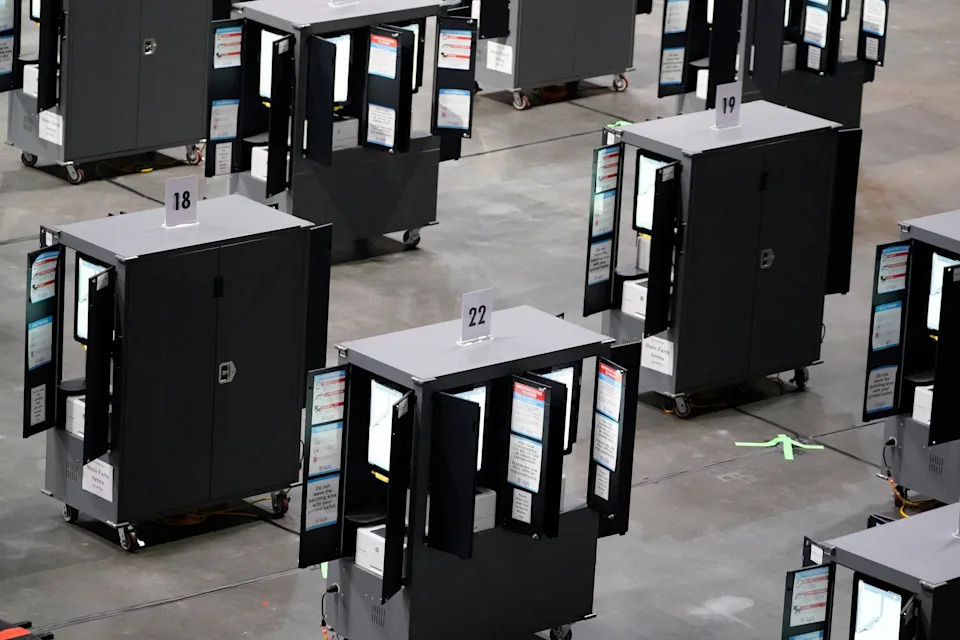
FILE - Voting machines fill the floor for early voting at State Farm Arena, Oct. 12, 2020, in Atlanta. (AP Photo/Brynn Anderson, File)(AP Photo/Brynn Anderson)
The State Election Board, which is controlled by a Trump-aligned majority and has clashed with Secretary of State Brad Raffensperger, countered that the secretary's approach lacks legal authority. The board passed a resolution directing counties to follow their emergency backup plan — hand-marked paper ballots scanned to count votes — if lawmakers do not extend the barcode deadline.
Implementation challenges and timeline
Even if lawmakers reach a consensus during the special session, officials warn implementing a new method in time for the July 28 special election would be difficult. County election directors say the dueling guidance creates uncertainty and potential legal exposure. Elizabeth Young, an attorney in the state attorney general's office, testified that while the guidance is not binding, receiving conflicting instructions from two authorities 'would cause confusion for elections superintendents.'
Local response
County officials in the affected congressional district — a six-county area where a special election will fill the late U.S. Rep. David Scott's seat — say they are awaiting clearer direction. Axiver Harris, Henry County's interim elections director, told officials they are 'waiting for further direction to ensure any decisions are consistent with state requirements and best practices.' Candidates in the race offered differing priorities: some urged calm and focus on turnout, while others called on lawmakers to extend the deadline to avoid rushed changes and legal challenges.
Why this matters
The dispute highlights tensions between election security concerns and practical administration. Critics of the QR-code system say voters cannot personally verify selections encoded in barcodes and worry about security; supporters say the current workflow is auditable and that a sudden change could disrupt voting. With the statute's deadline days away and a major special election looming, lawmakers must quickly provide clear legal and operational guidance to prevent confusion and potential litigation.
Key dates: July 1, 2026 — QR-code ban takes effect; July 6, 2026 — early voting begins for the special election; July 28, 2026 — special congressional election.
Help us improve.