Viktor Orbán was re-elected leader of Fidesz at a Budapest congress, winning 729 votes with eight abstentions and no opposition; his mandate is limited to one year. He accepted responsibility for his party's April election defeat and listed 10 causes, including a failure to counter corruption allegations from the rival Tisza party. Orbán pledged a grassroots reorganisation by autumn to prepare Fidesz for effective opposition and affirmed, 'I never retreat.' The election brought Péter Magyar's Tisza party a two-thirds parliamentary majority, ending Orbán's 16-year rule and increasing Hungary's isolation within the EU.
Orbán Re-Elected As Fidesz Leader Despite Landslide Defeat — 'I Never Retreat'
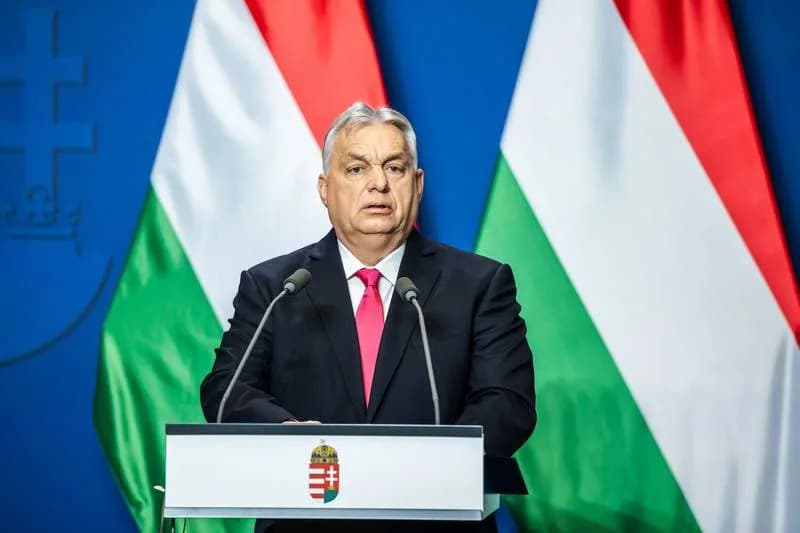
FILE PHOTO - Then Hungarian Prime Minister Viktor Orbán speaks during his annual press conference in Budapest. (is associated with: «Orbán re-elected Fidesz party leader despite crushing election defeat») Marton Monus/-/dpa
Viktor Orbán, Hungary's former prime minister, was confirmed on Saturday as leader of the right-wing nationalist Fidesz party at a Budapest party congress despite his party's heavy defeat in April's parliamentary election.
According to the congress vote, 729 delegates supported Orbán, none voted against him and eight abstained. His renewed mandate as party leader has been limited to one year.
In remarks to delegates, the 63-year-old said it was time for the "younger generation" to take on leadership roles but acknowledged personal responsibility for the election loss. He outlined 10 reasons for the defeat, citing among them Fidesz's failure to adequately rebut corruption allegations raised by the rival Tisza party during the campaign.
Orbán said he wants to strengthen the party through a grassroots reorganisation by this autumn to ensure Fidesz can function effectively as an opposition force.
'I never retreat,' he declared.The party also elected four new deputy chairmen at the congress.
The April 12 parliamentary vote was won in a landslide by political newcomer Péter Magyar. His Tisza party secured a two-thirds majority in parliament, giving it the power to enact major policy changes, including constitutional amendments. The result ended Orbán's 16-year dominance: he served as prime minister from 1998–2002 and then again from 2010 until this change of government.
Critics accuse Orbán of building a hybrid system of governance with autocratic elements, weakening the rule of law and hollowing out democratic checks and balances. As a consequence, the European Union has frozen many billions of euros in funding. Observers also point to Orbán's pro-Russian posture and hostility toward Ukraine as factors that have left Hungary increasingly isolated within the EU.
Help us improve.