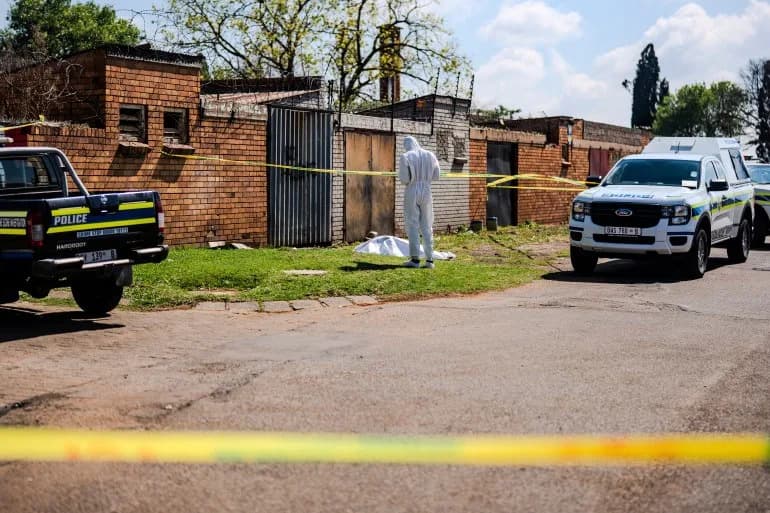
A mass shooting in a Johannesburg informal settlement left 12 dead and at least 15 wounded, with no arrests reported. Experts link the attack to organized criminal networks — including illegal mining gangs known as zama zamas — exploiting weak policing, poor infrastructure and deep inequality. South Africa faces widespread illegal firearms (estimated 2–3 million) and high homicide rates, while police corruption and under-resourcing have eroded public trust. The government has deployed troops and launched investigations into police collusion, but long-term solutions are still needed.
Mass Shooting in Johannesburg Settlement Highlights Organized Crime, Police Failures
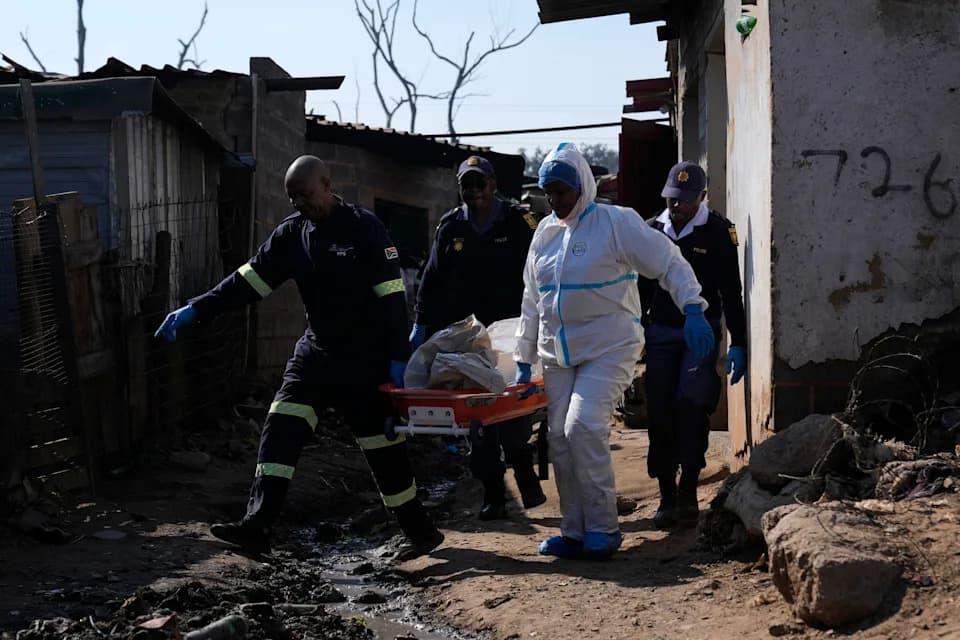
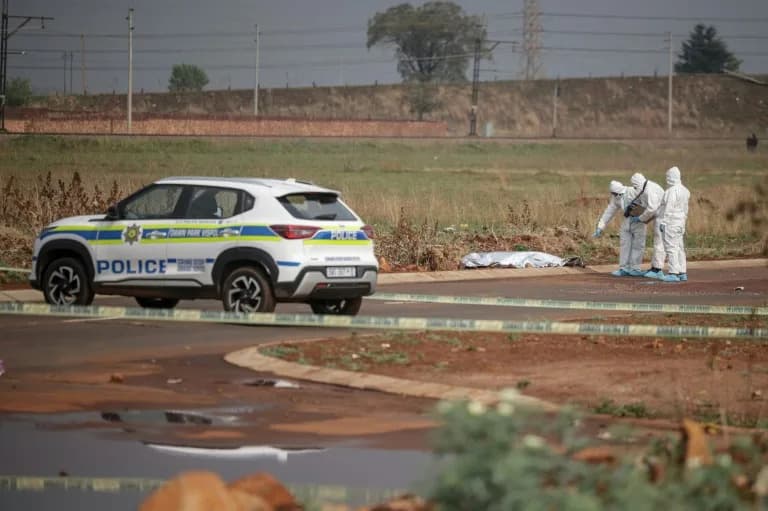
Police officers carry the body of a person on a stretcher after a mass shooting at an informal settlement in the Cleveland suburb of Johannesburg, South Africa, Wednesday, June 10, 2026. (AP Photo/Themba Hadebe)(AP Photo/Themba Hadebe)
Johannesburg — A mass shooting in an informal shack settlement in Johannesburg this week left 12 people dead and at least 15 wounded, officials said. Multiple suspects opened fire in the densely populated community; police have not announced any arrests.
Experts and residents say the attack is part of a broader pattern of lethal violence concentrated in South Africa’s poorest areas, where organized crime groups exploit weak security, limited policing and deep social inequality.
Police Failures and Corruption
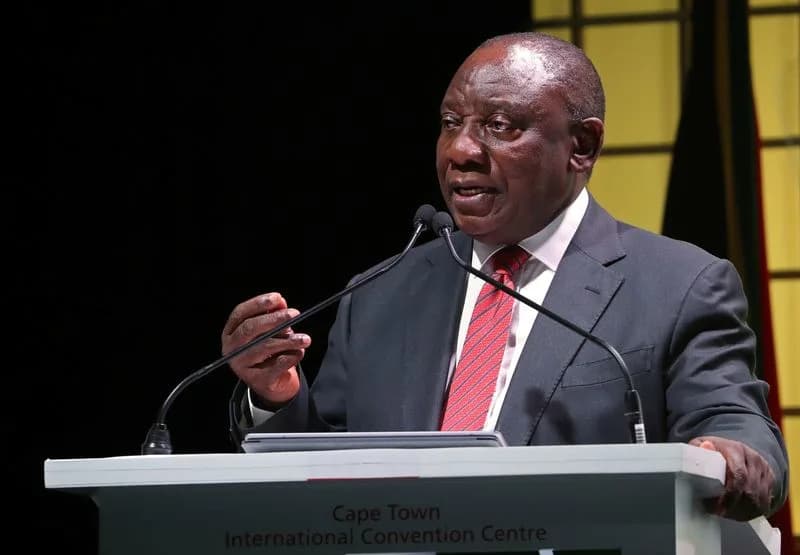
The national government has taken unusual measures: earlier this year, President Cyril Ramaphosa deployed troops to several crime hotspots in a bid to curb organized crime. That move reflected concerns that police were losing ground in parts of the country.
Compounding the problem are allegations of corruption and collusion within the police force. More than a dozen senior officers have been arrested amid investigations, and top officials — including the national police commissioner and the police minister — have been suspended while probes continue. Analysts say these scandals, along with under-resourcing, have eroded public trust and hindered investigations.
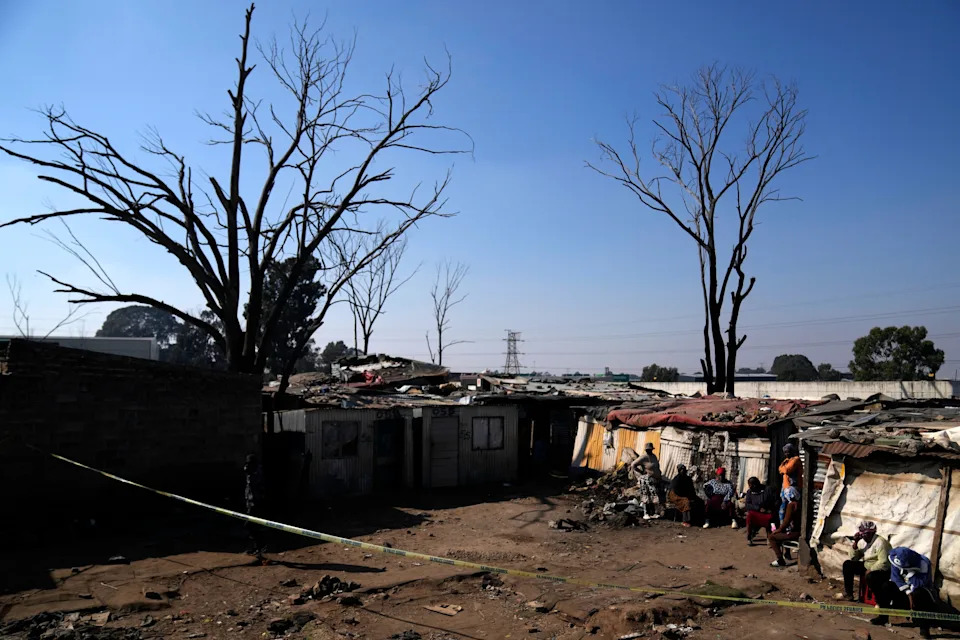
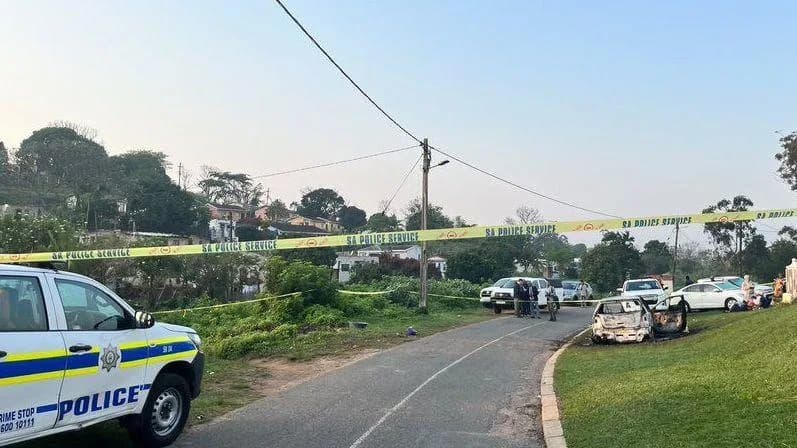
People sit outside a cordon, at the scene of a mass shooting at an informal settlement in the Cleveland suburb of Johannesburg, South Africa, Wednesday, June 10, 2026. (AP Photo/Themba Hadebe)(AP Photo/Themba Hadebe)
Organized Crime And Illegal Mining
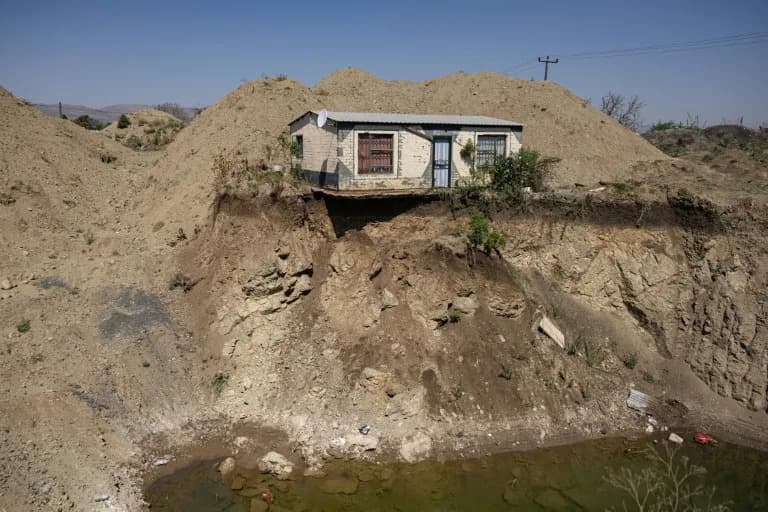
Illegal mining gangs — commonly known as zama zamas (a Zulu term meaning roughly “hustlers” or “chance-takers”) — have long operated around Johannesburg’s gold reserves. These groups set up bases in poorly policed neighborhoods, fight turf battles and use extreme violence to maintain control. Residents in the settlement targeted this week reported the presence of such gangs, and police say mining gangs are a focus of the investigation.
Authorities estimate South Africa loses more than $3 billion a year to illicit mining. Mining gangs often include undocumented migrants, which complicates identification and prosecution: many have no legal ID, registered address or biometric records.
Firearms And Homicide Rates
Despite strict rules on legal firearm ownership, independent studies and civil-society groups estimate there are between 2 million and 3 million illegal firearms circulating in South Africa’s population of about 62 million. Guns are the leading cause of homicide in the country, which records an average of more than 60 homicides per day in the latest annual figures.
“Criminal syndicates explicitly capitalize on this to hide weapons, execute hits, and vanish into the shadows,” said Jacob Mofokeng, a professor of criminology at the University of South Africa.
“In South Africa, we actually managed to create conditions that are very conducive for violent crime and also for organized crime syndicates to operate with impunity,” said Willem Els, an analyst at the Institute for Security Studies.
Private investigator and security specialist Mike Bolhuis added that trust in police is fractured: “The public doesn’t trust the police, they don’t trust the authorities, and they don’t trust each other,” a dynamic that undermines community cooperation and makes policing more difficult.
Authorities continue to investigate the Johannesburg shooting. The episode has renewed calls for better policing, tighter controls on illicit firearms, and long-term social and economic interventions in marginalized communities.
Help us improve.