Airbus has launched Team Gen 6, a German‑Spanish industrial initiative to pursue a crewed sixth‑generation fighter after the Franco‑German NGF element of FCAS collapsed. Airbus says several German and Spanish firms have signed a strategic paper and that broader FCAS workstreams continue, while the fighter needs a more agile industrial setup. Early trials will convert a Eurofighter into a command fighter that can work with uncrewed platforms, with an operational demonstrator targeted for 2029. Experts warn Germany and Spain will likely need further partners to reach viable production numbers (roughly 250–300 jets).
Airbus Forms German‑Spanish 'Team Gen 6' to Rescue Europe’s Sixth‑Generation Fighter Program
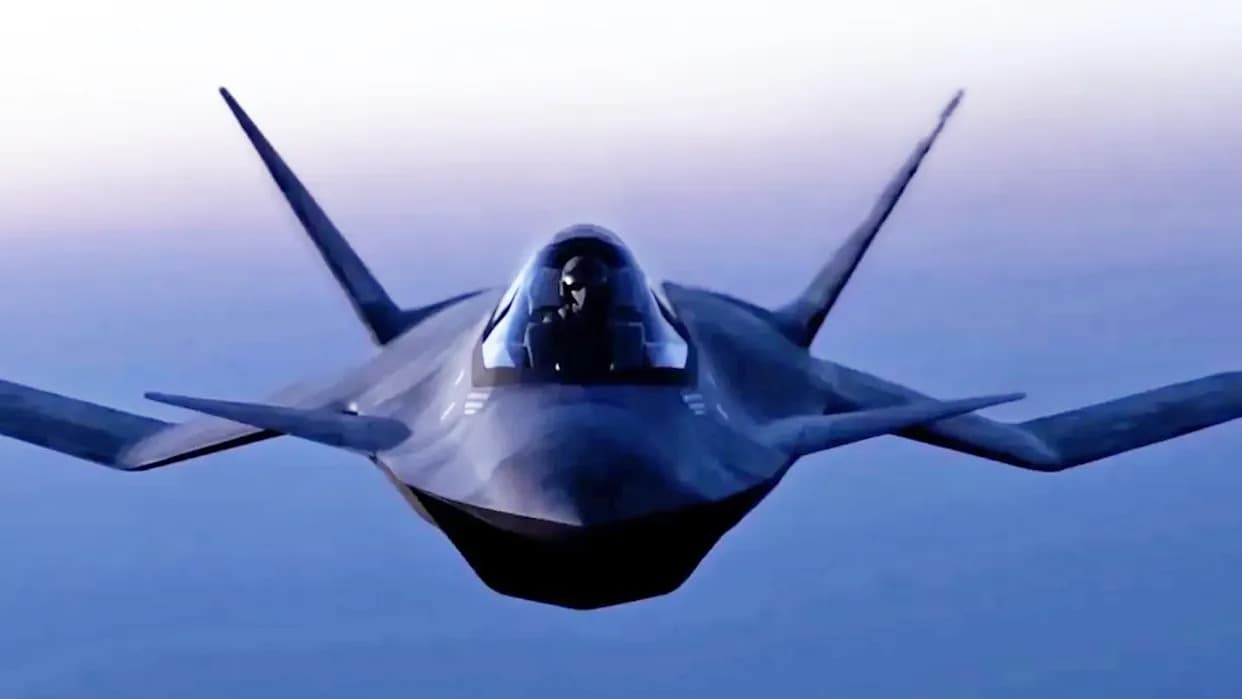
A screencap from an Airbus video showing a notional future fighter working with remote-carrier-type drones.
Airbus has launched Team Gen 6, a German‑Spanish industrial initiative aimed at advancing a crewed sixth‑generation combat aircraft after the Franco‑German New Generation Fighter (NGF) element of the Future Combat Air System (FCAS) effectively collapsed amid tensions between Paris and Berlin.
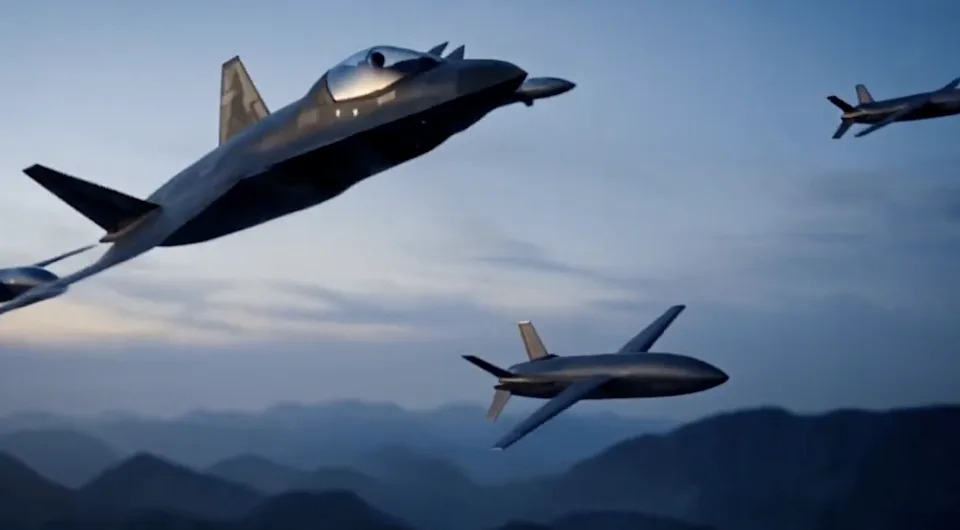
A screencap from an Airbus video showing a notional future fighter working with remote-carrier-type drones.Airbus screencap
Announced at the ILA Berlin airshow, Airbus Defence and Space described Team Gen 6 as “an exciting step for European sovereignty.” The company said several leading German defence and aerospace firms have signed a strategic positioning paper; named German participants include Autoflug, Diehl Defence, Hensoldt, Liebherr, MBDA Germany, MTU Aero Engines and Rohde & Schwarz. These firms are now “closely integrated” with Spanish partners GMV, Grupo Oesia, Indra, ITP Aero and Sener.
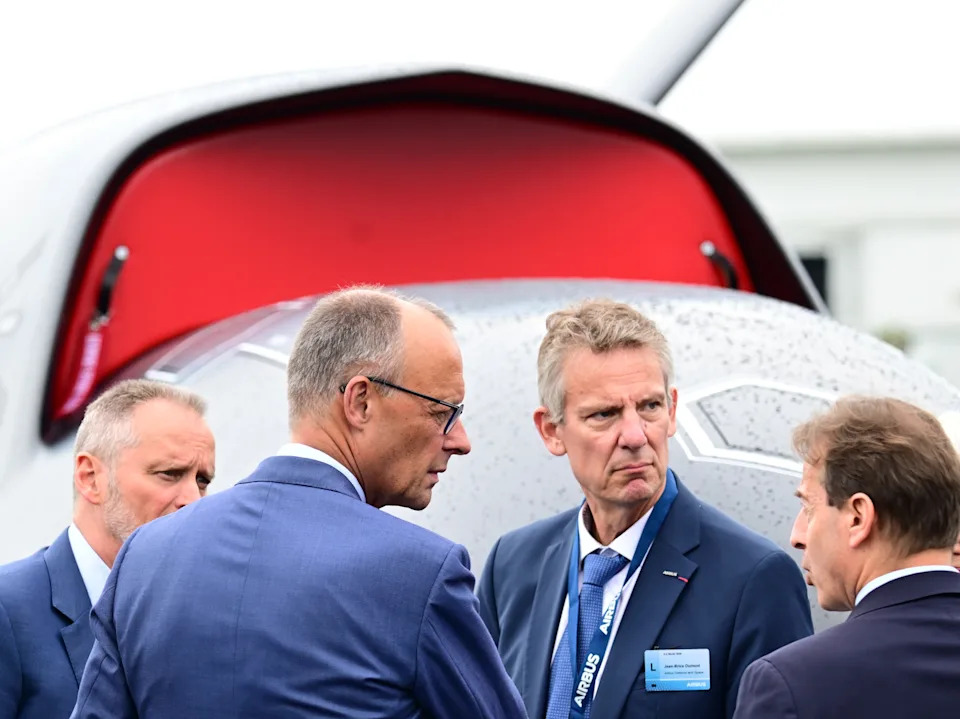
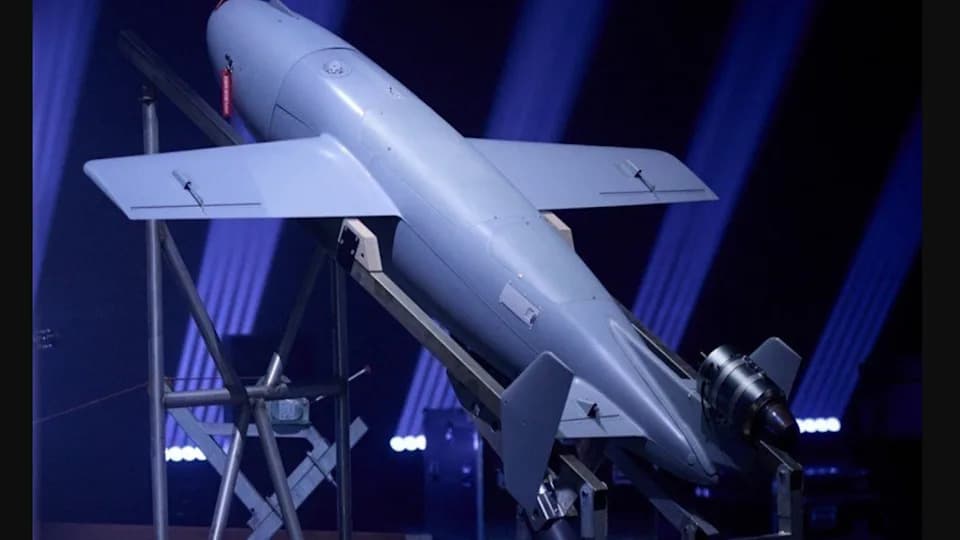
German Federal Chancellor Friedrich Merz (second from left) and Jean-Brice Dumont (second from right), head of air power at Airbus Defense and Space, stand in front of a drone during a tour of the International Aerospace Exhibition (ILA).Photo by Sebastian Gollnow/picture alliance via Getty Images
“While the development of the overarching [FCAS] ‘system of systems’ is progressing as before, the sixth‑generation fighter aircraft integrated within it requires a new, agile industrial setup,” Airbus said in its announcement.
Airbus also published a conceptual video of a notional manned aircraft flying alongside multiple uncrewed platforms. The crewed design in the clip shows canard foreplanes, a chin intake and a cranked wing — visual cues rather than a finalized configuration, Airbus cautioned.
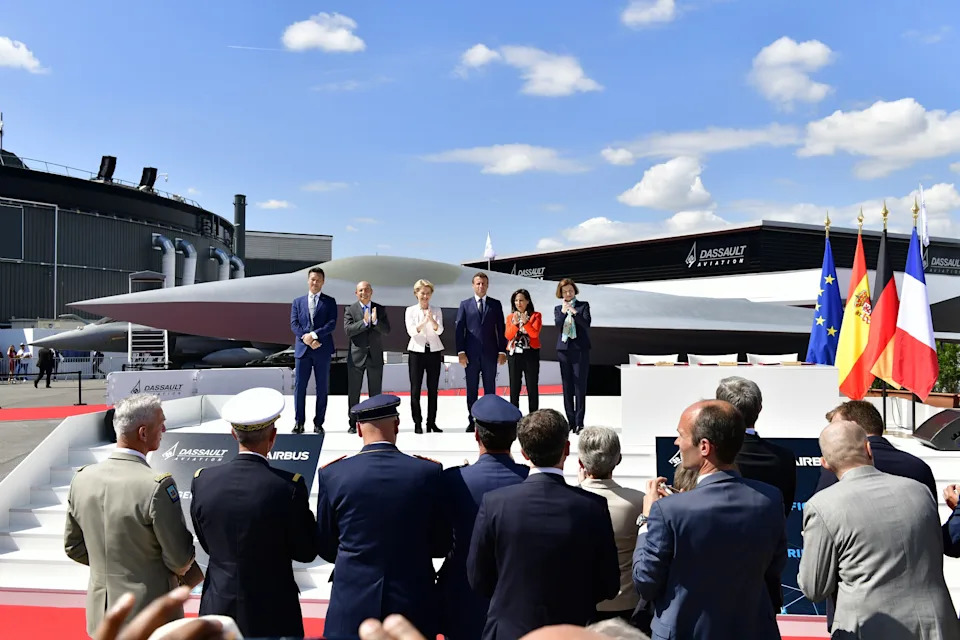
A 1:1 scale model of the NGF is unveiled at the Paris Airshow in 2019.Dassault Aviation
Why Team Gen 6 Now?
Jean‑Brice Dumont, head of air power at Airbus Defence and Space, told attendees at ILA Berlin that the security and technology landscape in 2026 is “very different” from 2017 when FCAS was launched. Dumont said the broader FCAS workstreams — including powerplant development, remote carrier vehicles, precision munitions and data connectivity — continue, but the crewed fighter requires a more agile industrial approach and faster milestones.
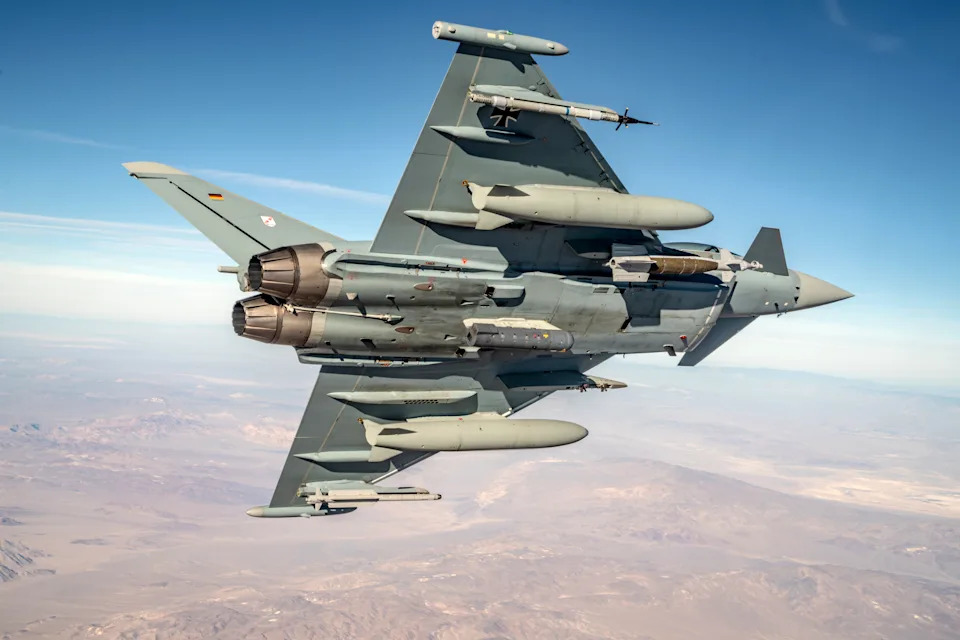
A German Eurofighter with a Litening laser targeting and reconnaissance pod on the centerline station.Crown Copyright
“We have to seek guidance from our governments on what they want us to do,” Dumont said. He stressed that decisions must be based on both technical and industrial feasibility — a lesson he said emerged from the NGF experience.
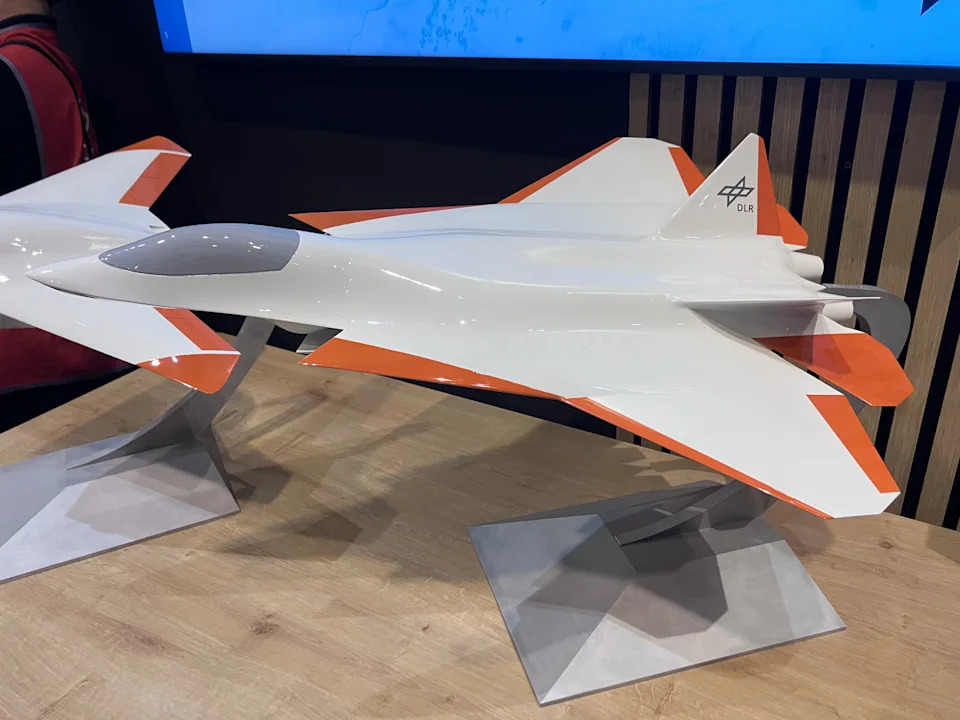
A model of a notional sixth-generation fighter displayed at ILA as part of a command fighter study by the German Aerospace Center (DLR).Thomas Newdick
From NGF To New Trials
The NGF element was the most politically sensitive and technically challenging part of FCAS. It collapsed after protracted disputes over industrial workshare and leadership, primarily between Airbus (representing German and Spanish interests) and France’s Dassault Aviation, which insisted on a leading role to meet specific French requirements such as carrier operations and a nuclear‑capable option — capabilities that Germany and Spain did not require.
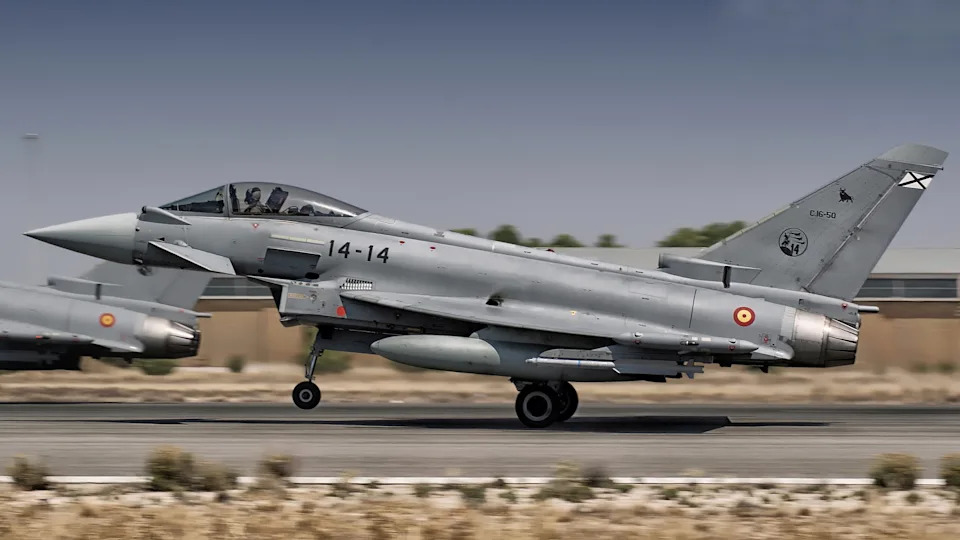
A pair of Spanish Air and Space Force Eurofighters.Spanish Ministry of Defense
Airbus says lessons from FCAS Phase 1A/1B remain valuable, particularly analyses of how to divide tasks between crewed and uncrewed platforms. As a near‑term practical step, Airbus plans trials to validate a “command fighter” concept: a crewed jet that can coordinate and operate with uncrewed collaborative combat aircraft (UCCAs). Initial testing will use a Learjet as a surrogate command fighter operating with drones in an “enhanced teaming” mode. Later trials will adapt a Eurofighter with a modified Rafael Litening 5 targeting pod as the interface to UCCAs, with Airbus targeting a command‑fighter‑configured Eurofighter to be ready for operational use in 2029.
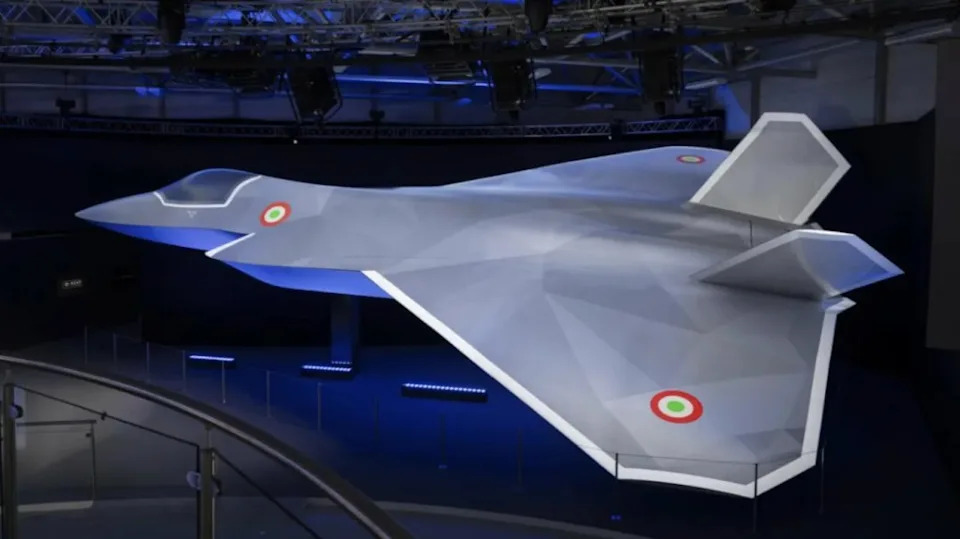
A scale model of a possible Tempest configuration, in Italian Air Force markings.Leonardo
Industry and Market Challenges
Douglas Barrie, senior fellow for military aerospace at the International Institute for Strategic Studies (IISS), told The War Zone that while a German‑Spanish pairing under Airbus makes sense, it faces significant commercial and scale challenges. He estimated combined German and Spanish requirements might be in the range of 250–300 jets — likely too small to achieve favorable unit economics alone. That reality will probably push Berlin and Madrid to seek additional partners.
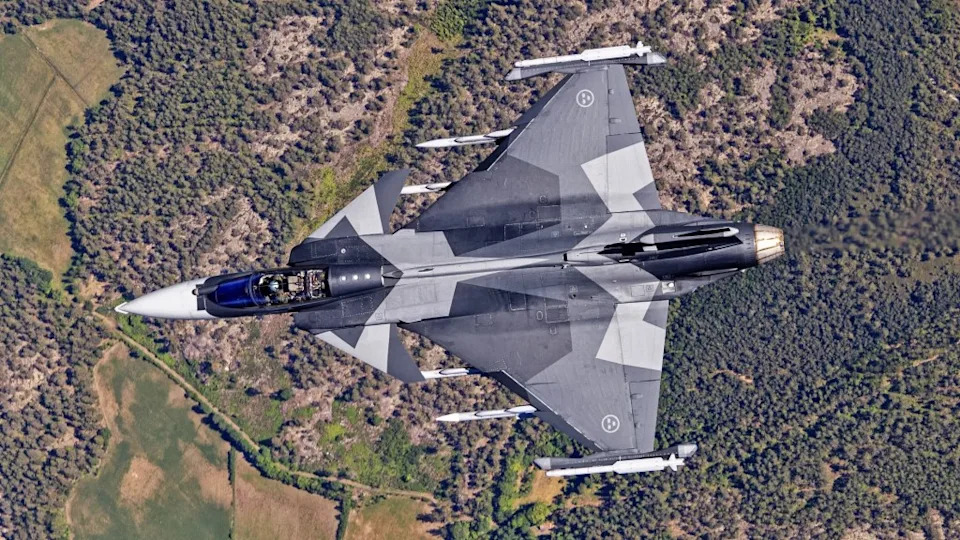
The Saab Gripen E.Saab
Potential partnerships include the UK‑led Global Combat Air Programme (GCAP) — whose Tempest centerpiece emphasizes longer range and bigger internal payloads — or Sweden’s next‑generation effort led by Saab, which may align better with German and Spanish size and capability preferences. Integrating Airbus into GCAP now would be complex and disruptive to timelines, Barrie warned.
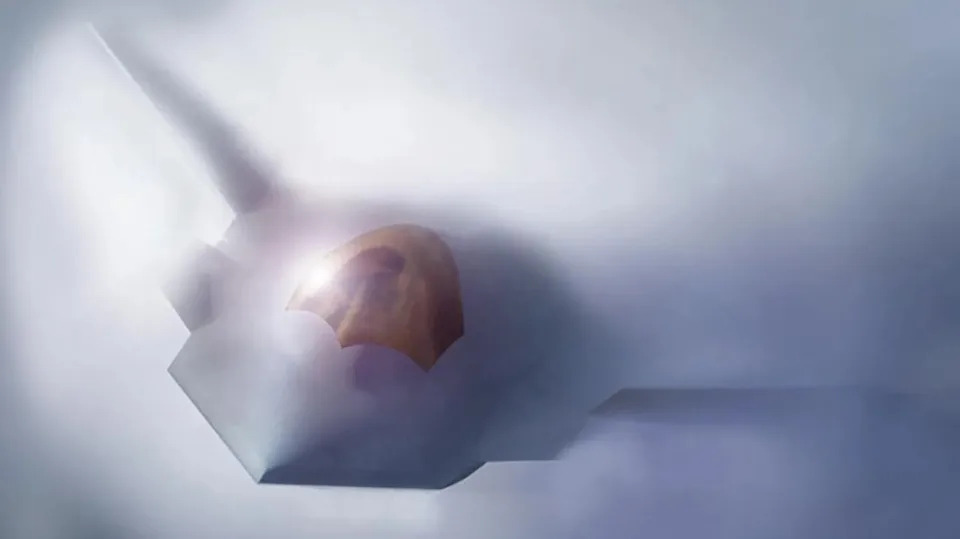
An official rendering of the Boeing F-47.U.S. Air Force
Competition for export customers will remain intense. France may continue Rafale development and pursue a successor with Dassault leadership. Other potential competitors or alternatives include South Korea’s KF‑21 and Turkey’s TF‑Kaan. Meanwhile, prospective partners such as India present both opportunity and geopolitical complexity given their diverse procurement relationships.
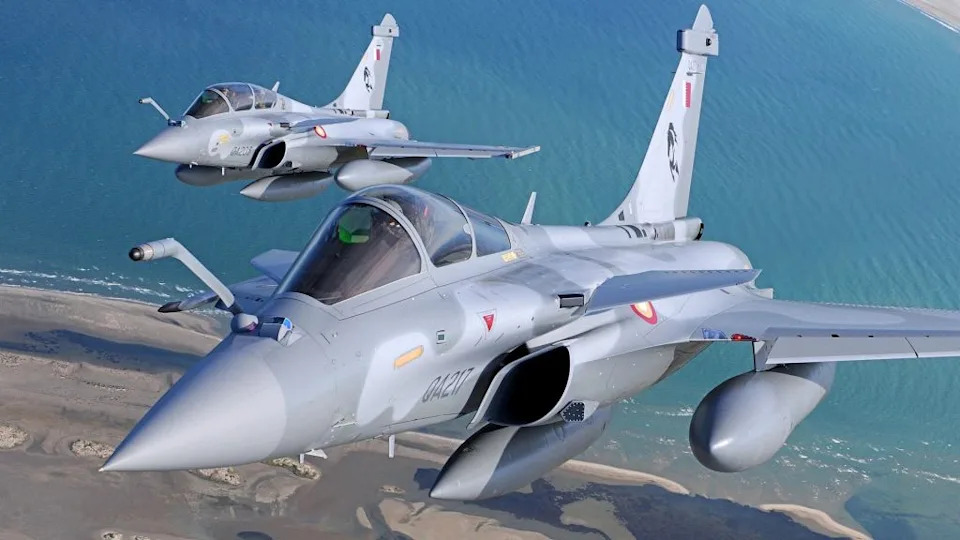
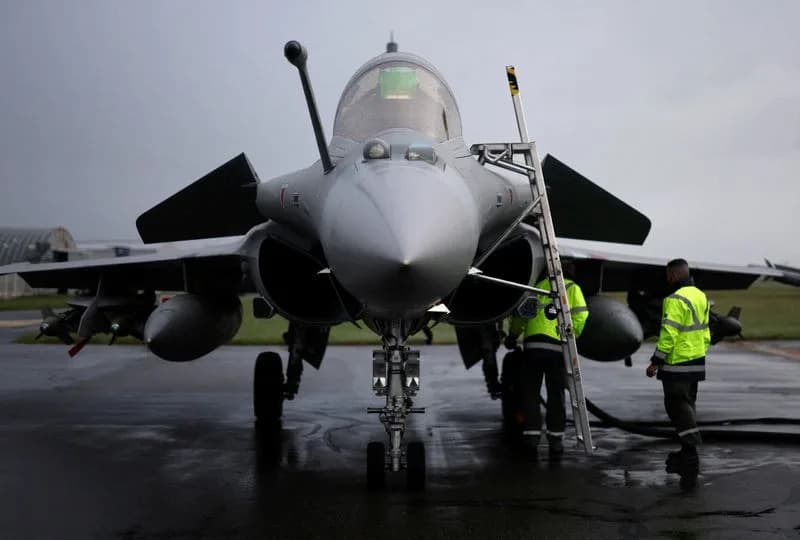
A pair of Rafales from the Qatar Emiri Air Force.Dassault Aviationwww.twz.com
Outlook
Airbus’s Team Gen 6 resets the industrial approach for a European sixth‑generation crewed fighter, steering toward a German‑Spanish led architecture intended to be more agile and less contested than the Franco‑German NGF effort. But significant political, financial and industrial hurdles remain: finding stable partners, aligning strategic priorities across capitals, and ensuring sufficient production volumes to make the program viable.
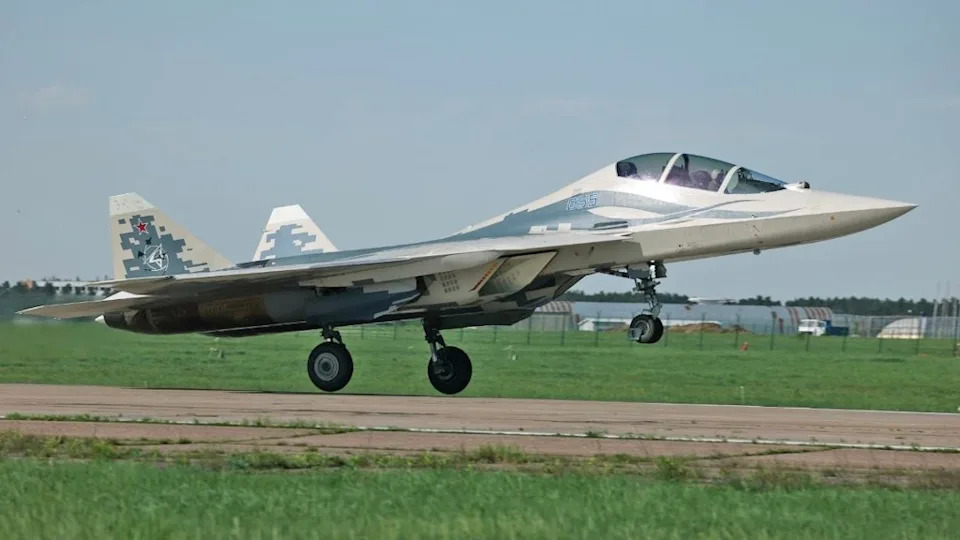
The previously unknown two-seat version of the Sukhoi Su-57 Felon, which appeared earlier this year.UACUAC
Whether Team Gen 6 can attract additional partners or successfully merge with other next‑generation efforts will determine if Europe can field a sovereign, competitive sixth‑generation capability in the decades ahead.
Contact the author: [email protected]
Help us improve.