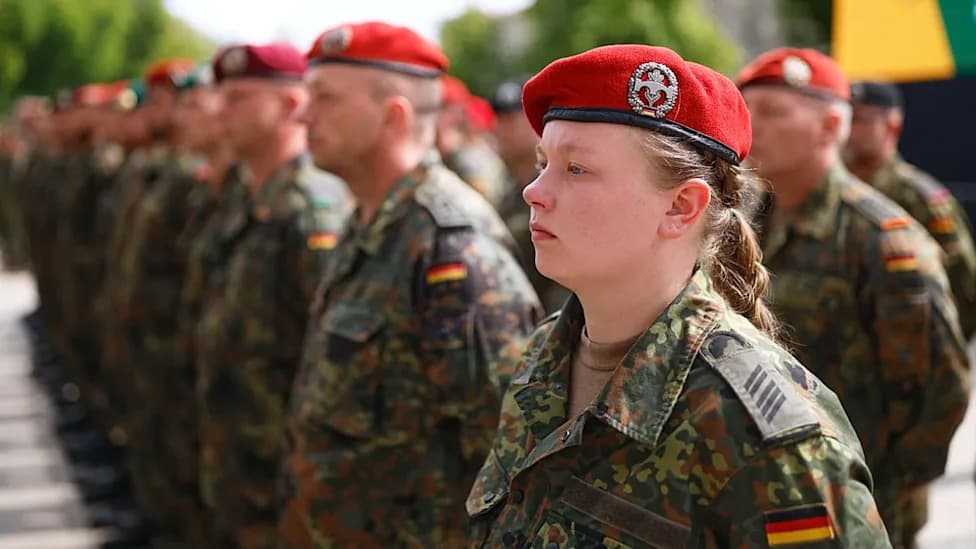
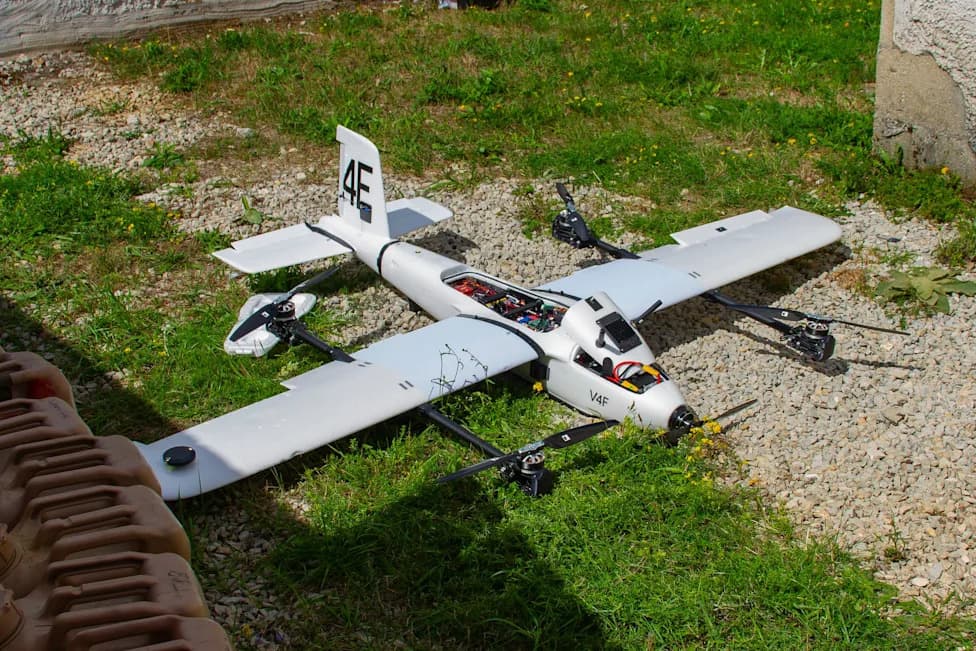
Germany is accelerating the adoption of drones and unmanned weapons as the 45th Armoured Brigade participates in NATO's Freedom Shield 2026 at Pabradė, bringing about 350 drones. Some 2,900 troops, including roughly 2,300 Germans, and about 800 vehicles from eight allies are involved. The brigade, committed to Lithuania as a response to perceived Russian threats, aims to be fully operational by 2027 with 4,800 soldiers and 200 civilian staff.
Germany Accelerates Drone, Unmanned Systems Deployment as 45th Armoured Brigade Joins NATO Drills
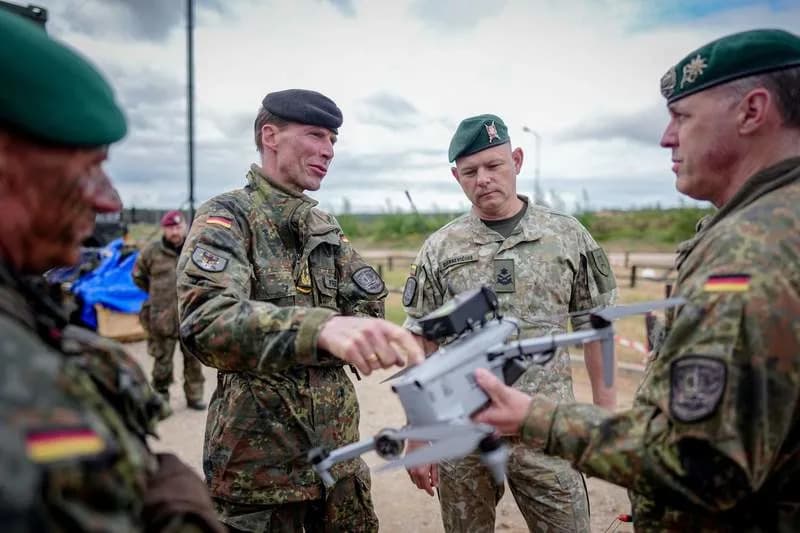
Lieutenant General Christian Freuding (L) and Lithuanian Brigadier General Nerijus Stankevičius inspect a modified drone during the "Freedom Shield 2026" combat exercise, which features 2,900 soldiers from eight nations facing new threat scenarios. (is associated with: «German army head seeks rapid growth in use of drones, unmanned systems») Kay Nietfeld/dpa
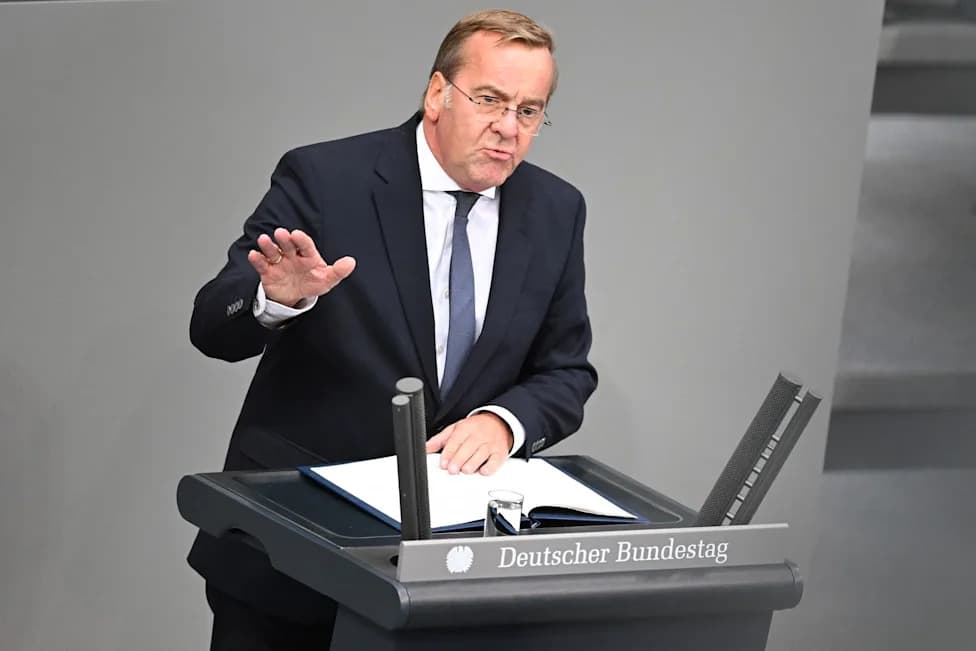
The German army is moving swiftly to expand the role of drones and unmanned weapons systems, Inspector General Christian Freuding said while visiting the inaugural exercises of a newly posted formation in Lithuania.
Exercises and Capabilities
The 45th Armoured Brigade, officially stood up last year, is participating in NATO's Freedom Shield 2026 exercises at the Pabradė training area northeast of Vilnius. The brigade has brought approximately 350 drones to the manoeuvres as part of wider efforts to integrate unmanned systems into combined-arms operations.
Coordination Emphasized
During his visit Freuding inspected command posts and operational concepts for drone employment and stressed that coordination between armoured formations and drone crews is of 'utmost importance' to the Bundeswehr. Effective integration of sensors, communications and tactics will determine how drones augment armoured units on the battlefield.
Scope Of The Deployment
About 2,900 troops — including roughly 2,300 German soldiers — and around 800 vehicles from eight NATO countries have assembled at Pabradė for the exercises on the alliance's eastern flank. The training area lies roughly 20 kilometres from the border with Belarus.
Longer-Term Plans
Berlin committed the armoured brigade to Lithuania in response to what it describes as an increased threat from Russia. The brigade is scheduled to reach full combat operational capability by 2027, with a planned strength of 4,800 soldiers and 200 civilian staff. Around 1,800 personnel are currently stationed in Lithuania.
Quick integration of unmanned systems into traditional armoured tactics is a priority, Freuding said, underscoring Germany’s push to modernize force structure and battlefield awareness.
The exercises at Pabradė provide an opportunity to test emerging concepts for combined drone-armour operations, improve interoperability with NATO partners and demonstrate deterrence on the alliance's eastern flank.
Help us improve.