The U.S. has added Cuba’s state oil company, Unión Cuba-Petróleo (Cupet), to its sanctions list, freezing any U.S.-based assets and barring U.S.-linked firms from doing business with the company. Officials say the move aims to cut revenue the government could use to repress citizens, while U.N. and rights groups warn the measures are worsening fuel shortages and medical supply shortfalls. The actions build on earlier steps to reduce Cuba’s fuel imports and have heightened diplomatic and military tensions in the region.
U.S. Sanctions Cuba’s State Oil Firm Cupet, Accusing Leadership Of Profiting As Blackouts Rise
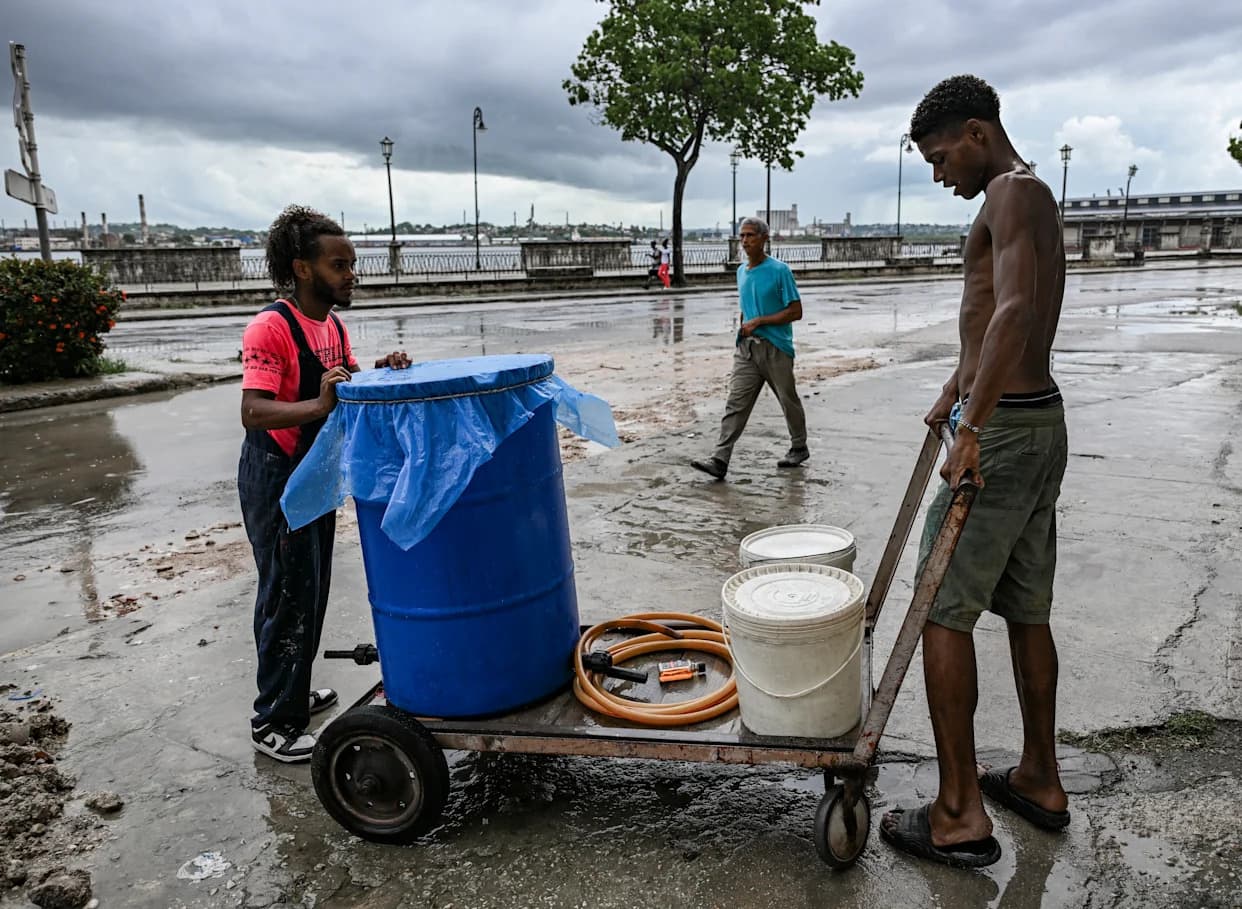
Young men load water containers onto a cart during a power outage in Havana on June 10 [Yamil Lage/AFP]
The United States has expanded sanctions against Cuba by adding the state oil and gas company Unión Cuba-Petróleo (Cupet) to its sanctions list. The measures freeze any U.S.-based assets of Cupet and bar companies operating in the United States from doing business with the firm.
U.S. Statements And Allegations
Senator Marco Rubio issued a public statement accusing Cupet of helping to fund Cuba's "repressive security apparatus," and alleging that Cuban officials divert energy resources to benefit the regime while ordinary Cubans face fuel shortages and frequent blackouts. Rubio also referred to nationalizations of foreign-owned oil assets around 1960 as the origin of disputed claims over some assets.
Sanctions, Supply Disruptions And Context
The sanctions build on a broader U.S. campaign to tighten Cuba's access to fuel. Measures earlier in the year included steps that reduced shipments from Venezuela and warnings to third-party suppliers — actions that, together with the long-standing U.S. embargo, have sharply curtailed Cuba's petroleum imports.
The International Energy Agency estimated in 2023 that Cuba produces roughly 40% of the oil it consumes; historically the remainder came from foreign suppliers. Media reports indicate that, since late January, very few foreign tankers have reached Cuba, underscoring the decline in imports.
Humanitarian Concerns
United Nations human-rights chief Volker Türk warned that the combined effect of fuel restrictions and extraterritorial sanctions is harming vulnerable Cubans. "The fuel restrictions imposed since early 2026 and recent tightening of extraterritorial sanctions, taken together, are directly harming Cubans, especially the most vulnerable," he said, adding that shortages of medical supplies are having severe consequences.
Politics, Military Posture And Diplomacy
U.S. officials say the measures are intended to pressure the Cuban government toward political and economic reforms. Some in Washington have made strong public statements, and increased U.S. naval activity in the Caribbean and visits by senior military leaders to Guantánamo Bay have heightened tensions and public debate. At the same time, officials from both countries have reportedly held talks as Havana seeks relief from the tightening of fuel supplies.
Analysts caution that harsher sanctions risk exacerbating Cuba's energy crisis and worsening humanitarian conditions; others argue pressure is necessary to change the government's behavior. The situation remains fluid and politically charged.
Background
The 1960 nationalizations of foreign-owned oil and other assets in Cuba came amid a rapid deterioration in U.S.–Cuba relations. The recent measures target Cupet as a principal state-owned energy company central to the island's economy and energy distribution.
What This Means Now: The sanctions take immediate legal effect for U.S. persons and entities; their broader geopolitical and humanitarian consequences are under active international scrutiny.
Help us improve.