Three young Tehran residents told Fox News Digital that the IRGC and the Basij have become visibly more present and assertive in public life, with checkpoints, renewed hijab enforcement and increased repression. They described severe economic hardship — official data cited annual inflation of 53.7% in April and food inflation above 115% — and long bakery lines, mass layoffs and rising medical and utility costs. The interviewees urged the U.S. not to appease the regime and asked President Trump to maintain pressure, while some voiced hope for a post‑regime future under Reza Pahlavi.
Inside Tehran: Iranians Describe Growing IRGC Control, Deepening Poverty — Urge Trump To "Stay The Course"
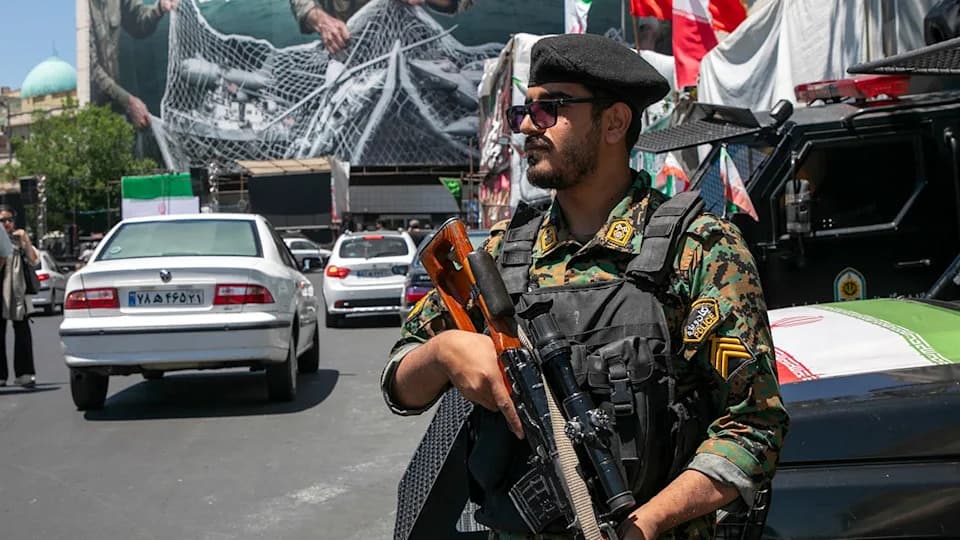
A fragile ceasefire that many Iranians say does not feel like a ceasefire has given some people inside Iran the courage to speak out, despite what they describe as enormous personal risk.(Getty Images)
A fragile ceasefire that many Iranians say rarely felt like a pause has nonetheless emboldened some residents to speak out despite serious personal risk. Three young Tehranis, interviewed via written messages because of security concerns and internet restrictions, describe a country where the Islamic Revolutionary Guard Corps (IRGC) and its Basij militia have become markedly more visible and assertive in public life.
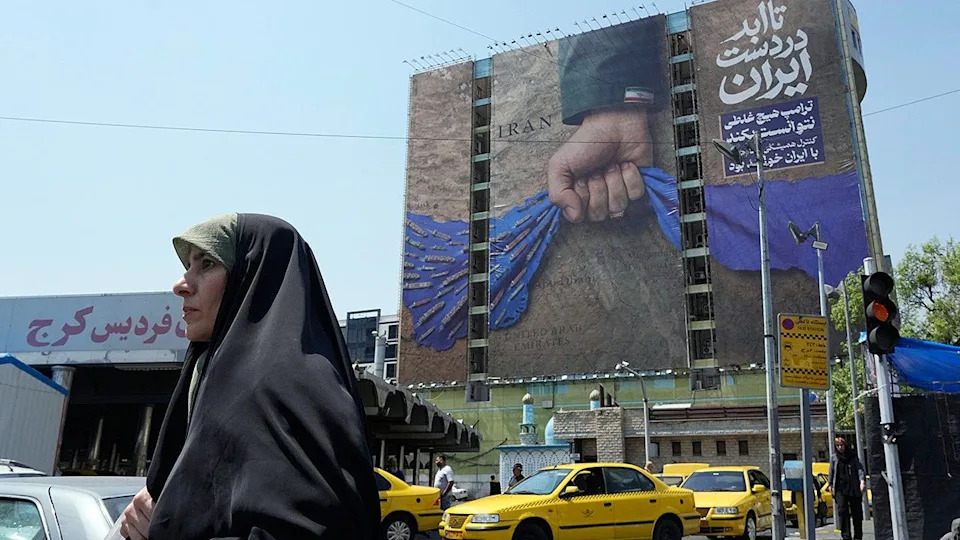
A woman walks past a billboard showing a military hand holding the Strait of Hormuz with Farsi text which reads, "In Iran's hands forever," "Trump couldn't do a damn thing," "The control of Strait of Hormuz will be Iran's forever," in Vanak Square, in northern Tehran, Iran, on April 16, 2026.
Heightened Security Presence
All three sources, identified only by pseudonyms to protect their safety, reported checkpoints on major thoroughfares, more security forces in public squares and intersections, and a widening role for IRGC-affiliated personnel in government and civil administration.
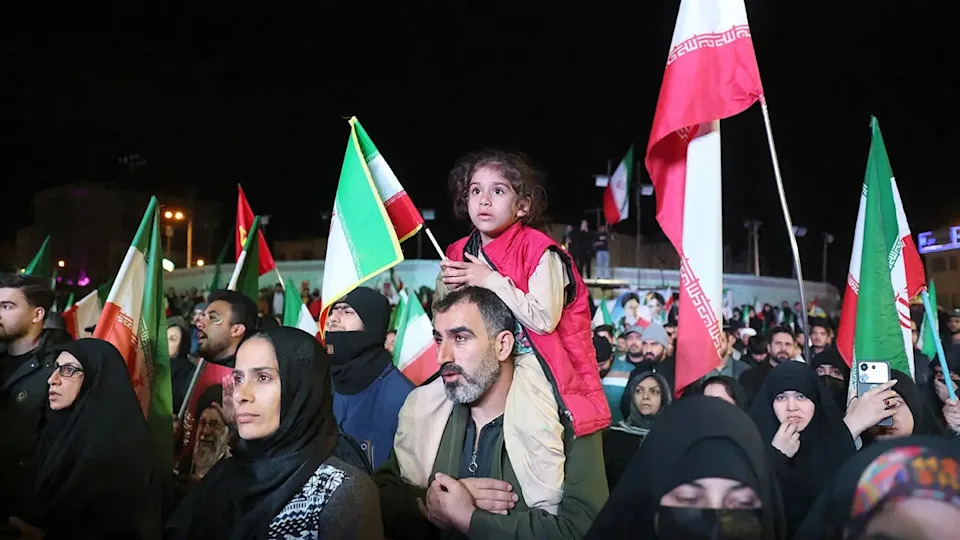
Iranians react after a ceasefire announcement at the Enqelab square, Wednesday, in Tehran. The U.S. and Iran agreed to a two-week ceasefire Tuesday, barely an hour before President Donald Trump's deadline to obliterate the rival country was set to expire, with Tehran to temporarily reopen the vital Strait of Hormuz.
"The influence of the Revolutionary Guards always has been present, and everything has operated within their ideological framework. Now, their interference is more obvious and easier to see," Hassan said. "Now the curtain has simply been pulled back."
"The atmosphere in cities and government offices has become much more securitized. Security forces are now visible around almost every major square and intersection, and there are numerous checkpoints throughout the cities," Milad said. "Individuals affiliated with the security apparatus or the Basij are increasingly being given positions of authority and influence."
Social Controls and Repression
Interviewees reported a return to stricter social enforcement, including renewed pressure around hijab rules. They recounted cases where even regime supporters were warned or detained for stepping beyond political red lines. Ali, a student in Tehran, said Basij members who once hid their affiliation are now openly identifying themselves.
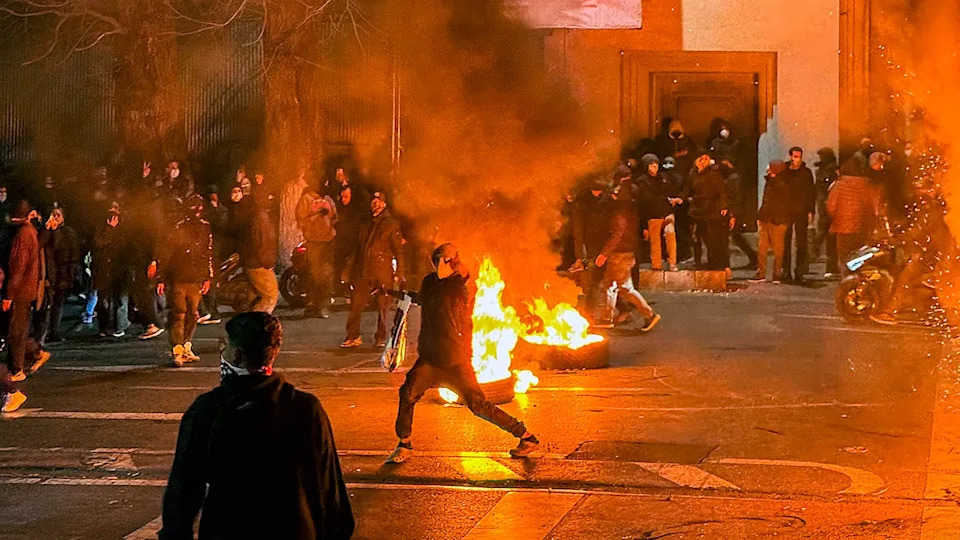
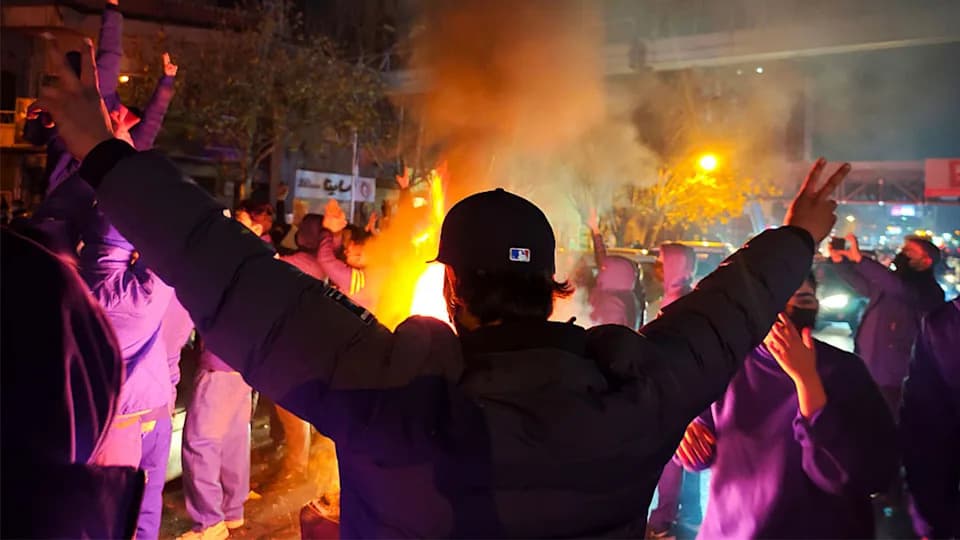
Iranians gather while blocking a street during a protest in Tehran, Iran, on Jan. 9, 2026.
"When you drive through the streets and reach checkpoints, you don’t even dare look them in the eye because they can do whatever they want," Ali said. "No one dares get into trouble with people who are members of organizations like the Basij, because they can report your name and have you arrested."
Violence, Casualties And Fear
The personal accounts come against a backdrop of heavy repression. Iran International reported more than 36,500 killed during the January crackdown; Amnesty International described January 2026 as the deadliest period of repression in decades and said deaths rose into the thousands. The three interviewees said the scale of the January violence has left lasting trauma.
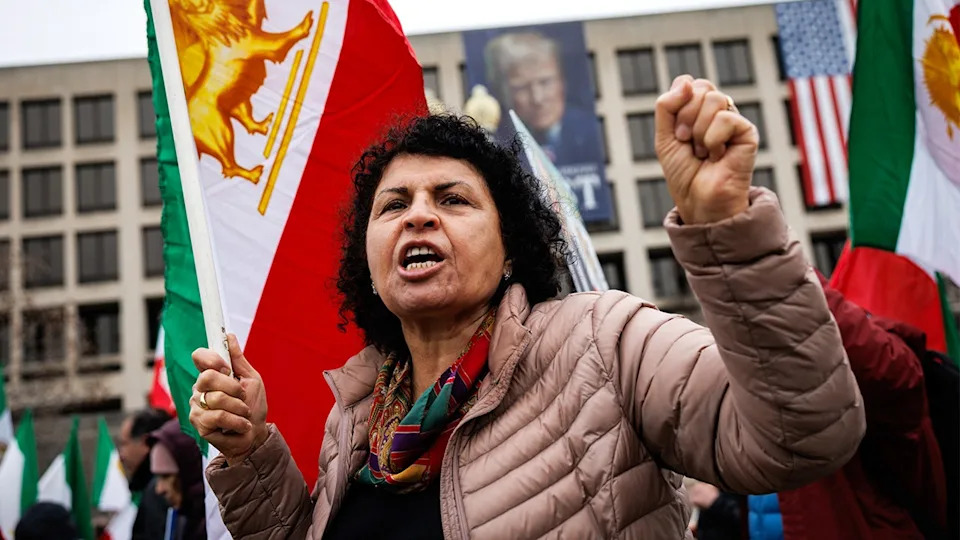
Protesters rally in Washington, D.C., on March 7, 2026, supporting regime change in Iran following U.S. and Israeli strikes that killed Iran’s Supreme Leader Ayatollah Ali Khamenei.
"Before the war, we couldn’t even breathe. We couldn’t sleep at night," Milad said. "After the war, we were able to sleep more easily at night, but we continue to worry about the families of the martyrs and those who are in prison, under torture, and facing the executioner."
Economic Pain And Everyday Survival
Economic hardship has intensified. Iran already faced high inflation, a collapsing currency, corruption and sanctions before the conflict escalated. According to Iran’s official statistics center, annual inflation reached 53.7% in April, with food inflation above 115% (Associated Press).
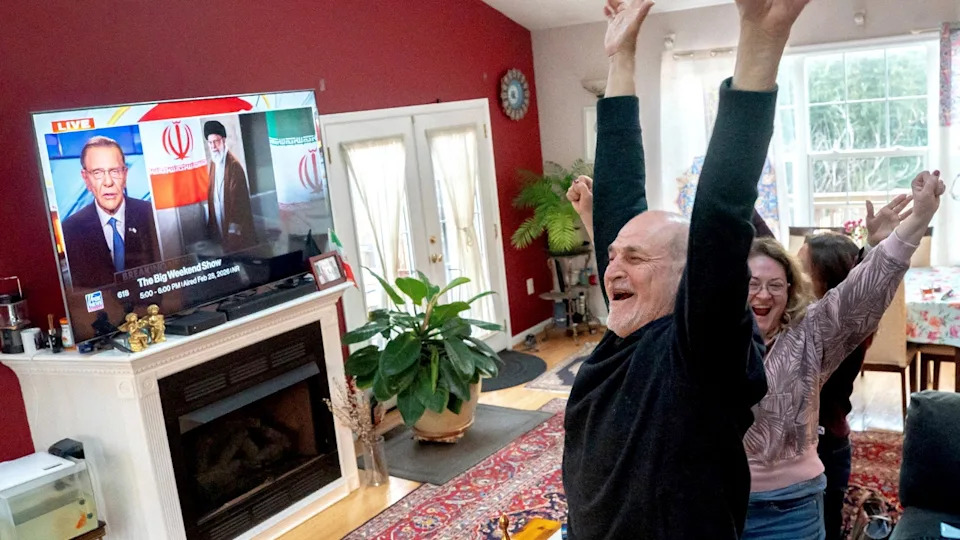
Iranian American community members Sadaf Ebrahimi, Shirin Nariman, and Mehran Ebrahimi watch a TV screen at Nariman's home in Vienna, Virginia, reacting to news of U.S. President Donald Trump's announcement that Iran's Supreme Leader Ayatollah Ali Khamenei was killed in joint U.S. and Israeli strikes on Feb. 28, 2026.
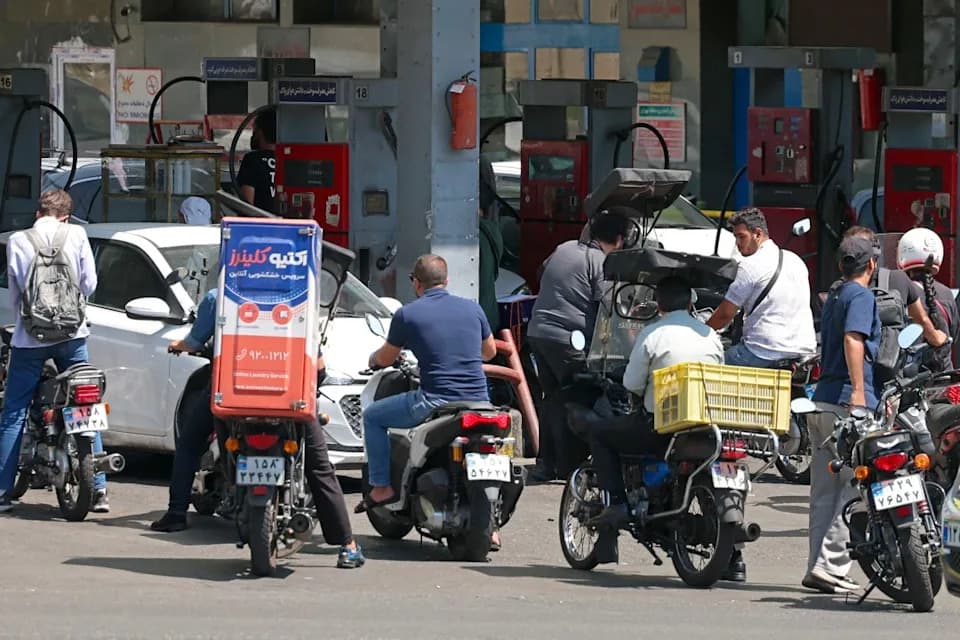
Interviewees described mass layoffs, unpaid wages, long lines at bakeries and rising utility and medical costs. Bread, they said, has become a primary affordable staple for many households.
"The economic situation has become so bad that almost all industries are on the verge of collapse and are simply trying to survive," Ali said. "Many companies have laid off workers, including me. Families can no longer financially support their children."
Political Hopes And Appeals To Washington
Some of those interviewed expressed political hopes for a post‑Islamic Republic future under exiled Crown Prince Reza Pahlavi, who has positioned himself as a unifying voice for opponents of the clerical regime. At the same time, they urged the U.S. not to ease pressure prematurely.
"I would like to tell the Western world that appeasement of the Islamic Republic is futile," Hassan said. "These are dishonest and deceptive people... It is extremely naive to believe that meaningful negotiations can be conducted with such individuals."
"We have one message to the president, and that is to continue," Milad added. "Here in Iran, we no longer say, ‘Obama, Obama, either with us or with them.’ Now we’re saying: ‘Trump, don’t be Obama. You are with us, not with them. President Trump, stay the course.'"
Context On Recent U.S. Statements
President Donald Trump announced from the Oval Office that the U.S. had reached what he called "a great settlement of the war with Iran," saying the agreement remained "subject to finalization of documents" and could be signed in Europe. His comments followed weeks of military escalation, U.S. strikes, and tense diplomacy.
Fox News Digital contacted Iran’s mission to the United Nations for comment. The three Tehran residents spoke under pseudonyms and via written messages to mitigate security risks; their accounts reflect personal observations and reported developments on the ground.
Help us improve.