Jonathan Hall KC, the government's independent reviewer of terrorism laws, has urged a public debate on how migration should be considered in the UK's national security strategy after a knife attack in Belfast. The suspect, a 30-year-old Sudanese man who arrived in 2023 and held refugee status, has been charged with attempted murder. Experts warn nationality alone does not predict criminality and cite socioeconomic and demographic drivers, while ministers highlight 67,000 deportations as the government commits to further action if required.
Terror Adviser Urges National Security Debate Over Migration After Belfast Knife Attack

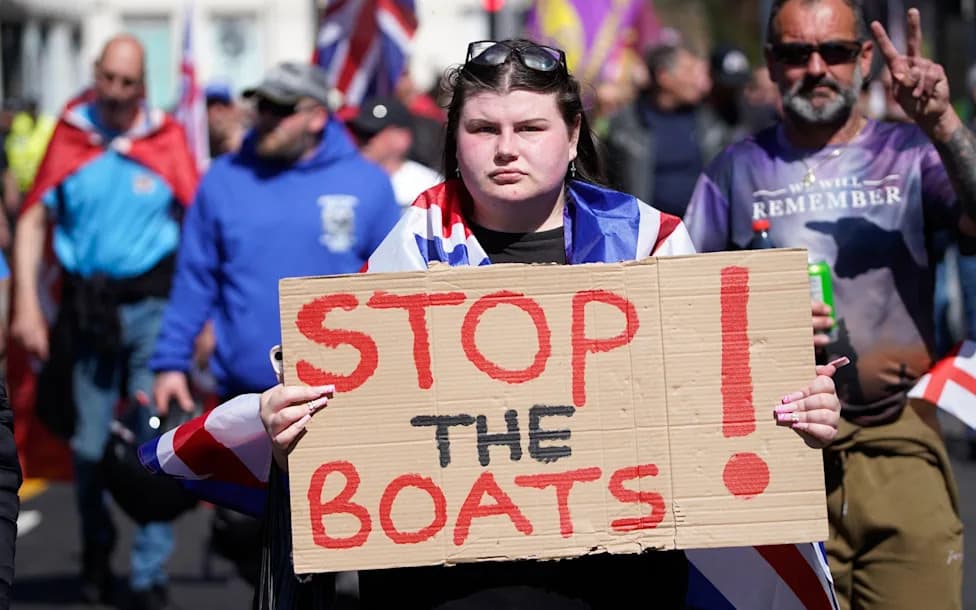
Disorder spread in Belfast on Tuesday following the knife attack [Getty Images]
The government's independent reviewer of terrorism legislation, Jonathan Hall KC, has called for a public debate about the implications of migration for the UK's national security following a high-profile knife attack in Belfast.
Background
Hall made his comments after it emerged that the 30-year-old Sudanese man charged with attempted murder entered the UK in 2023 and had been granted refugee status. Speaking on BBC Radio 4's Today programme, Hall said it was "absolutely legitimate to talk about immigration in the context of national security." He argued that nationality and recent migration could be becoming more relevant to the wider security picture.
"If you look at state threats and people who have been willing to act as proxies or carry out attacks on behalf of Iran... I'm interested in the question of whether or not foreign nationality, particularly recent migrants, is becoming more relevant to the overall national security picture," Hall said.
Security Concerns and Evidence
Hall acknowledged that the Belfast stabbing does not currently appear to be a national security incident, but said it has had "huge ramifications," including instances of Black and minority ethnic residents being displaced from their homes, which he described as "extraordinarily destabilising." He drew a comparison with security assessments of individuals who left the UK to join ISIS in Syria, noting that prior involvement in serious violence is a relevant factor when assessing future risk.
The Ministry of Justice does not record the immigration status of convicted people, though it does hold data on nationality. Ben Brindle, a researcher at the University of Oxford's Migration Observatory, told BBC Radio 4's World at One that in 2024 the share of foreign nationals among convictions and among prisoners in England and Wales was roughly equal to the foreign-national share of the population (about 13%). Brindle emphasised that differences in conviction rates between nationalities are influenced by socioeconomic factors, age and sex — for example, young men are both more likely to claim asylum and statistically more likely to commit offences.
Political Reaction
During an urgent question in the House of Commons, Home Office minister Dan Jarvis said the government had carried out 67,000 deportations and removals under the current administration, and pledged to seek any further powers required to remove people who pose a threat to the public.
Shadow home secretary Chris Philp proposed leaving the European Convention on Human Rights to enable immediate deportation of illegal arrivals, saying it would curb illegal migration and associated crimes. Critics argue such steps would raise legal and human-rights concerns.
The Attack And The Victim
On Wednesday, 30-year-old Hadi Alodid was charged with attempted murder over a knife attack in north Belfast. He also faces charges of possession of a knife in a public place and threats to kill an NHS worker, and has been remanded in custody.
The victim, named as Stephen Ogilvy, is in his 40s and remains in hospital. Court reports indicate he has lost his left eye, sustained damage to his right eye, and suffered injuries to his neck and back. Extra police patrols were deployed in the area amid community tension, and the victim's family said "unrest is not welcome."
Questions Ahead
The attack and its aftermath have prompted renewed debate about how migration, public safety and national security intersect. Experts caution that nationality alone is not a reliable predictor of criminality and stress the importance of socioeconomic context and individual assessment, while some politicians press for tougher immigration controls and removal powers. The discussion raises difficult questions about balancing public safety, legal obligations and humanitarian protections.
Help us improve.