Antares Nuclear's Mark-0 microreactor reached criticality at Idaho National Laboratory, marking a major technical milestone toward deployable compact nuclear power. The achievement has intensified military interest: the Army and Air Force are pursuing on-site reactor options through programs such as Janus and ANPI, which aims for at least one installation reactor by 2030. The Mark-0 uses TRISO fuel from BWX Technologies, and officials highlight that microreactors can provide years of resilient power compared with diesel backups.
Antares' Mark-0 Microreactor Reaches Criticality, Sparking Military Push for Deployable Nuclear Power

Illustration: Aïda Amer/Axios. Stock: Getty Images
Antares Nuclear announced that its advanced Mark-0 microreactor reached criticality this month at Idaho National Laboratory, achieving a self-sustaining chain reaction — a key milestone on the path to deployable, compact nuclear power.
Why It Matters
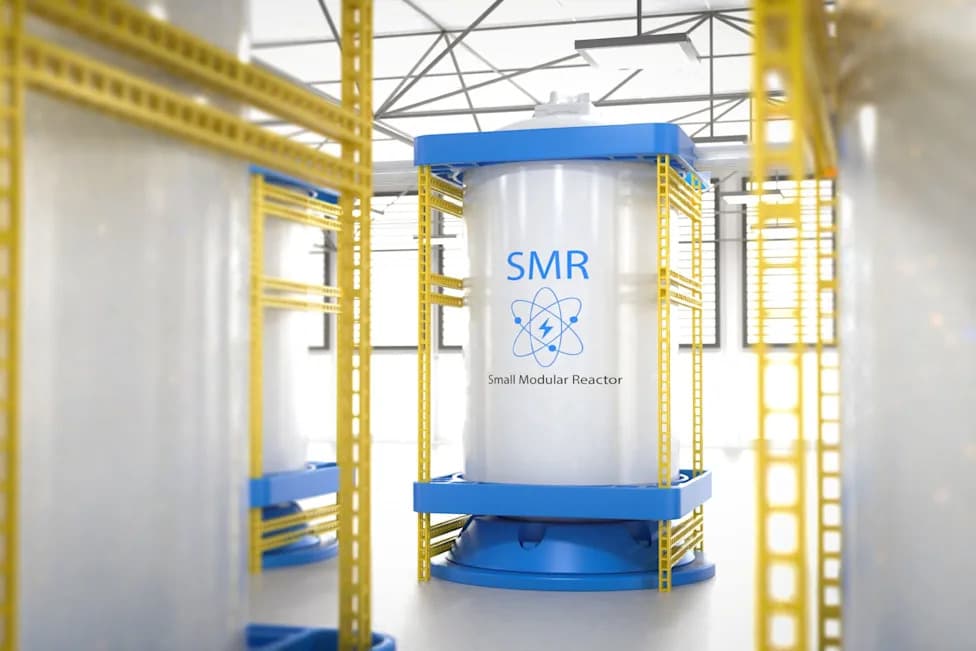
Modern battlefields and fixed bases demand ever-greater, resilient energy: drone swarms, command-and-control systems, radars, data centers and communications infrastructure all require reliable power. Microreactors and small modular reactors offer a high-energy-density alternative to conventional backups, promising long-duration, low-maintenance power that could keep installations online even if the civilian grid is disrupted.
Driving The News
Antares was the first of 10 companies chosen for the U.S. Department of Energy's Reactor Pilot Program, which supports development and testing toward real-world deployment. Another participant, Valar Atomics, recently demonstrated mobility by airlifting a reactor on a C-17 transport aircraft.
"We're months to years out from being able to start deploying this technology to military installations," CEO Jordan Bramble told reporters.
"Thousands and thousands of assets here in the U.S., on military installations, need resilient power," he added. "Couple that with the fact that we now have an adversary that's actually capable of disrupting the civilian grid."
State Of Play
Both the Army and the Air Force have signaled strong interest in on-site nuclear power. The Army's Janus initiative and the Air Force's Advanced Nuclear Power for Installations (ANPI) program aim to evaluate and field compact reactors for bases and forward sites. This year the Air Force paired Antares with Joint Base San Antonio, Texas, as part of ANPI’s effort to have at least one reactor operating on an installation by 2030.
"There is no better high-energy-density source that can keep the lights on on a bad day for a long time," said Rian Bahran, deputy assistant secretary of energy for nuclear reactors.
Bahran contrasted diesel backup generators—capable of providing power for weeks to months—with microreactors that could operate for years without refueling, offering a step change in resilience for mission-critical sites.
Zoom In: Fuel And Mobility
The Mark-0 used tri-structural isotropic (TRISO) fuel fabricated by BWX Technologies (BWXT). Antares' CEO said enough TRISO was produced to support multiple future reactors. BWXT is also a key participant in Project Pele, the Pentagon Strategic Capabilities Office effort to develop mobile nuclear reactors for rapid deployment.
Bottom Line
Antares' Mark-0 achieving criticality is a tangible milestone in efforts to field deployable microreactors for military resilience. If testing and certification proceed on schedule, microreactors could provide multi-year, low-maintenance power at bases and forward operating locations — changing logistics, force posture and contingency planning.
"I think June 4 will be a historic day in the American nuclear renaissance," Energy Secretary Chris Wright said, praising Antares and DOE partners for demonstrating bold progress.
Help us improve.