Congress approved nearly $1 trillion in Medicaid reductions that the CBO says could leave about 7.5 million people uninsured — the largest federal rollback of health support in modern U.S. history. The law adds work requirements, restricts provider-tax strategies, and tightens immigrant eligibility while enhanced ACA subsidies expire. Past rollouts (Arkansas 2018, Tennessee 2005) show many early losses stem from administrative paperwork, not true ineligibility, with measurable harm to health and mortality. With savings rates down and limited financial buffers, households and rural hospitals may face immediate strain.
7.5 Million at Risk: Inside the Largest Medicaid Rollback in U.S. History

24/7 Wall St.
Congress recently approved nearly $1 trillion in reductions to the Medicaid program. The Congressional Budget Office (CBO) estimates that roughly 7.5 million Americans could lose coverage — a scale experts call the largest federal rollback of health support in modern U.S. history.
What the Law Changes
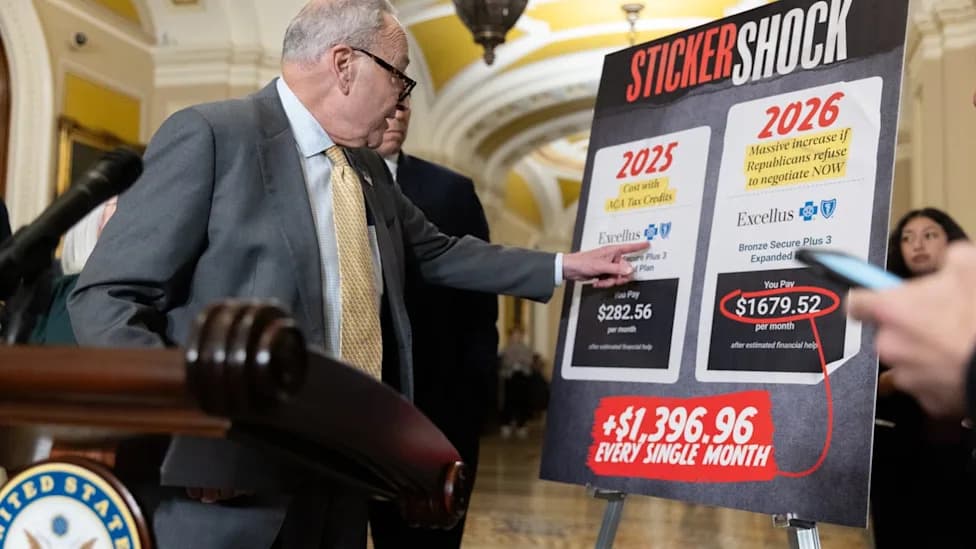
The package layers new work requirements onto state Medicaid programs, restricts how states can use hospital provider taxes to draw federal matching dollars, and tightens eligibility for lawfully present immigrants. It also allowed enhanced Affordable Care Act subsidies to lapse and narrowed marketplace support, compounding potential coverage losses.
How Big Medicaid Is For Households
Medicaid moves real money into American homes. In Q1 2026 the program delivered about $1.05 trillion in transfer income to households, making it the third-largest federal transfer after Social Security and Medicare. Pulling close to a trillion dollars out of that pipeline over several years will directly affect household budgets that are already thinner than they were two years ago.
Economic Vulnerability
Key indicators show limited capacity to absorb a coverage shock: the personal savings rate fell from 6.2% (Q1 2024) to 3.7% (Q1 2026), consumer sentiment was 49.8 in April 2026 (a reading economists associate with weakness), and unemployment stood at 4.3% in May 2026. Household health spending ran at an annual rate of $3,700.1 billion in April 2026, up from $3,494.0 billion a year earlier — and a growing share of that spending could shift to out-of-pocket bills as coverage drops.
Real-World Evidence: Administrative Failures Matter
We do not have to guess how this plays out: similar policies have already produced large coverage losses driven largely by administrative barriers rather than true ineligibility. When Arkansas imposed work requirements in 2018, about 18,000 people lost coverage within six months. Research and advocates reported that most of those disenrollments resulted from paperwork problems with monthly reporting portals and other red tape. Camille Richoux of Arkansas Advocates for Children and Families said the losses hit people who "struggle with the paperwork and red tape." Tennessee's 2005 retrenchment showed similar patterns, and subsequent studies linked coverage disruptions to worse health outcomes and higher mortality.
"This is the biggest rollback in federal support for healthcare ever," says Larry Levitt of KFF.
Downstream Effects To Watch
Health experts warn of predictable consequences: rising uninsurance, fewer doctor visits, medication nonadherence, and greater reliance on emergency rooms to treat otherwise ambulatory conditions. Rural hospitals — which depend disproportionately on Medicaid reimbursements and on the provider tax structures now constrained by Congress — are likely to feel the first and heaviest financial impacts.
The earliest signals will come from states that move quickly to implement work requirements. Watch initial disenrollment numbers and the share of losses attributable to administrative barriers rather than true ineligibility: if the Arkansas pattern repeats, a large fraction of the 7.5 million figure may reflect paperwork-driven attrition.
What This Means For Households
With lower savings and modest unemployment, many households lack the financial cushion to absorb medical bills or sudden loss of coverage. The policy change will shift costs onto families and local providers and create measurable public-health consequences unless states and advocates take steps to reduce administrative barriers and preserve access.
Bottom line: The CBO estimate frames the scale; history shows how administrative hurdles amplify harm. Policymakers, health systems, and communities should prepare for immediate financial and health impacts if enrollment declines follow the patterns of past rollouts.
Help us improve.