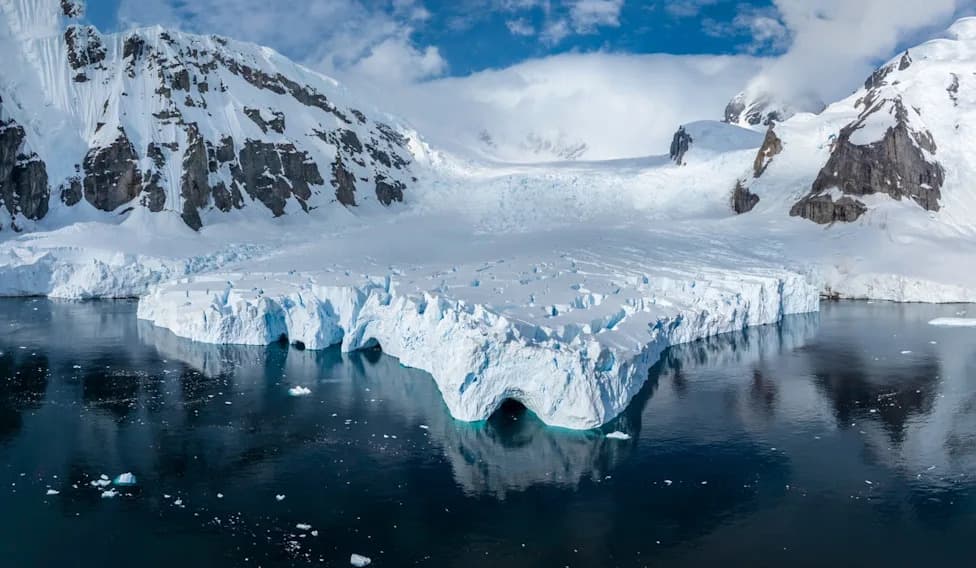
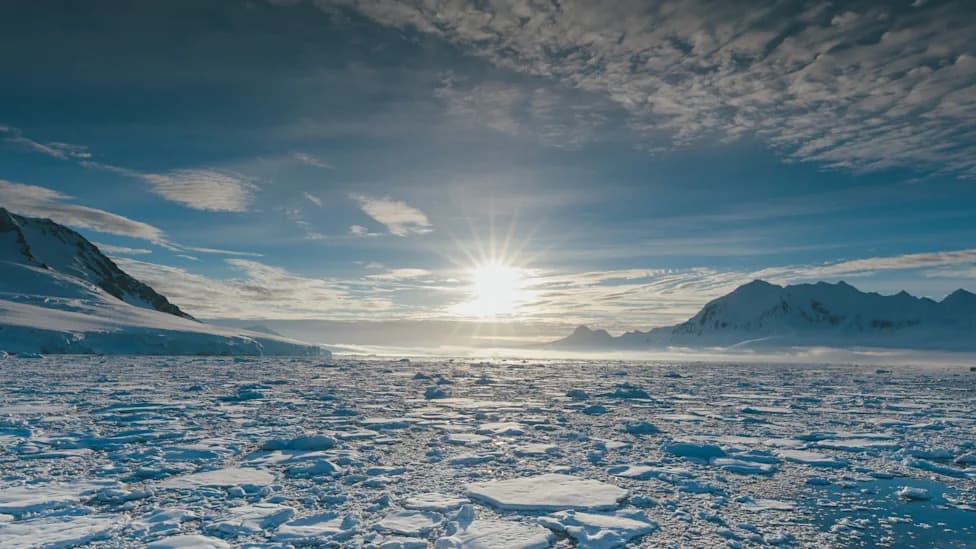
Researchers led by Egidio Armadillo have reconstructed a vast, fan-shaped province of about 30 interconnected basins beneath East Antarctica, dubbed the East Antarctic Fan-Shaped Basin Province (EAFBP). Using rebound topography together with radar, gravity, seismic and magnetic data, they found a radial pattern best explained by rotational extension around a central pivot. The feature underlies roughly half the East Antarctic Ice Sheet and may have influenced Gondwana breakup, Antarctica–Australia separation, and uplift of major mountain ranges. Timing remains uncertain and further work will refine the chronology and ice-dynamic implications.
Scientists Reveal Massive Fan-Shaped Basin System Hidden Beneath East Antarctica
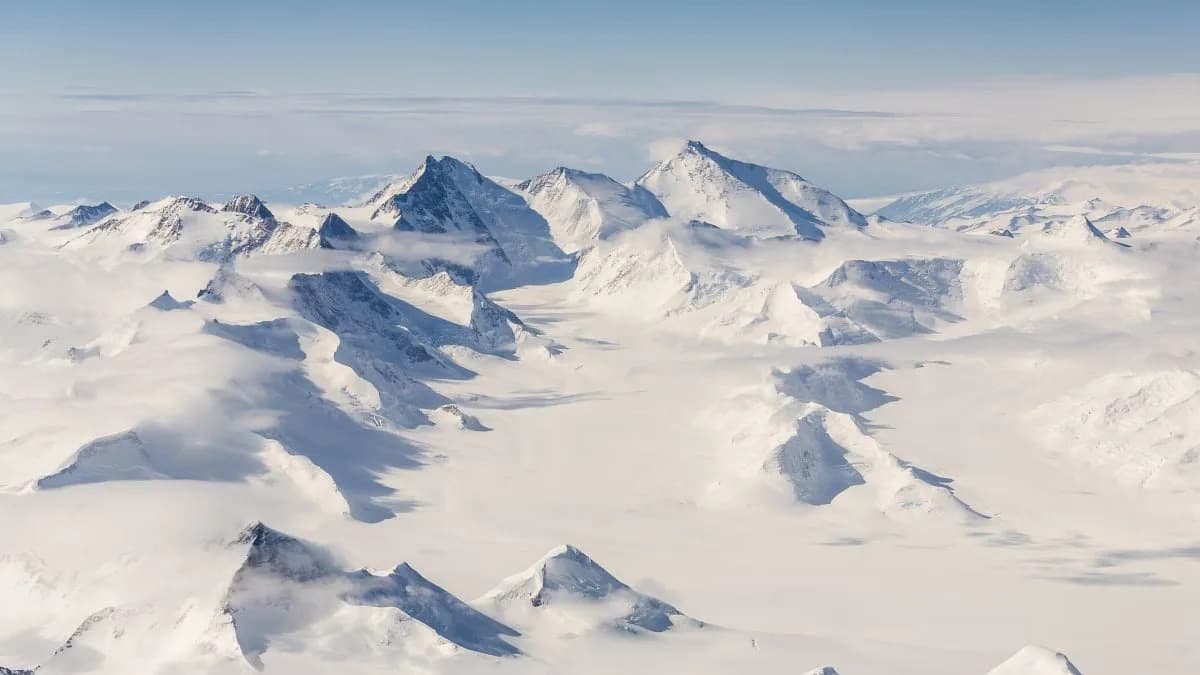
The Transantarctic Mountains, the longest non-compressional range in the world, border one side of the structure. (Matt Palmer/iStock/Getty Images Plus)
Antarctica’s ice sheet hides an ancient landscape of mountains and deep chasms. Decades of radar and geophysical surveys have now helped researchers assemble evidence for an enormous, fan-shaped system of interconnected basins beneath East Antarctica.
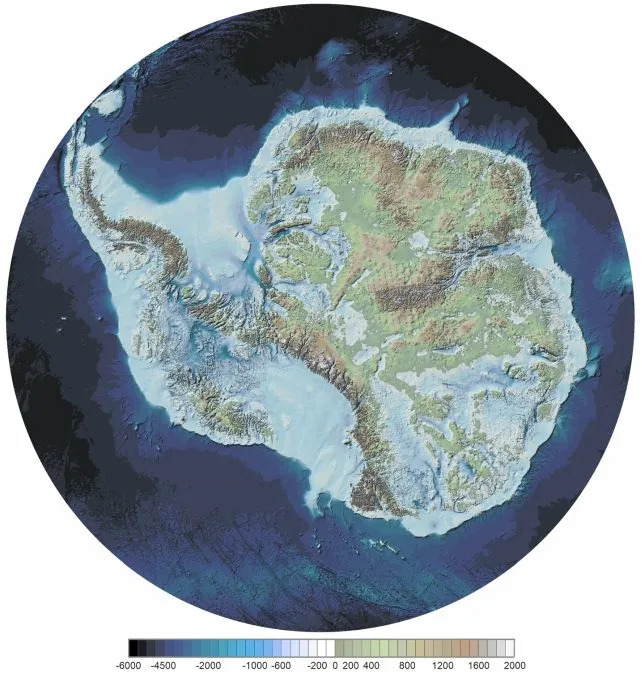
A map of Antarctica beneath the ice. (Pritchard et al.,Sci. Data, 2025)
What Was Discovered
Led by geophysicist Egidio Armadillo of the University of Genoa, the team identified roughly 30 linked subglacial basins that together form what they call the East Antarctic Fan-Shaped Basin Province (EAFBP). The province fans outward toward the coast, as if a sector of the continent rotated and stretched around a central inland pivot.
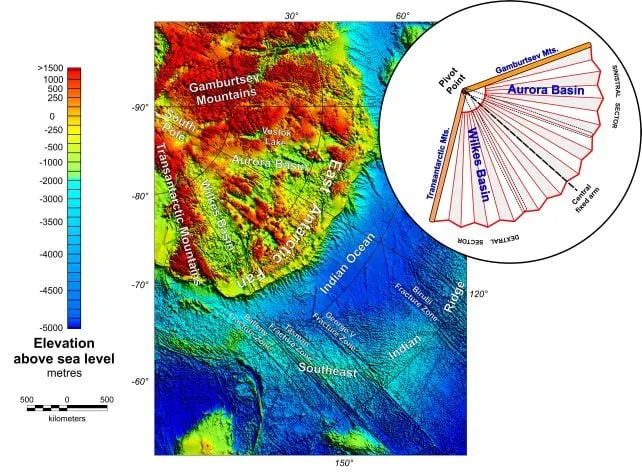
A map of the EAFBP with a fan inset to show the similarity. (University of Genoa)
How the Team Reconstructed the Buried Landscape
The researchers combined reconstructed rebound topography with radar, gravity, seismic and magnetic data to characterise the concealed bedrock. They corrected for glacial isostatic depression — the weight of an estimated ~27 million cubic kilometres of ice pushes the crust down, and removing that load could allow the land to rebound by up to about 1 kilometre (0.6 miles).
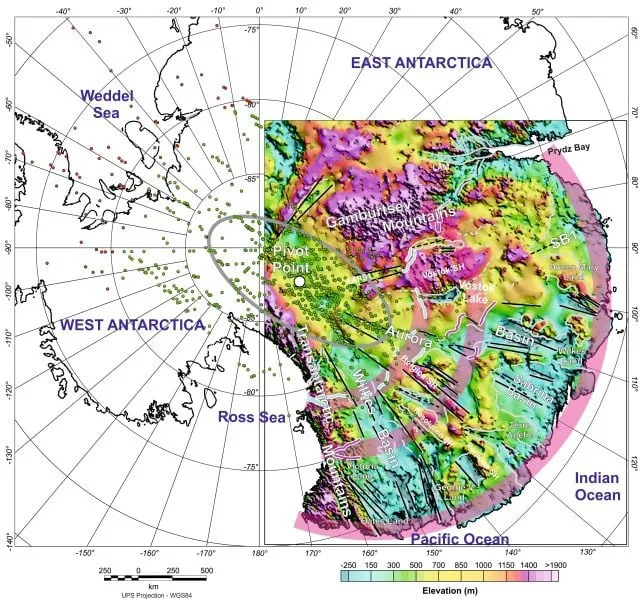
A map of the EAFBP. (Armadillo et al.,Nat. Geosci., 2026)
Interpretation and Mechanism
Many major subglacial basins show a consistent geometry: ridges and basins radiating from a common central point, forming a "coherent continent-scale radial pattern." This arrangement resembles a tectonic feature historically described as a sphenochasm and most closely matches a process called rotational extension, in which crustal blocks diverge around a pivot much like the ribs of an opening handheld fan.
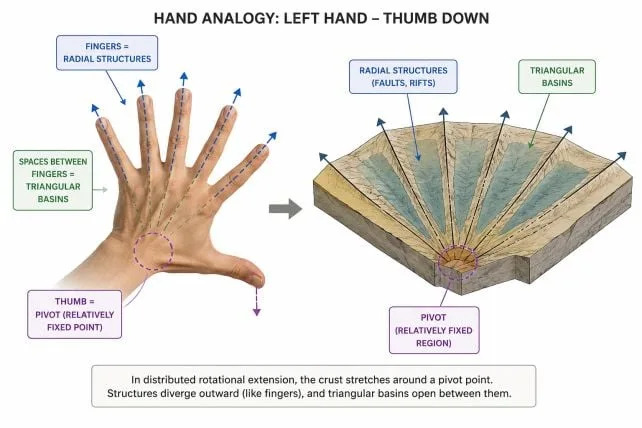
A diagram illustrating how the EAFBP resembles a spread fan, or hand with too many fingers for some reason. (University of Genoa)
"Because these basins underlie about half of the East Antarctic Ice Sheet, they are likely to heavily influence both ice-flow and landscape evolution," the authors write in their paper.
Why It Matters
If the fan-shaped pattern results from rotational extension, it may preserve evidence of tectonic motions that predate the breakup of the Gondwana supercontinent and could have helped steer Antarctica’s eventual separation from Australia. The process may also help explain uplift and formation of major ranges such as the Gamburtsev Subglacial Mountains and parts of the Transantarctic Mountains.

Subscribe to ScienceAlert's free fact-checked newsletter
Uncertainties and Next Steps
The timing of the proposed extension is difficult to constrain, and the feature could be the product of multiple overlapping tectonic events. Future work will refine the chronology, test alternative mechanisms (including inherited structural fabric and glacial modification), and improve models of how the basins influence ice dynamics.
The study has been published in Nature Geoscience.
Help us improve.