Bolivia’s political crisis highlights a wider dilemma for Latin America: how to accept Chinese investment without undermining domestic institutions. Dr. R. Evan Ellis, after a May 2026 visit, argues that opaque contracts and weak oversight have turned foreign projects—notably lithium ventures—into political flashpoints. The article calls for transparent procurement, robust environmental reviews and capacity-building investments that strengthen state institutions rather than substitute for them.
Bolivia’s China Lesson: How Investment Without Oversight Erodes Trust
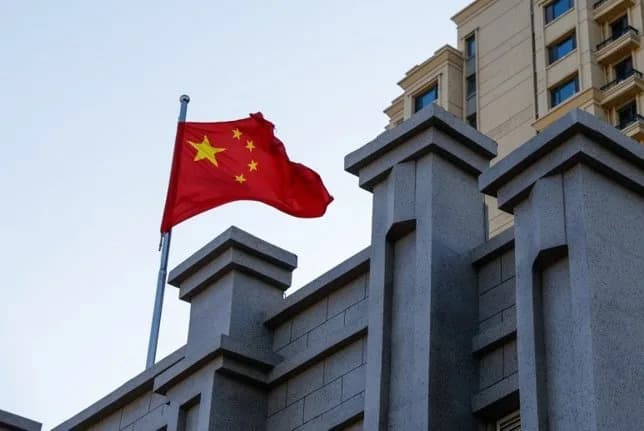
Bolivia's turmoil points to a larger question facing Latin America: how should nations engage China without weakening their own institutions? File Photo by Mark R. Christino/EPA
Bolivia’s recent political crisis is often described as an internal clash over poverty and the future of the movement once led by Evo Morales. That description is accurate, but the turmoil also raises a broader, regional question: how can Latin American countries engage China without hollowing out their own institutions?
China, Investment and Institutional Risk
In a new piece for The Diplomat, Latin America scholar Dr. R. Evan Ellis—based on a May 2026 visit and extensive interviews across Bolivia’s political and business communities—explains why relations with China have become a flashpoint. The central concern is not investment itself but the combination of opaque deals, weak oversight and politicized decision-making that has turned projects into sources of public mistrust.
For years Bolivia appeared to be one of China’s more promising partners in South America. Under the governments of Evo Morales and later Luis Arce, Chinese companies were invited into strategic sectors: infrastructure, energy and mining. The political logic was clear: Bolivia wanted development while avoiding excessive reliance on Washington or traditional Western institutions. China offered financing, technology and geopolitical alternatives.
Yet outcomes were uneven. Several projects tied to Chinese contractors attracted complaints about delays, poor workmanship, labor disputes and corruption allegations. In a country already divided by regional and ethnic lines, these controversies deepened suspicion about who benefits from Bolivia’s resources and on what terms.
The Lithium Question
Lithium crystallizes the problem. Bolivia holds some of the world’s largest lithium reserves—an essential input for electric vehicles and the energy transition—yet has struggled to translate that advantage into broad-based prosperity. Deals involving Chinese and Russian firms have sparked resistance, especially in Potosí, where communities fear extraction that brings environmental harm, heavy water use and limited local benefit.
These environmental and social concerns are not peripheral. They cut to the core of whether Bolivia’s lithium becomes a foundation for national development or another episode in the long history of exporting raw materials while others capture most of the value.
Transparency, Oversight and Political Risk
The problem is not rejecting Chinese investment—doing so would be unrealistic and counterproductive. The issue is the absence of clear rules, transparent procurement, independent environmental review and strong public accountability. When contracts are negotiated behind closed doors, citizens assume the worst; when projects are tied to political patronage, a change of government can transform last year’s policy into today’s crisis.
Bolivia’s current unrest illustrates how quickly economic grievances become tests of state authority. Roadblocks have isolated cities and disrupted access to food and medicine. Unions, Indigenous organizations, teachers and supporters of Morales have pressed grievances into nationwide protests. The actions of Beijing’s representatives have been conspicuous: as Dr. Ellis notes, even while supply routes into La Paz were blocked, China’s ambassador Wang Liang convened an economic forum in Tarija titled "Bolivia, Into The World With China," a contrast that underscored how foreign engagement can appear detached from local tensions.
What Should Change?
Bolivia’s experience matters beyond La Paz. External actors frequently frame China’s role as a geopolitical contest—who gains influence, who loses ground—but that framing misses the more pressing question: do Latin American states have the institutional capacity to negotiate with any major power in ways that protect the public interest? Institutional weakness invites exploitation not only by China but also by Western companies and domestic elites.
Bolivia needs a development strategy built on open competition, transparent contracts, rigorous environmental safeguards and investments in institutional capacity. For the United States and democratic partners, the takeaway is practical: criticism of China is not a strategy. To regain credibility, Washington and like-minded partners must offer viable alternatives—investment that strengthens governance, respects national dignity and leaves institutions more capable than before.
If Bolivia learns that lesson, its lithium and strategic position could become assets for national renewal. If it does not, foreign capital will continue to arrive wrapped in promises while deepening the grievances that already fracture the country.
Gustavo Nakamura is Regional Director in Peru for CEFAS CEU (Ibero-American Center for University Studies), where he focuses on geopolitical analysis and institutional development in Latin America. The views expressed are those of the author.
Help us improve.