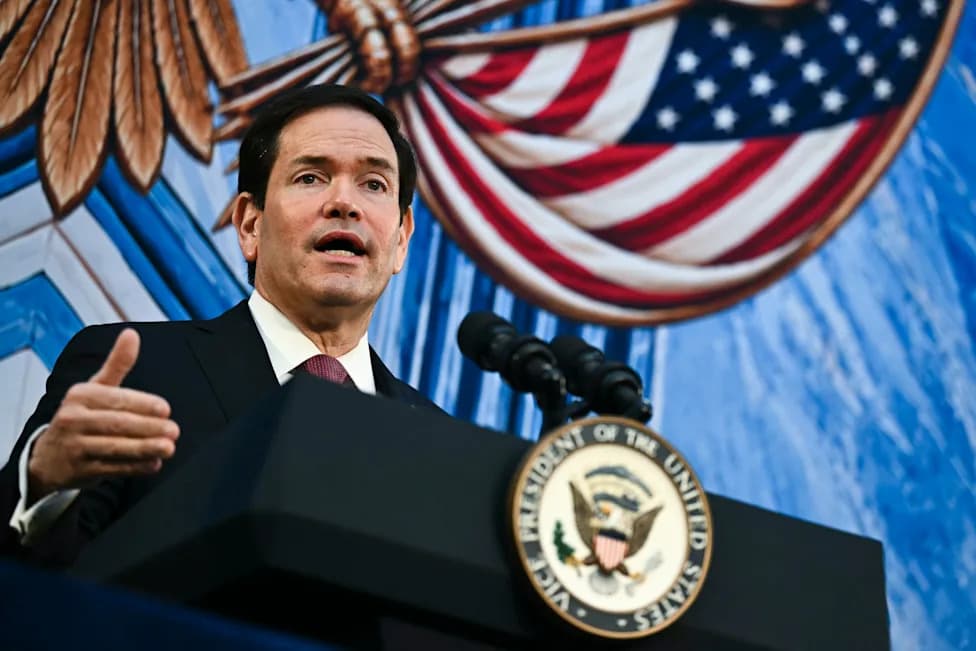
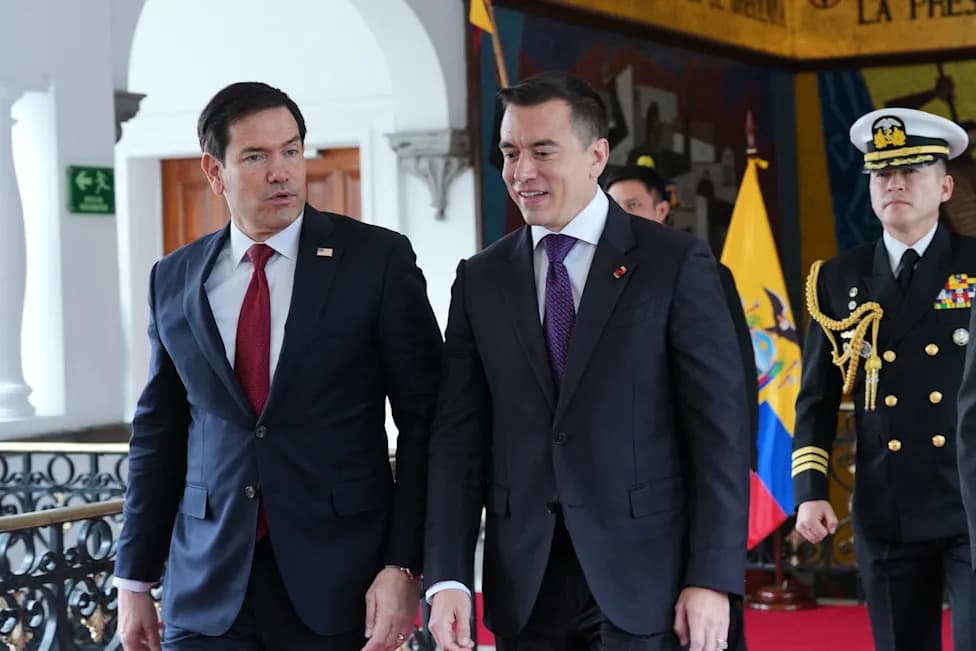
Marco Rubio’s Sept. 10 visit to Lima accelerated Washington’s re-engagement with Peru, as President Keiko Fujimori joined the U.S.-led Shield of the Americas and received a $35 million security package including two King Air 360ER surveillance aircraft. Analysts warn illegal mining, narcotics networks and pervasive corruption remain deeply intertwined with politics and business. The central challenge for Fujimori is converting foreign support into durable state capacity, trustworthy institutions and long-term governance reforms.
Rubio’s Lima Visit Accelerates U.S.-Peru Rapprochement — The Harder Test Is Building a Stronger State
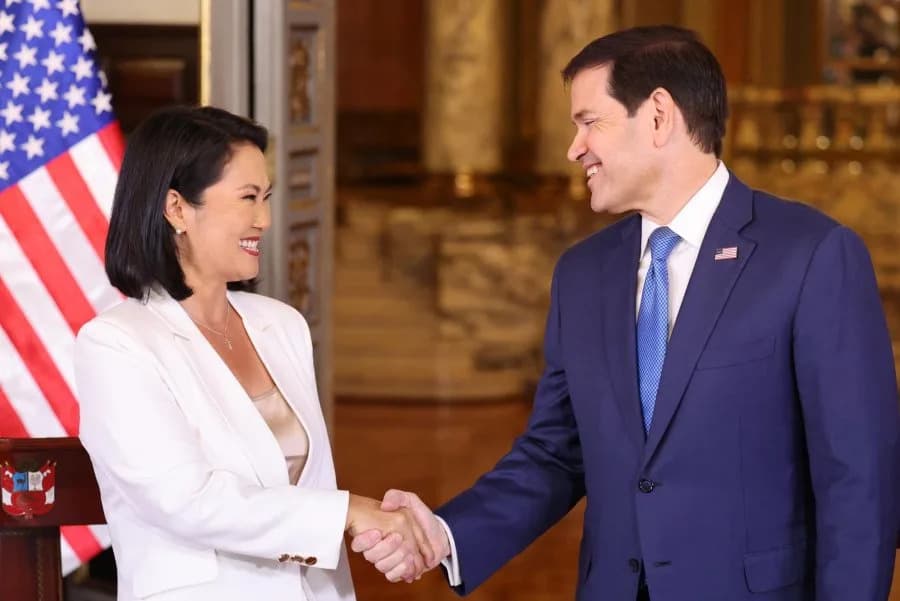
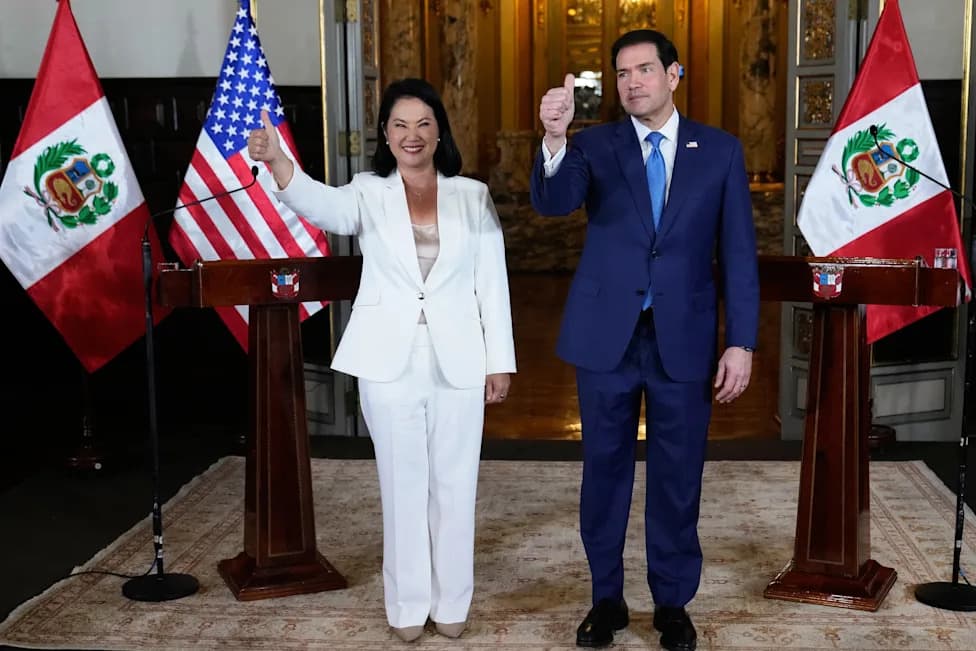
Peruvian President Keiko Fujimori shakes hands with U.S. Secretary of State Marco Rubio during a press conference at Government Palace in Lima, Peru, on Sept. 10. Photo by Paolo Aguilar/EPA
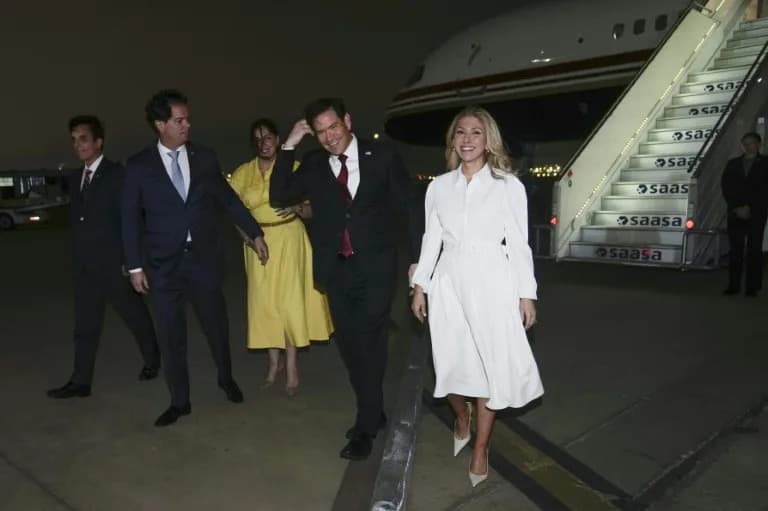
Sept. 15 (UPI) — U.S. Secretary of State Marco Rubio’s Sept. 10 visit to Lima has deepened U.S.-Peru engagement at a critical early moment in President Keiko Fujimori’s term. Barely six weeks into her administration, Fujimori has moved quickly to strengthen ties with Washington, joining a new regional security coalition and expanding cooperation on defense, critical minerals, technology and infrastructure.
What Rubio’s Visit Changed
The visit confirmed Peru’s accession to the U.S.-led Shield of the Americas, a coalition designed to improve intelligence sharing and coordinated action against transnational criminal organizations. Washington also announced a $35 million security package that includes two King Air 360ER surveillance aircraft for the Peruvian Navy, intended to boost maritime monitoring and efforts against trafficking and illegal fishing.
Security Gains — But Deep Challenges Remain
These steps are important, but they do not resolve the deeper, interconnected risks laid out by U.S. analyst R. Evan Ellis after an August visit to Peru. Ellis warns of four overlapping threats: entrenched organized crime and insecurity, pervasive corruption and political fragmentation, China’s expanding strategic influence in Peru’s economy, and the difficult task of rebuilding a durable relationship with the United States.
"A government can confront criminals operating outside state institutions. The problem is far harder when criminal money begins to influence the institutions meant to control it."
Peru’s illicit economy has diversified beyond coca cultivation. Illegal mining, timber trafficking, extortion and drug trafficking increasingly intersect with legitimate commerce, local politics and public institutions. Ellis highlights how rural criminal activity can feed the urban economy when illicit proceeds are laundered through construction projects and informal trade. Illegal mining also poses environmental, economic and governance threats when linked to political and business interests.
Operational Moves and Their Limits
The Fujimori government has already launched security operations against illegal mining, drug networks and remnants of the Shining Path in the VRAEM (a remote jungle area often called Peru’s "cocaine valley") and deployed thousands of additional police officers in Lima. New U.S. assistance can strengthen these efforts, but past large-scale deployments have not always changed the underlying conditions that allow organized crime to flourish.
The real test is not how many operations are announced or how much equipment arrives: it is whether state authority becomes permanent where it has long been absent. Achieving that permanence requires capable police, prosecutors and intelligence services — and institutions citizens can trust.
Corruption and Institutional Trust
Corruption is central to the challenge. In Transparency International’s 2025 Corruption Perceptions Index, Peru ranked 130th of 182 countries. Recent decades of Peruvian politics are marked by presidents investigated, jailed, removed or politically destroyed amid corruption allegations. Fujimori must show that stronger executive action and closer security cooperation with Washington will not erode democratic safeguards.
China, Infrastructure and Strategic Autonomy
China is deeply woven into Peru’s economy with major stakes in mining, energy, telecommunications and infrastructure. The Chancay megaport, for example, has potential to become a major Pacific logistics hub. But critical infrastructure is not neutral in an era of geopolitical competition: ports, telecoms, energy networks and strategic minerals carry both commercial value and national-security implications.
The U.S.-Peru agenda now reaches into those domains. The two governments are implementing a memorandum on critical minerals, Washington has pledged a $5 million development-finance investment in Peru’s mining sector, and discussions are progressing on U.S. support for the Callao naval base. During Rubio’s visit they also highlighted memoranda on artificial intelligence cooperation, a nascent space partnership and plans to explore peaceful civilian nuclear energy cooperation.
These initiatives expand Peru’s strategic choices. The prudent aim is strategic autonomy: productive economic ties with China, a restored partnership with the United States, and broader relations with other democratic economies. A wider set of credible partners gives Peru more room to defend its interests.
From External Support To Lasting Reform
Rubio’s visit presents an opportunity and a test. Washington has signaled readiness to re-engage Peru through security assistance, investment and high-level attention. Now Fujimori must convert that external support into stronger Peruvian institutions rather than merely a new series of bilateral agreements.
As analyst Ellis notes, it remains uncertain whether Fujimori can navigate the political pressures that have undone many recent presidents. Peru has important advantages — abundant natural resources, a dynamic private sector, a strategic Pacific location and growing importance in mineral and transit competition — but strategic importance alone is not strategic strength. Strength depends on institutions that can turn assets into sustainable development while protecting sovereignty, security and democratic stability.
Gustavo Nakamura is Regional Director in Peru for CEFAS CEU (Ibero-American Center for University Studies), focusing on geopolitical analysis and institutional development in Latin America. The views expressed are his own.
Help us improve.