A University of Gothenburg study finds thawing permafrost north of 23.5°N released >300 petagrams of carbon after the last Ice Age, contributing about 52 ppm of the ~90 ppm rise in atmospheric CO2 from ~180 ppm to ~270 ppm. Researchers combined pollen records with climate models to reconstruct vegetation and soil carbon changes over the past ~21,000 years. Holocene peatland expansion later re‑sequestered much of the released carbon, but the results warn that rapid modern warming and sea‑level rise may limit future natural storage options.
Study Finds Permafrost Thaw May Have Driven Nearly Half of CO2 Rise After the Last Ice Age
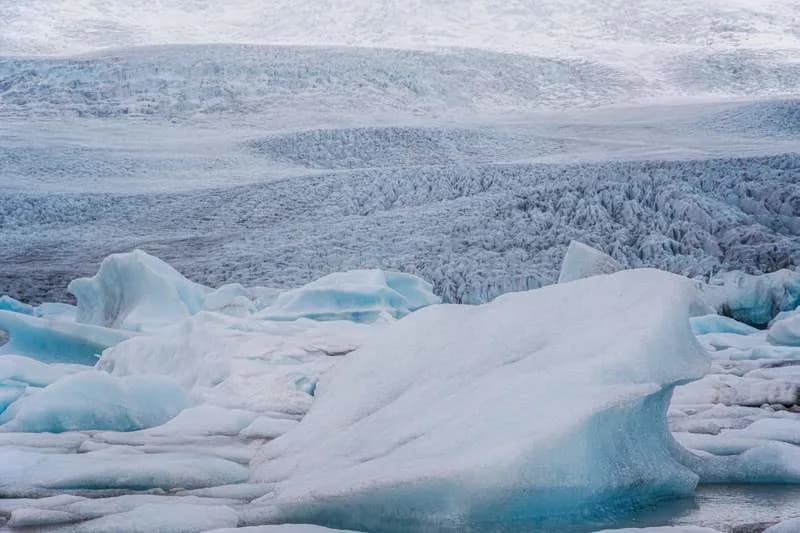
A University of Gothenburg study finds thawing permafrost released massive amounts of carbon after the last Ice Age, potentially accounting for nearly half of the atmospheric carbon dioxide increase that accompanied Earth’s transition into a warmer climate. (CREDIT: Shutterstock)
A new analysis from the University of Gothenburg suggests thawing permafrost across northern lands released enormous amounts of ancient carbon as the planet warmed after the last Ice Age. The researchers estimate these emissions contributed roughly half of the atmospheric carbon dioxide increase that accompanied the transition from glacial to interglacial conditions.
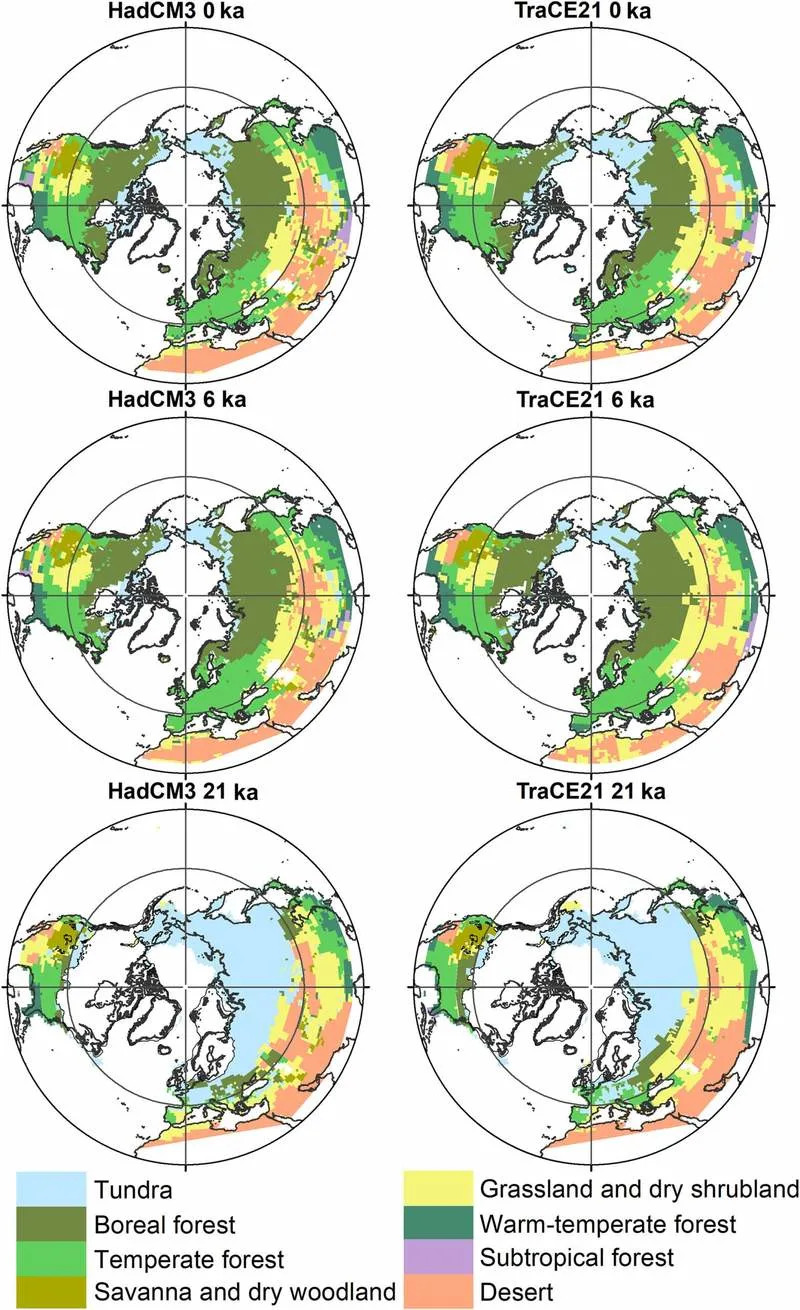
Reconstructed biome distributions at 0, 6, and 21 ka. (CREDIT: Science Advances)
What the Study Shows
The team focused on regions north of 23.5°N (north of the Tropic of Cancer), where extensive permafrost and wind‑blown loess deposits preserved organic material through the glacial period. By combining pollen records with climate model outputs — taking snapshots every 1,000 years — the authors reconstructed past vegetation and estimated changes in soil carbon storage over the last ~21,000 years.
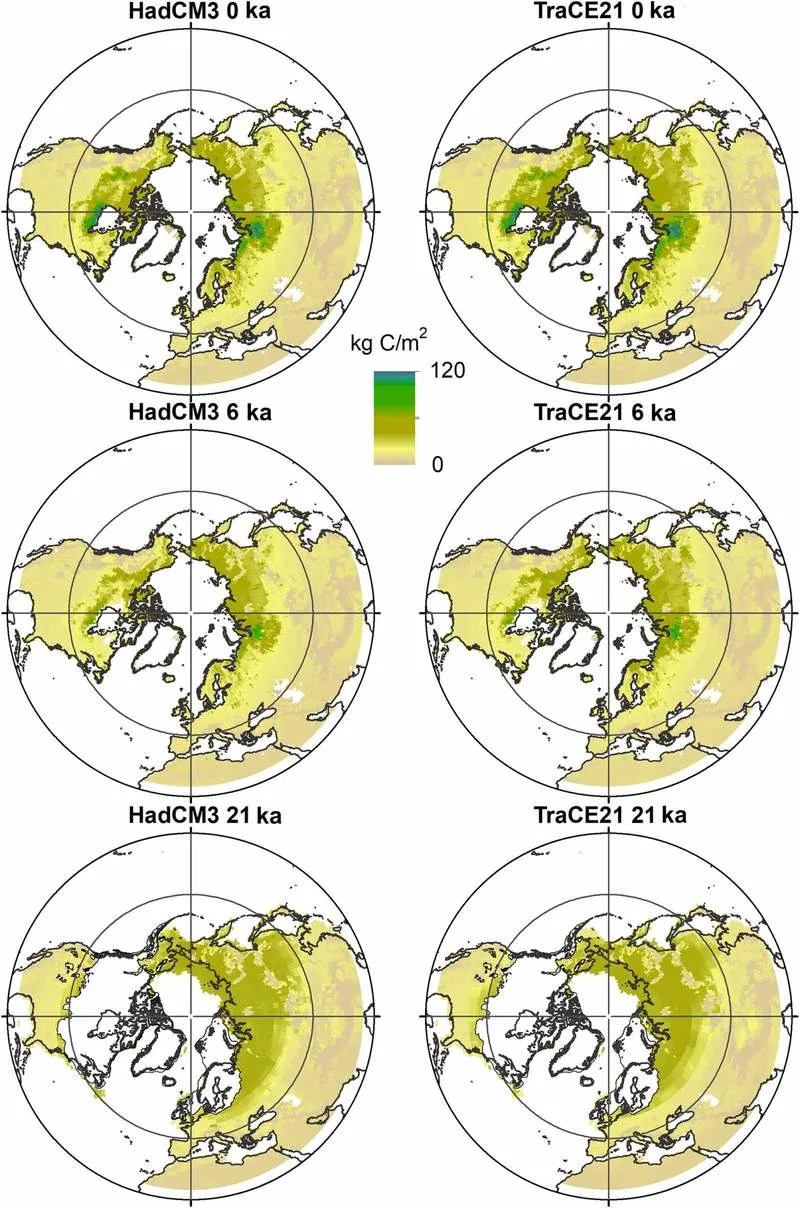
Distribution of soil C density. (CREDIT: Science Advances)
The researchers estimate northern terrestrial areas released more than 300 petagrams of carbon (1 petagram = 1 billion metric tons) during the major thawing interval between about 17,000 and 11,000 years ago. On a global atmospheric scale, that loss would account for roughly 52 parts per million (ppm) of the total ~90 ppm rise in atmospheric CO2 (from ~180 ppm at the last glacial maximum to ~270 ppm by ~11,000 years ago).
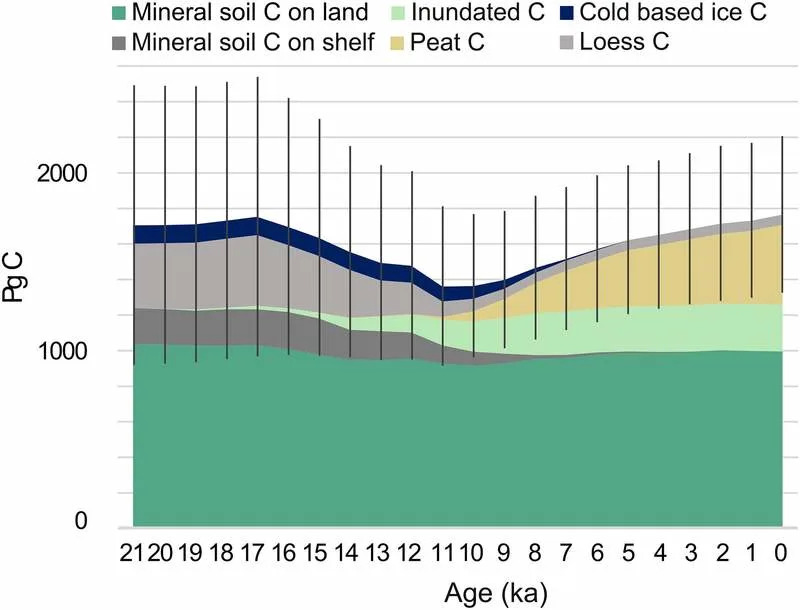
Time series of the development of land C storage. (CREDIT: Science Advances)
Why Permafrost Matters
Under cold, frozen conditions microbes decompose organic matter very slowly, allowing huge carbon stores to accumulate in soils and loess deposits. When climates warmed after the Ice Age, thawing exposed this long‑preserved material to decomposition and released pulses of CO2 that help explain abrupt greenhouse‑gas spikes seen in ice‑core records.
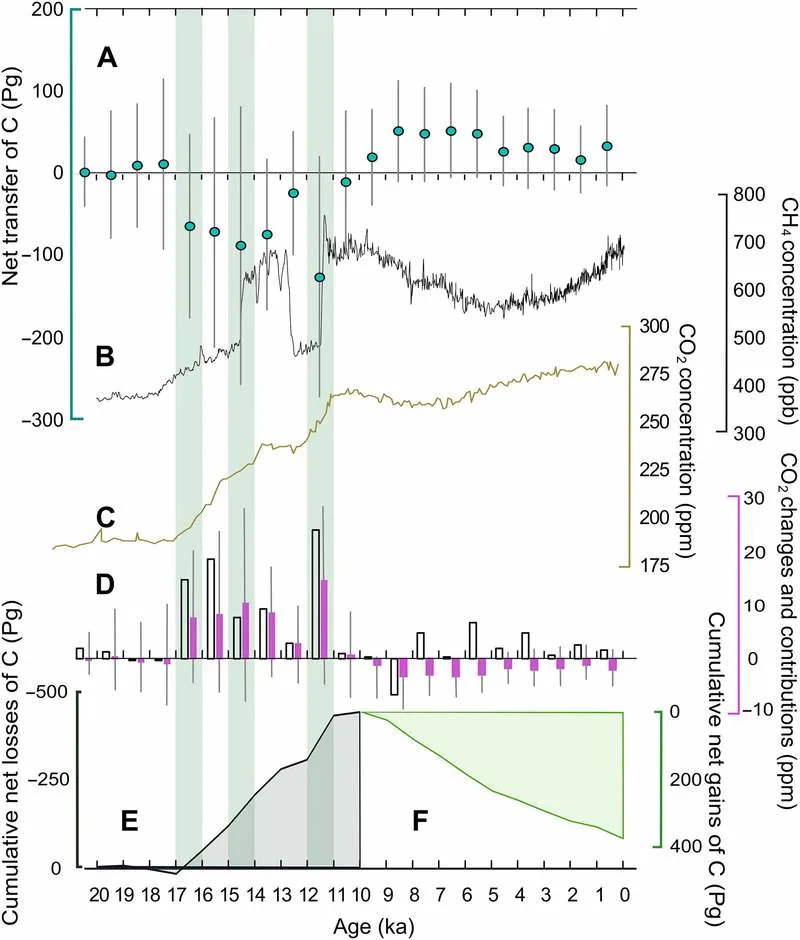
Time series of net land C transfers, atmospheric CO2 and CH4 concentrations, and cumulative losses and gains of C. (CREDIT: Science Advances)
"We estimate that land north of the Tropic of Cancer emitted a lot of carbon when northern‑hemisphere temperatures rose after our last ice age," said Amelie Lindgren, researcher in ecosystem science at the University of Gothenburg.
Natural Recovery: Peatlands
Following the main thaw, peatland expansion in the Holocene (the current warm period) sequestered large quantities of carbon. The study finds that peat accumulation over millennia offset much of the earlier permafrost carbon loss, helping stabilize atmospheric CO2 for thousands of years.
Implications for Today
Although these events unfolded over centuries to millennia, the study carries an urgent message for the present: human activities have already raised CO2 far more rapidly — from ~280 ppm pre‑Industrial to ~420 ppm today — and modern warming is again thawing permafrost. Unlike the post‑Ice‑Age world, future warming may provide fewer new land areas for carbon to reaccumulate (because of sea‑level rise), making permafrost carbon release a potentially important additional climate forcing.
The researchers published their findings online in Science Advances. Their work strengthens the case for including realistic permafrost carbon dynamics in climate models and underscores the value of conserving natural carbon sinks such as peatlands.
Help us improve.