New analyses reinforce that human-caused warming is exacerbating many extreme weather events. Carbon Brief’s mapping of over 900 studies finds roughly 77% of events became more likely or severe and about 85% show some influence from climate change. NASA satellite data point to a recent increase in drought and flood intensity, while a World Weather Attribution report links warming-driven permafrost thaw to a deadly Himalayan rock collapse. Researchers say longer records are still needed to confirm some trends, but the evidence points to warming intensifying extremes.
New Research Strengthens the Link Between Global Warming and Extreme Weather

New Research Strengthens the Link Between Warming and Extreme Weather
Researchers are amassing a growing body of evidence that human-caused global warming is making many extreme weather events more frequent and more severe. Early attribution work—most notably a 2004 analysis of the 2003 European summer heatwave that killed more than 70,000 people—found that human influence had at least doubled the probability of such an event. That finding catalysed a wider scientific effort to quantify how warming affects individual extreme events.
Large-Scale Evidence from Carbon Brief
UK-based Carbon Brief has compiled and mapped more than 900 published studies covering nearly 1,000 distinct extreme events and trends to make the growing literature easier to survey. Across those cases, Carbon Brief found that 77% were made more likely or more severe because of climate change, while about 8% were made less likely or less severe. Overall, roughly 85% of the reviewed events and trends show some detectable influence from human-caused warming.
Recent Satellite Analysis From NASA
In 2025, NASA published an analysis using observations from the GRACE satellite mission that documented a notable increase in the intensity of several kinds of extremes—droughts, floods and similar events—over the preceding five years. Some 2024 measures were reported at approximately twice the 2003–2020 average. NASA identified climate change as the most plausible driver of the rise in intensity but stressed that the pace of change appears to outstrip the rise in global temperatures. The study’s authors noted that a much longer record—another decade or more—will be needed to determine whether these changes represent a sustained trend.
Bailing Li, of the Hydrological Sciences Laboratory at NASA’s Goddard Space Flight Center, cautioned: "We can't prove causation yet—we would need a much longer dataset. It's difficult to pinpoint exactly what's happening here, but other events suggest that (global) warming is the driving factor. We are seeing more and more extreme events around the world, so this is certainly alarming."
Case Study: Himalayan Rock Collapse and Floods
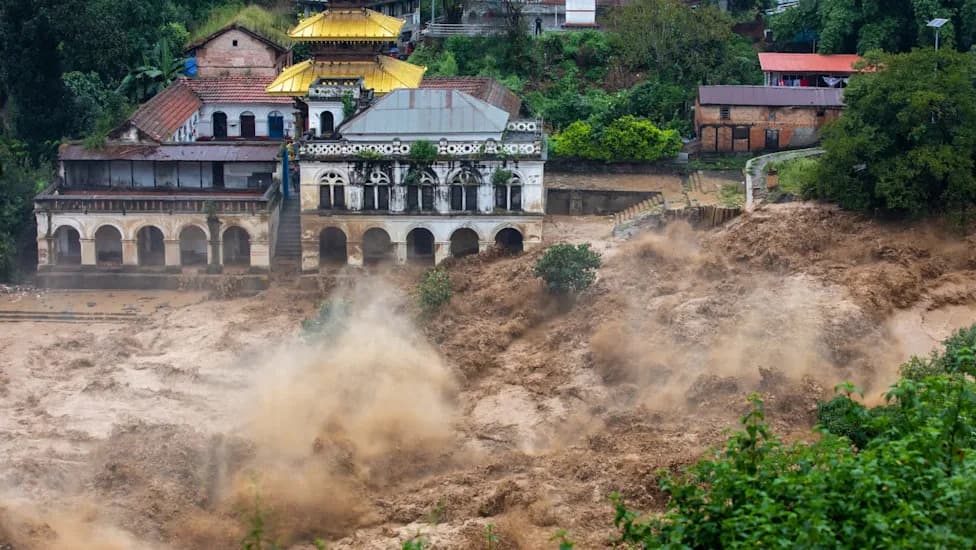
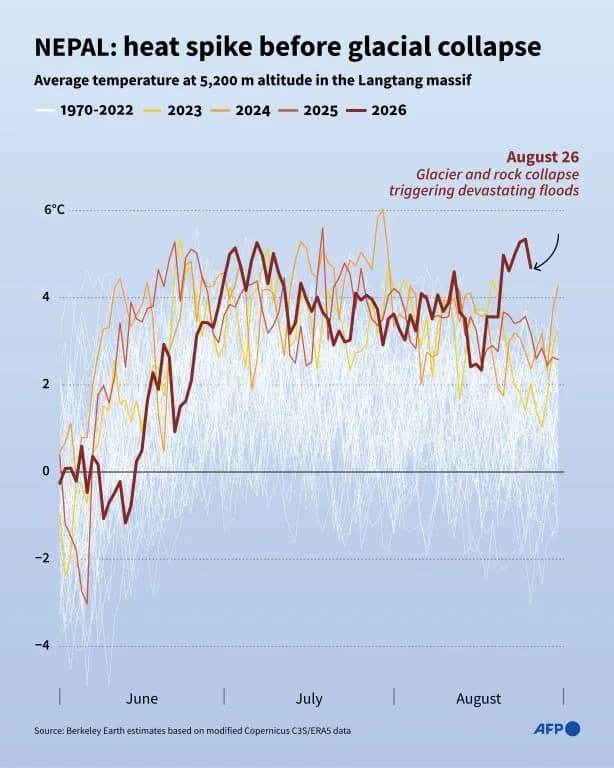
A September report by roughly two dozen researchers for World Weather Attribution concluded that warming very likely contributed to a large rock collapse on Langtang Lirung in August, which triggered devastating floods in parts of Nepal and Tibet. The team found that unusually warm conditions—including measured temperatures near 12°C on the mountain’s northern face in the days before the collapse and anomalously warm July–August conditions—likely destabilised ice and permafrost that had helped bind the rocky slopes.
The report acknowledges that other factors—such as the 2015 Nepal earthquake—may have contributed to slope weakening, but judged the linkage to human-caused warming to be "very strong." The disaster killed more than 1,300 people, left thousands missing, and prompted Nepal to estimate recovery and reconstruction costs at roughly $5 billion. Although the World Weather Attribution study has not yet appeared in a peer-reviewed journal, its findings could support Nepal’s requests for international climate adaptation and loss-and-damage funding.
Mechanisms: Permafrost Thaw and Contaminants
Scientists have documented processes that help explain how warming can increase slope failure risk in high mountains. Permafrost—soil and sediment bound by ice—acts as a seal that limits water infiltration. When permafrost thaws, more water can penetrate rock fissures; if that water later refreezes it expands cracks and weakens surrounding rock. Researchers have also reported rising mercury concentrations at high elevations compared with preindustrial times, linked to warming-driven changes. Walter Immerzeel, a mountain hydrologist at Utrecht University who contributed to the report, explained how thawing permafrost and increased water cycling undermine mountain stability.
What This Means
A broad suite of studies over the past two decades increasingly associates human-caused warming with many kinds of extreme weather. While climate change is not the sole cause of every severe event, the evidence indicates that rising global temperatures are intensifying many extremes and causing some events to occur more often. Scientists emphasise that longer observational records and continued peer review are important next steps, but policymakers and communities face a growing need to adapt to heightened risks.
By Felicity Bradstock for Oilprice.com
Help us improve.