The Elephant’s Foot is a glassy mass of corium formed when Chernobyl’s Reactor 4 melted down and fused fuel with reactor materials. Discovered in December 1986, it initially emitted roughly 10,000 roentgens per hour — enough to be lethal within minutes of direct exposure. Corium has been produced only a few times worldwide, and Chernobyl contains an estimated 100 tons. Laboratory recreations of LFCMs and Chernobylite are helping scientists understand corrosion and long‑term behavior to improve cleanup and future reactor safety.
The Elephant’s Foot: Chernobyl’s Most Dangerous Man‑Made Remnant
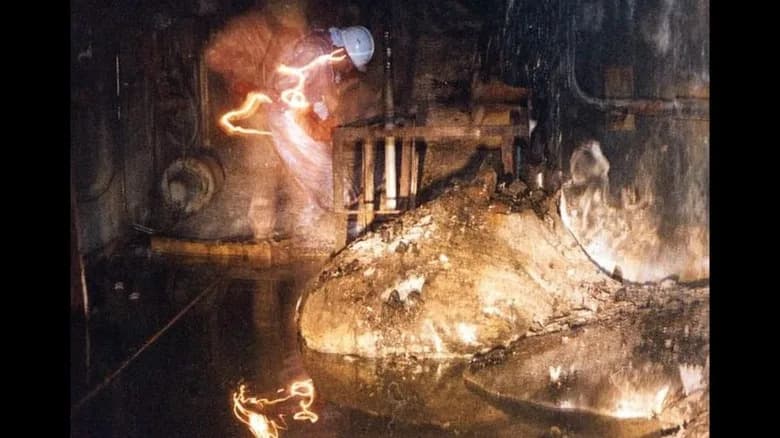
The "Elephant's Foot" corium mass - U.S. Department Of Energy
Forty years after the 1986 Reactor 4 catastrophe, Chernobyl remains a stark reminder of the hazards of nuclear accidents. Hidden beneath the ruined reactor lies one of the disaster’s most notorious remnants — a glassy, black mass nicknamed the "Elephant’s Foot." Formed during the core meltdown, this material is one of the most hazardous man‑made substances ever unintentionally created.
What Is the Elephant’s Foot?
The Elephant’s Foot is a solidified mass of corium (also called lava‑like fuel‑containing material, or LFCM). It formed when molten nuclear fuel fused with reactor components and building materials — steel, concrete, glass, sand and graphite — then flowed into lower corridors and cooled into a glassy, ceramic‑like slag. Chemically it contains melted fuel, fission products and elements such as uranium and zirconium.
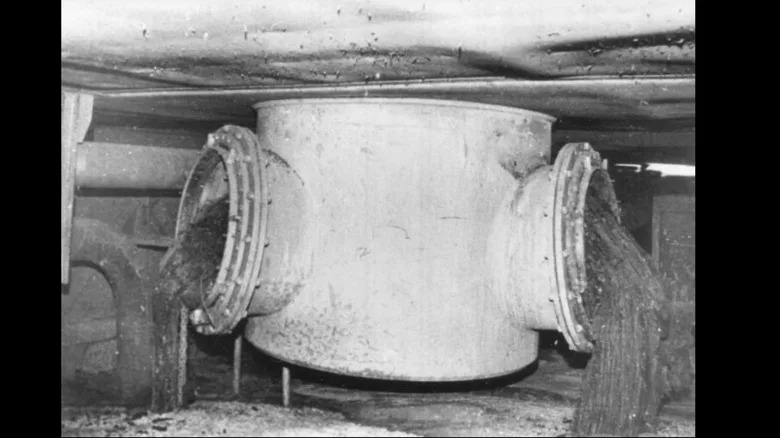
Corium flowing through a steam valve - PNNL
Discovery and Immediate Danger
Dosimetry teams first located the mass in December 1986 while inspecting the reactor’s lower levels. At discovery it emitted on the order of 10,000 roentgens per hour, a level at which just minutes of unshielded exposure could be fatal. The Elephant’s Foot represents only a portion of an estimated ~100 tons of corium now buried beneath the Chernobyl site. Although radioactivity has declined through decay, these materials remain hazardous and require long‑term management.
Unique Minerals: Chernobylite
As corium cooled in the presence of air and steam, a unique crystalline matrix formed, now called chernobylite. This mineral concentrates uranium, zirconium and other contaminated byproducts. Its nearest analogue is trinitite, the fused glass formed at the 1945 Trinity nuclear test. Both are geological byproducts of extreme nuclear events and are themselves radioactive.
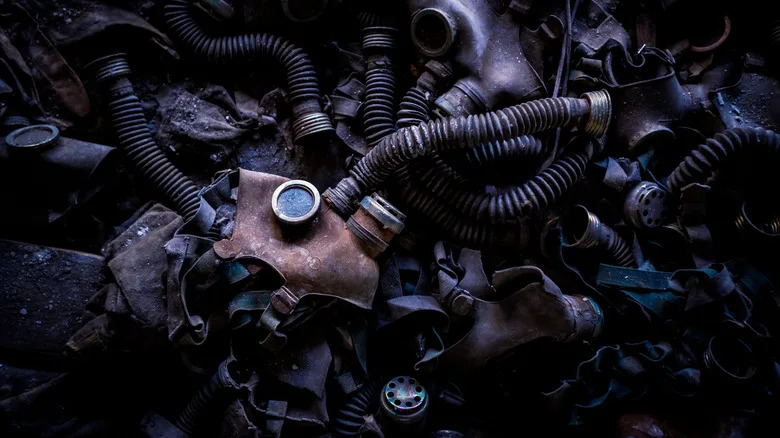
Gas masks in left in a school building on the site of Chernobyl - Wirestock/Getty Images
Research and Remediation
Corium formation is rare — documented only a handful of times worldwide (Chernobyl, Three Mile Island and three events at Fukushima Daiichi). Because real samples are highly radioactive and form only during severe accidents, researchers have recreated LFCM and Chernobylite analogues in laboratories to study corrosion, stability and long‑term behavior. A recent study published in Nature reports successful synthesis of LFCM analogues and a Chernobylite‑like material, advancing understanding that can inform cleanup strategies and safer reactor designs.
Why it matters: Studying the Elephant’s Foot and related materials helps scientists predict how corium will evolve, how it corrodes containment structures, and what remediation approaches are safest and most effective — knowledge that could reduce risk in current and future nuclear incidents.
Help us improve.