Ghana has recorded 14 arrests tied to false news and offensive online speech in under 16 months, nearly double the number during the previous administration, the MFWA says. The arrests have reignited debate over whether existing laws (Section 208 of the Criminal Code and Section 76 of the Electronic Communications Act) are being properly applied in the digital age or are being used to curb dissent. Supporters of enforcement cite anonymous and reckless social-media content; critics point to alleged misapplications of the law and call for clearer rules, stronger institutions and better constitutional education. Opposition leaders warn that excessive use of state power risks eroding Ghana's democratic gains.
Ghana Arrests of Critics Spark Fresh Fears Over Free Speech Under President Mahama
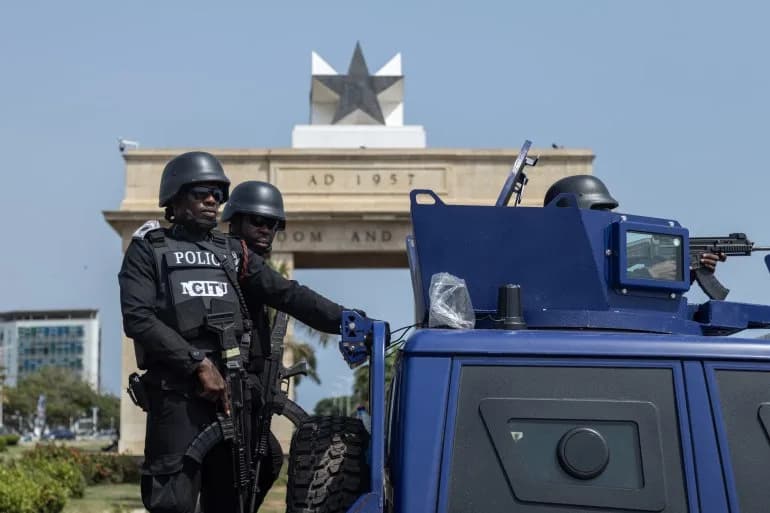
Police officers on security patrol in front of the Ghana black star symbol [Frank Kporfor/Epa]
Accra, Ghana — The Media Foundation for West Africa (MFWA) reports that Ghana has recorded 14 arrests linked to false news and offensive speech in fewer than 16 months — nearly double the number logged during the previous administration's entire eight-year term. The rise has sharpened a national debate over whether authorities are simply enforcing existing laws in a changing digital landscape or taking an increasingly restrictive approach to public expression.
The legal focus centers on long-standing provisions in Ghana's Criminal Code (Section 208) and the Electronic Communications Act (Section 76), which authorities say must now be applied to fast-moving online content. Government defenders argue enforcement responds to an explosion of anonymous, reckless and potentially dangerous material on social media. Critics counter that the problem is not the statutes themselves but how they are being used.
Political Reactions
A senior ruling party official dismissed claims of a coordinated crackdown:
"The opposition intentionally sponsors people to insult the President. When the law catches up with them, they cry persecution to score cheap political points."He cited the arrest last August of TikToker Prince Ofori, known as "Fante Comedy," saying that his appearance at an opposition rally days later shows how quickly such cases become politicised.
Opposition leaders see a more troubling pattern. Minority leader Alexander Afenyo-Markin told Al Jazeera:
"The state-sponsored persecution must stop. Arresting citizens for words that do not constitute genuine threats is not justice. It is intimidation."He acknowledged speech has limits but warned the state risks undoing Ghana's democratic gains if enforcement becomes excessive.
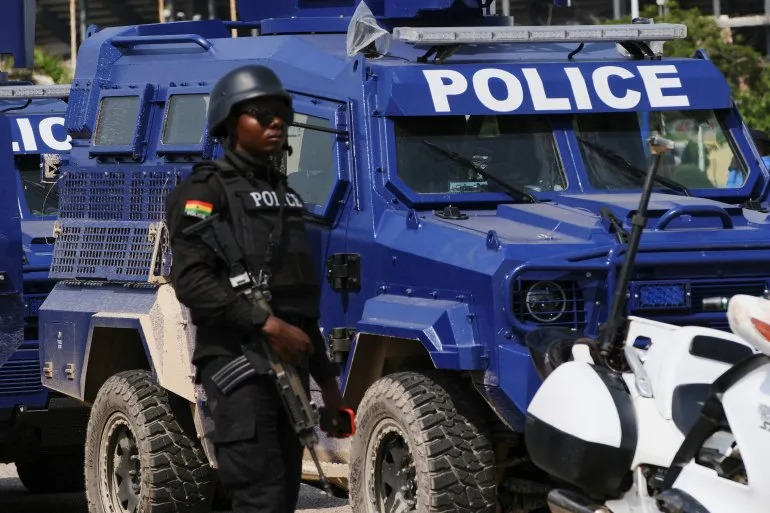
Police stand guard during a Show of Force Exercise in Accra last December [Francis Kokoroko/Reuters]
Legal and Civil-Society Concerns
A legal consultant who reviewed recent prosecutions said he found at least 16 alleged misapplications of Section 208 in the past 18 months, compared with roughly a dozen such cases over the previous eight years. "The law has been abused beyond repair," he said, urging repeal or reform.
Veteran journalist Ben Ephson called for clearer public guidance: "The government must properly explain the arrests so people can draw the line between press freedom and responsible journalism." Civil-society voices also urged institutional solutions: independent courts, transparent enforcement, media self-regulation and improved digital literacy.
Broader Context
Observers note that similar tensions between free speech and online regulation are playing out across democracies worldwide. Diaspora groups have raised concerns that high-profile arrests could tarnish Ghana's international image. Officials and ruling-party communicators insist there is no systematic attempt to silence dissent and that enforcement reflects a pre-existing legal framework facing new technological pressures.
What’s at stake: The central question remains whether Ghana can protect citizens from genuinely harmful online speech without undermining the tolerant, competitive political culture that has long defined the country. Critics argue President Mahama, who as an opposition leader once condemned state intimidation as a "dangerous blueprint," now has an opportunity to demonstrate restraint and leave a legacy of tolerance and free speech.
Help us improve.