The report emerging from the 2025 Native Nations Honorary conference (42 tribal nations represented) presents a national agenda that centers tribal leadership in early childhood systems. It highlights barriers such as poverty, workforce shortages and funding limits — especially for families living off tribal lands — and underscores early childhood programs' role in preserving language, culture and tribal sovereignty. Tribal leaders are urged to prioritize early childhood, strengthen the workforce and use the report's recommendations when working with state and federal partners.
New Report Urges Tribal Leadership to Rebuild Early Childhood Systems and Preserve Culture
A new national report, A National Agenda for Tribal Early Childhood Development in Practice: Prioritizing Tribal Leadership in Early Childhood Systems, grew out of the 2025 Native Nations Honorary 'Culture Shaping Futures for Native Children' conference. Representatives from 42 tribal nations and organizations convened to set shared priorities for Native children and families and to propose an agenda that centers tribal leadership in early childhood services.
Why This Matters
The report documents persistent barriers facing Native communities — including poverty, workforce shortages, unequal funding, and limited access to culturally relevant services for Native families who live away from tribal lands. It argues that early childhood systems are essential not only for child development but also for restoring language, culture and tribal sovereignty that have been eroded by historical trauma.
Voices From the Field
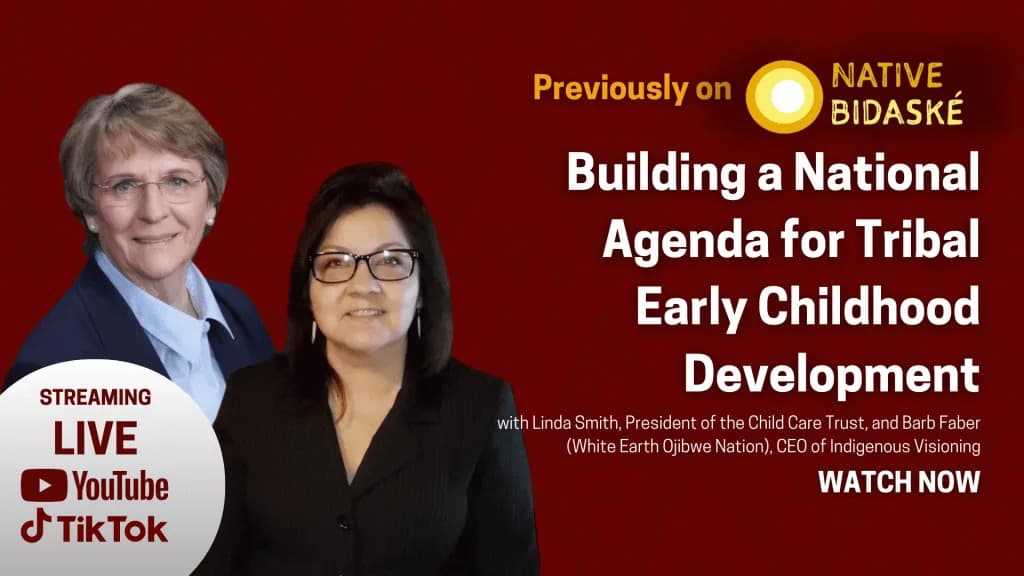
On a recent episode of Native Bidaské, host Levi Rickert spoke with Linda Smith, president of the Child Care Trust and longtime national early childhood policy leader, and Barb Faber, CEO of Indigenous Visioning and a citizen of the White Earth Ojibwe Nation, who has worked in tribal early childhood systems for more than three decades. They unpacked the report's findings and discussed concrete recommendations for tribal, state and federal partners.
Conference Goals and Shared Priorities
Smith: The conference aimed to gather experts from across Indian Country to discuss the future of early childhood and to identify ways to strengthen supports for Native children. Attendees included tribal leaders, parents, elders, Head Start staff, child care providers, educators and home-visiting professionals. Together they created a shared agenda and identified common priorities to address challenges facing Native families.
Faber: Participants brought diverse experiences but agreed on the central importance of early childhood. Through structured conversations they identified priority areas and a common vision. The report is a practical tool to help tribal leaders understand early childhood systems and advocate for culturally grounded services when negotiating with states, federal agencies and philanthropic partners.
Reaching Native Families Off Tribal Lands
Smith: Many people are surprised by how many Native Americans live outside reservation boundaries. A substantial number of Native families live in urban and non-tribal rural communities, and they need support that maintains cultural connections.
Faber: In many cities, Native-operated early childhood programs are scarce compared with the size of the Native population. Federal funding often is limited to designated service areas around reservations, leaving many Native families with reduced access to culturally relevant care and early education.
Tribal Early Childhood: More Than Child Care
Faber: Tribal early childhood systems extend beyond traditional child care and education. They integrate language, culture, community and family into children's early experiences. Such systems also support local economies by enabling parents to work and by creating jobs within communities.
'Language, culture, land and identity are not separate from early childhood education — they are central to a child's wellbeing and connection to community,' the report emphasizes.
The report also frames early childhood programs as a pathway to healing from the long-term impacts of boarding schools and historical trauma. Participants described these programs as opportunities for tribes to restore language and cultural continuity for future generations.
Recommendations for Tribal, State and Federal Leaders
Key recommendations encourage tribal governments to prioritize early childhood, strengthen and retain the workforce, support language and culture initiatives, and secure sustainable funding. The report includes practical guidance tribal leaders can use when collaborating with state and federal partners — not to make every leader an early childhood expert, but to equip leaders with the information needed for informed decisions and advocacy.
Watch the full episode of Native Bidaské for the complete conversation and additional context.
Help us improve.