Venezuela's move to open its mineral wealth to private investors faces a major hurdle: criminal "sindicatos" and Colombian guerrilla groups now control large swathes of the country's mining zones, especially across the Orinoco Mining Arc. Armed groups extort workers, enforce order through violence, and smuggle gold across Brazil and Colombia. A 2025 Transparency International report estimates armed groups linked to authorities control about 20% of gold output, while political elites and criminal partners capture roughly 66% of annual mining revenues. Analysts say the gangs entrenched themselves after the 2011 revocation of foreign concessions and that removing them will require decisive political will and greater transparency.
Blood Gold: How Gangs and Guerrillas Control Venezuela’s Mining Frontier

A miner stands outside a gold-buying store in El Dorado, Bolivar State, Venezuela on May 24, 2025 (Pedro MATTEY)(Pedro MATTEY/AFP/AFP)
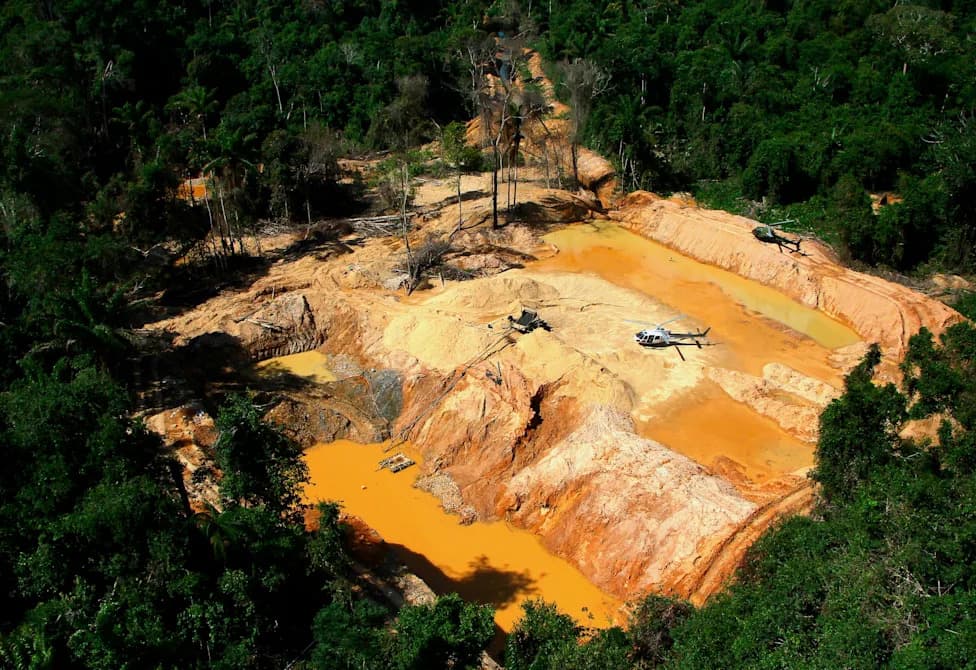
Investors welcomed Caracas's decision in April to open Venezuela's vast mineral deposits to private capital, but violent criminal groups that control large parts of the mining frontier pose a major obstacle to safe, transparent investment.
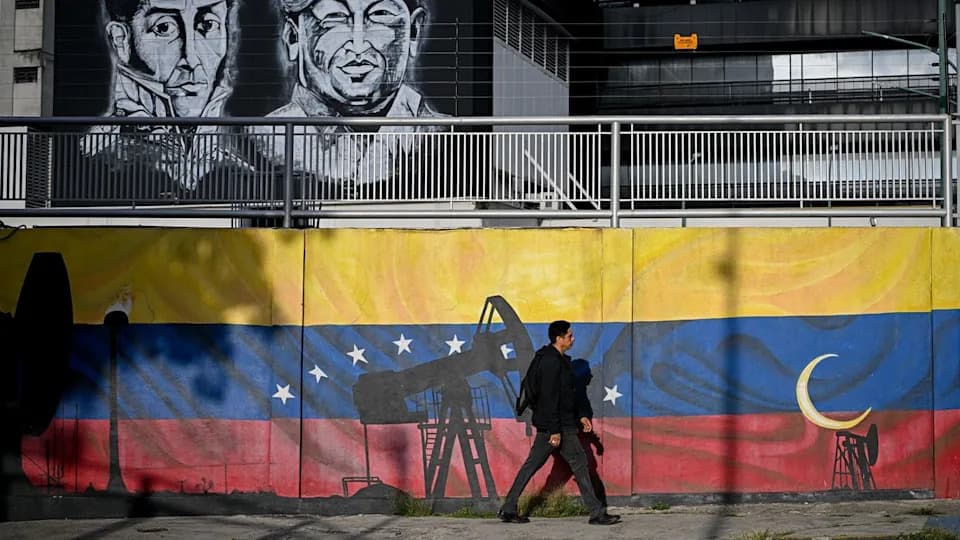
The South American nation, led by President Nicolás Maduro, has the world's largest proven oil reserves and extensive deposits of gold, diamonds, bauxite, coltan — a mineral critical for electronics and defense — and rare earth elements. Much of this activity is concentrated across a broad eastern zone known as the Orinoco Mining Arc, which covers roughly 112,000 km2 (43,000 square miles), with additional mines in southern Amazonas and Bolívar states.
Lisseth Boon, author of Oro malandro ("Bandit Gold"), describes the gold extracted from these areas as "blood gold," invoking parallels with the blood diamonds of African conflict zones. Local reporting and security analysts say almost all mining in large parts of the country is run by criminal gangs or Colombian guerrilla groups that call themselves "sindicatos" (syndicates) and govern many communities through intimidation and violence.
Extortion, 'Justice' By Force, And Smuggling
Security experts and interviewees report that syndicates amass substantial revenues by extorting residents and miners. In some areas they effectively act as judge and jury, resolving disputes and meting out violent punishments — including beatings, torture and killings — against those they accuse of wrongdoing.
Yet some community members say those same groups can impose a ruthless form of order. In the mining town of El Dorado, one resident described a local boss known as "Fabio" who combines intimidation with acts of charity — paying for medicines, repairing infrastructure and providing food — which has won him support among some locals.
The syndicates generally avoid directly confronting foreign companies, according to residents and analysts, preferring instead to mine and smuggle their own gold across porous borders into Brazil and Colombia. Artisanal miners also move product along these routes.
Scale Of Corruption And Political Links
A 2025 report by the Venezuelan chapter of Transparency International estimated that armed groups "linked to the authorities" control about 20% of the country's annual gold output. The report also concluded that roughly 66% of the approximately $5.5 billion generated annually by mining is captured by political elites working in collusion with organized-crime networks through opaque public-private arrangements.
"We don't know the criteria used (by the state) to select partners, their obligations, the duration of the agreements, level of production, the contracts nor the amount of minerals," Transparency International said.
Despite rising gold production over the last decade, the report notes the state's reported gold revenues have not increased proportionally, raising concerns about diversion, underreporting and corruption.
Roots Of The Crisis And Human Cost
Observers trace the expansion of gang control back to 2011, when then-president Hugo Chávez revoked foreign mining concessions. Analysts say that decision created a governance vacuum in many remote mining areas that syndicates exploited to entrench their power.
The struggle for control of mining revenues has been deadly. Among the worst single incidents was the 2016 massacre in Tumeremo, where 17 miners were shot and their bodies buried in a mass grave. Smaller-scale killings, kidnappings and forced labor-like conditions are reported to be common in some mining zones.
Think tanks such as Insight Crime have documented the syndicates' economic control, citing examples like the Las Claritas group in Bolívar state, which reportedly imposes informal "taxes" and extracts protection payments known locally as "vacunas."
What This Means For Investors And Communities
The persistence of armed groups, suspected collusion with local authorities, and opaque licensing arrangements create significant legal, ethical and security risks for outside investors. Experts and activists say dislodging the syndicates will require sustained political will, stronger law enforcement, transparent contracting and measures to protect local communities and legitimate artisanal miners.
Reporting credits: AFP, Transparency International (Venezuelan chapter), Insight Crime; interviews with local residents and researchers.
Help us improve.