The RTA approved a 0.25% sales tax increase effective Aug. 1 to fund the transition to the Northern Illinois Transit Authority, which will be formally established on Sept. 1. Revenue from the hike is expected to top $199 million this year and exceed $500 million in 2027. The RTA set aside $132.2 million in 2026 for operating improvements — nearly $60 million for safety — and Metra is rolling out service expansions on the Electric and Rock Island districts, including more frequent stops in Hyde Park. Officials say the changes will improve security, fares and regional service frequency.
RTA Approves 0.25% Sales Tax to Kick Off Transition to Northern Illinois Transit Authority
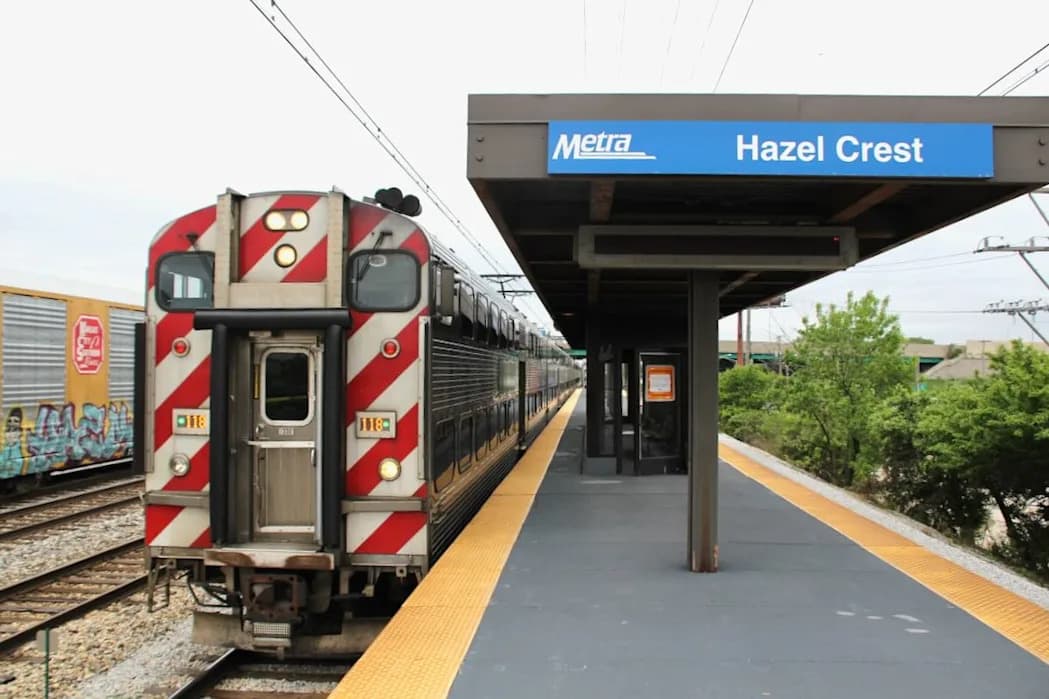
A Metra Electric train arrives at the Hazel Crest station. Metra is increasing Electric District service on June 15 as part of new funding under the act creating the Northern Illinois Transit Authority. David Lassen
The Regional Transportation Authority (RTA) has approved a 0.25 percentage-point increase in the RTA sales tax to begin the formal transition to the Northern Illinois Transit Authority (NITA), the new regional transit agency created by the state legislature and signed into law by Gov. J.B. Pritzker.
The tax increase, required under the NITA Act, will apply across the six-county RTA service area — Cook, DuPage, Kane, Lake, McHenry and Will — and takes effect Aug. 1. Officials project the hike will generate more than $199 million this year and exceed $500 million in 2027, the first full year under NITA. The increase applies to the same categories of purchases currently subject to the RTA sales tax.
The board vote initiates a transition period that culminates on Sept. 1, when NITA will be formally established and newly appointed board members assume their terms. Under the new governance structure, NITA will have expanded authority over systemwide scheduling and fare policy for its three operating units — the Chicago Transit Authority, Metra and Pace.
"Today marks the beginning of a new chapter for regional transit, and thanks to the NITA Act, transit riders should know that service not only continues without interruption, but will be enhanced," RTA Board Chair Kirk Dillard said in a press release. "This summer, riders will begin seeing the benefits of new funding through more security personnel, expanded service, improved fare programs and better customer information across the region."
In May, the RTA amended its 2026 operating budget to allocate $132.2 million in NITA-designated operating improvements, with nearly $60 million specifically earmarked for safety and security enhancements.
Appointments to the new NITA board will be made during the transition by Gov. J.B. Pritzker, Chicago Mayor Brandon Johnson, Cook County Board President Toni Preckwinkle and the chairs of the five other county boards. The revised board structure is intended to provide regionwide direction while strengthening operational oversight.
Metra Service Enhancements
As part of the new funding and service improvements, Metra has rolled out schedule upgrades. Service increases on the Electric District began June 15, following Rock Island District upgrades that took effect May 26, 2026. The updated schedules simplify service patterns and add stops at all three Hyde Park stations to provide roughly 20-minute average headways for riders.
Metra also restored service at recently renovated stations — 79th Street/Chatham, 87th Street/Woodruff and 103rd Street/Rossmore — increased midday service on the Blue Island Branch, and extended morning outbound service by 40 minutes and evening inbound service by two hours on the South Chicago Branch. The complete timetable is available on Metra's website and customer channels.
"This schedule brings Metra closer to our goal of implementing regional rail service across our system," Metra Executive Director/CEO Jim Derwinski said in a press release. "The revision supports reverse commuting, suburb-to-suburb trips, and leisure travel — not just traditional peak-period commutes."
To report news tips or corrections, contact [email protected].
Help us improve.