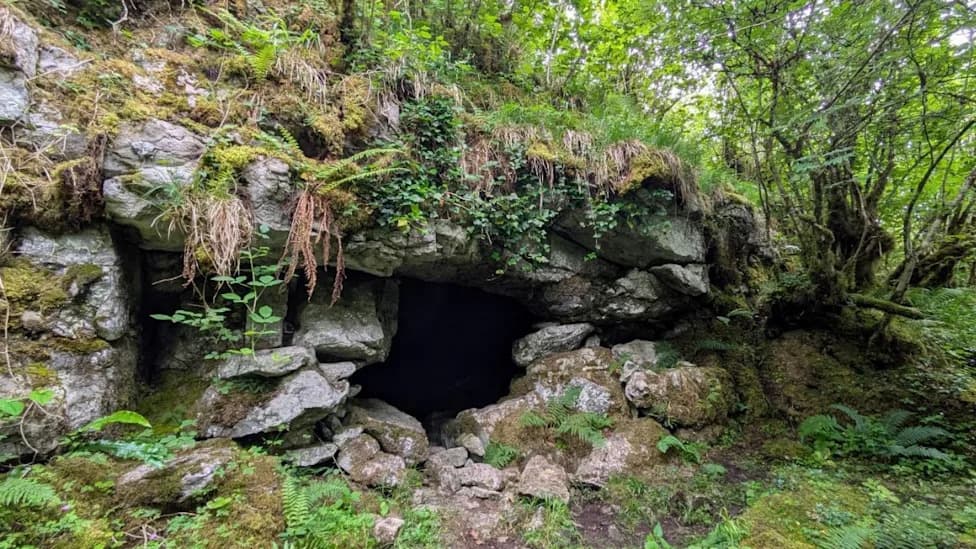
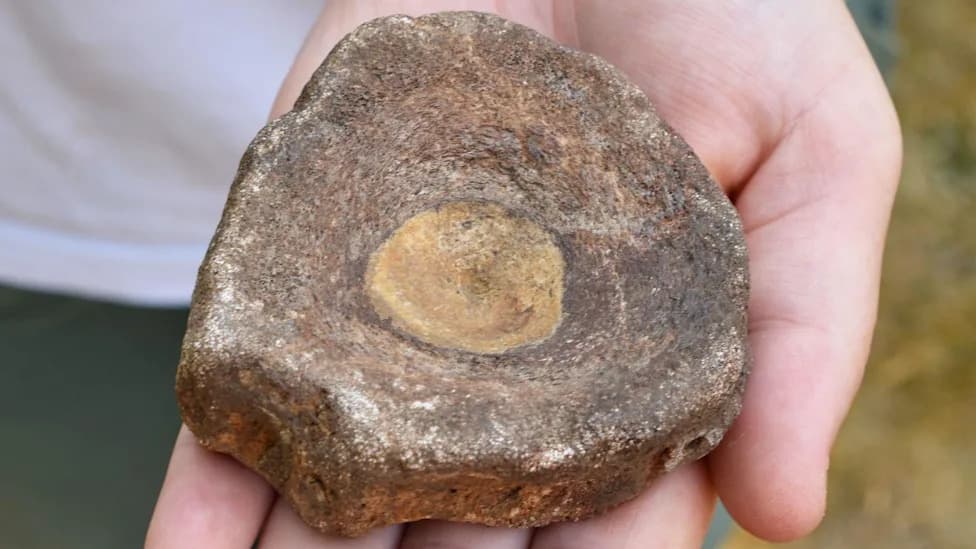
New analyses confirm that red horizontal stripes on a rock panel in Bacon Hole cave near Mumbles, South Wales, are deliberate prehistoric paintings applied by a finger about 17,100 years ago. First recorded in 1912 and later dismissed as mineral staining, the marks have been revalidated by an international team and reported in the journal Quaternary. The discovery identifies the panel as the oldest known cave art in Britain and northwestern Europe and prompts calls for strong legal protection for the fragile site.
Red Stripes in Welsh Cave Confirmed as Britain's Oldest Prehistoric Art — Finger‑Made and 17,100 Years Old
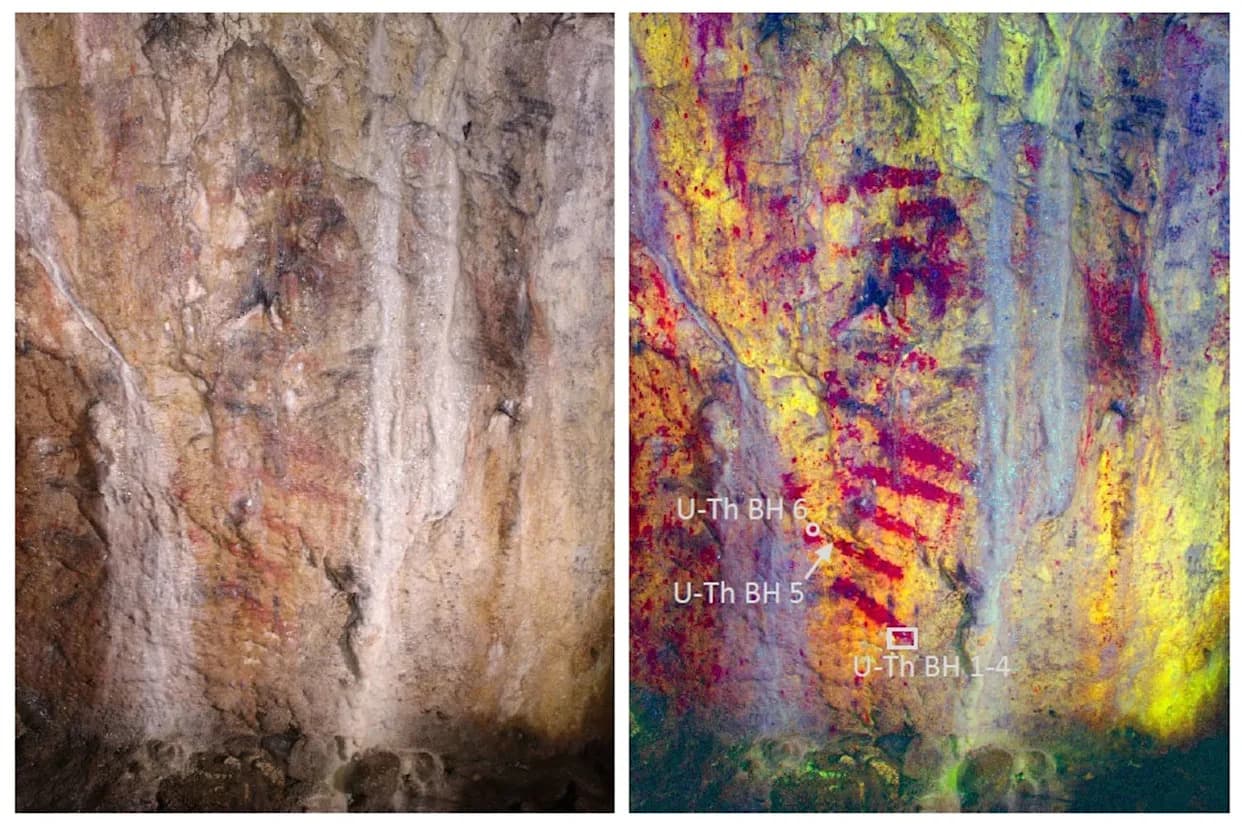
A color enhancement, right, shows red stripes on a wall in Bacon Hole, a cave in Wales. (Courtesy of George Harold Nash)(Courtesy of George Harold Nash)
Researchers have confirmed that a series of red horizontal stripes painted on a rock panel inside Bacon Hole, a limestone cave near Mumbles on the south Wales coast, are the oldest known prehistoric artworks in Britain and northwestern Europe. New laboratory analyses indicate the pigment was applied by a human finger about 17,100 years ago, restoring a century‑old interpretation that had been dismissed as natural staining.
Rediscovery of a Forgotten Panel
The panel was first recorded in 1912 by Professor William Sollas and Henri Breuil, who interpreted the marks as prehistoric art. Later researchers, however, concluded the red bands were mineral deposits rather than human markings, and the panel faded from scholarly attention.
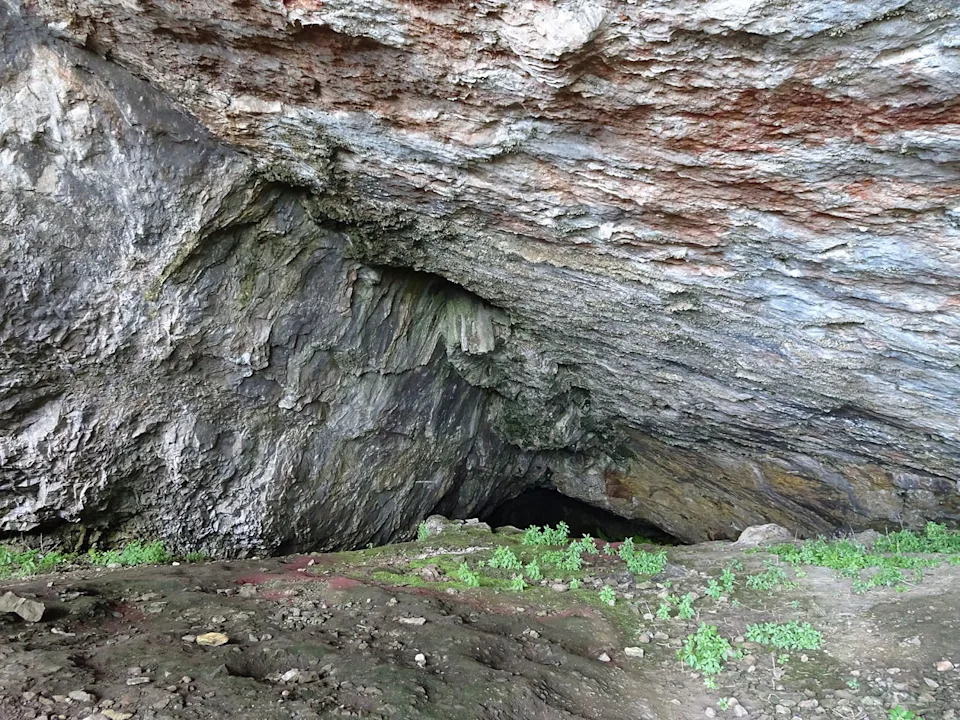
The entrance of Bacon Hole in Wales. (Courtesy George Harold Nash)(Courtesy George Harold Nash)
Modern Analyses Reaffirm Human Agency
In a study published in the journal Quaternary, the First‑Art research team — a multidisciplinary group including specialists from China, Germany, Italy, Portugal, Spain and Wales — re‑examined the panel at Bacon Hole. Using modern pigment analyses and laboratory dating methods, the team found that the lines are evenly spaced, form a deliberate pattern, and bear microscopic and chemical traces consistent with application by a finger.
“Overlooked and unrecognized, the panel existed as little more than a historical footnote,” said George Harold Nash, the archaeologist who led the investigation. “To stand before a painted panel that had been discovered over a hundred and ten years earlier, then dismissed and largely forgotten, and suddenly rediscover it on site, was an extraordinary experience.”
Context and Significance
When the stripes were created around 17,100 years ago, the region was emerging from a severe glacial phase. The authors argue that coastal caves such as Bacon Hole would have provided viable shelter for hunter‑fisher‑gatherer groups, and their interior locations point to cultural or symbolic significance beyond everyday use.
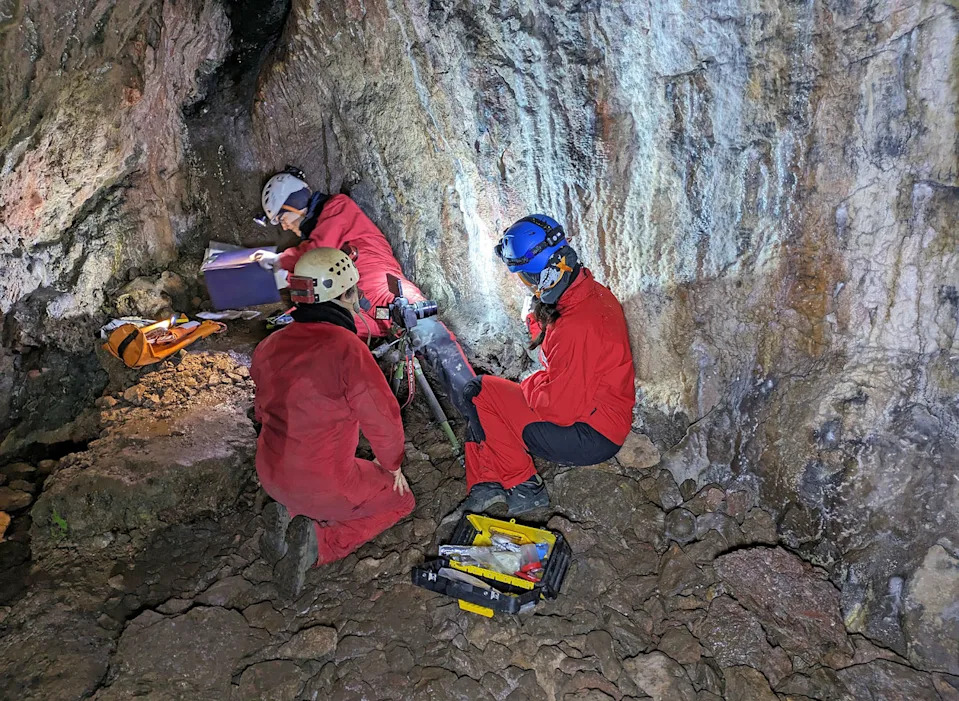
Members of the First-Art Team take samples for laboratory analysis at Bacon Hole. (Courtesy George Harold Nash)(Courtesy George Harold Nash)
The interpretation had been complicated for decades by later graffiti: a local fisherman inscribed his name on a different wall of the chamber in 1894, which obscured and confused readings of the original panel.
Protection and Next Steps
Bacon Hole is managed by National Trust Wales, which, together with the Bradshaw Foundation, has supported scientific work at the site. National Trust Wales said it plans a formal announcement of the findings. Researchers, including Nash, are urging the highest levels of legal protection for the cave, emphasizing that prehistoric paintings are exceptionally rare and fragile.
Why it matters: Revalidating the 1912 interpretation does more than correct the record; it expands our understanding of Ice Age symbolic behavior in northwestern Europe and highlights the need to safeguard fragile archaeological sites.
Study reference: First‑Art research team, published in Quaternary. Fieldwork and laboratory analyses involved international specialists and modern dating techniques.
Help us improve.