Researchers led by Dr George Nash used AI-guided mapping and field surveys to locate rock art in eight southwest Irish caves that they date to at least 15,000 years ago. The finds predate the previous earliest evidence of humans in Ireland by about 5,000 years and support a route from Wales across a now-submerged land bridge. The team is keeping cave locations secret to prevent vandalism while further tests and peer review continue.
AI-Led Discovery: 15,000-Year-Old Cave Art in Southwest Ireland Suggests First People Crossed From Wales
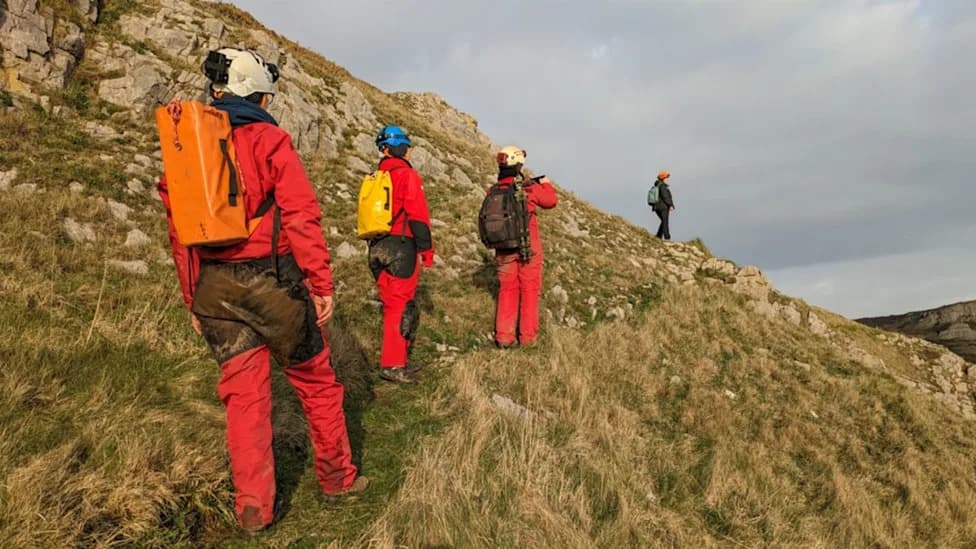
Researchers have located sites in Ireland featuring rock art dating back from at least 15,000 years ago [Dr George Nash]
Researchers have discovered ancient rock art in southwest Ireland that suggests the earliest people to reach the island may have traveled from Wales across a now-submerged land bridge.
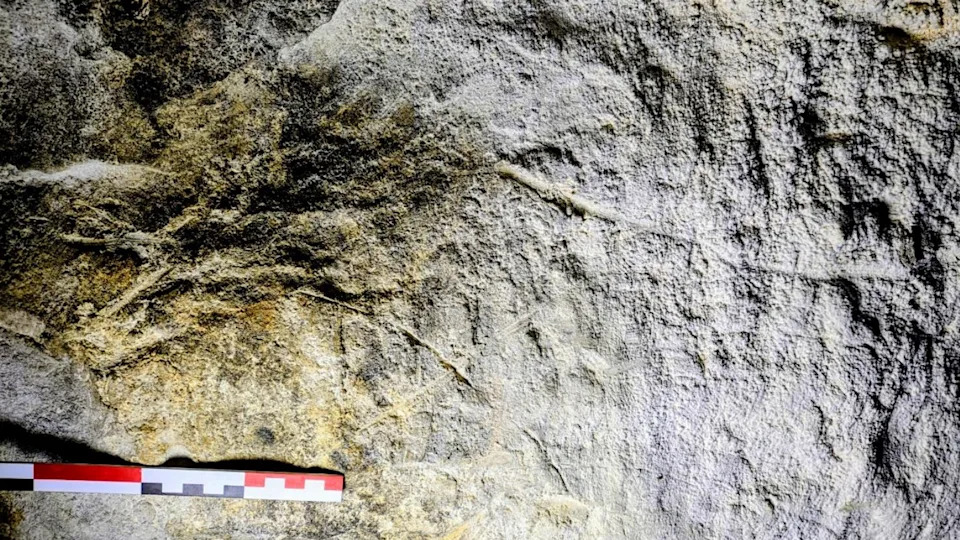
An engraving depicting the front quarters of a cervid deer, in a cave in south-west Ireland [George Nash - Lost Land Bridge Project]
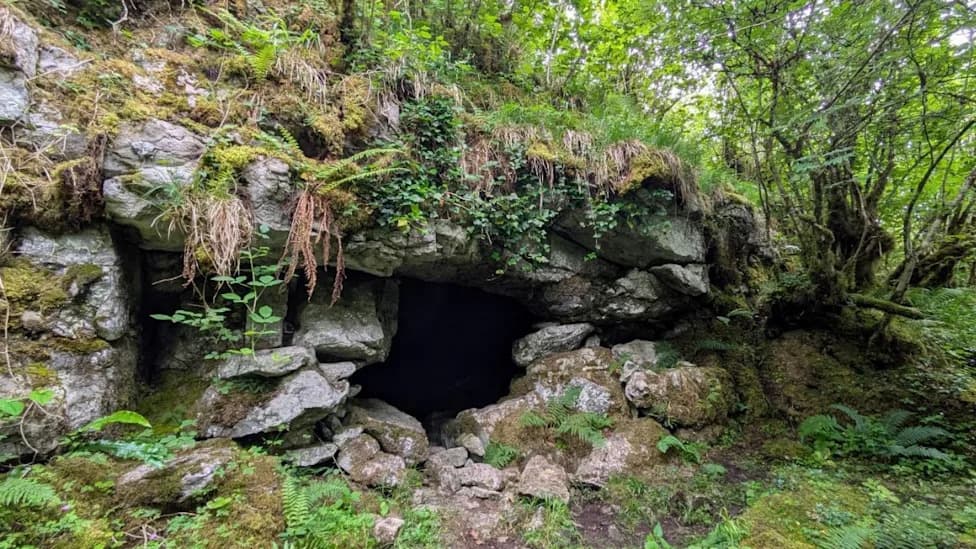
Dr George Nash, a rock-art specialist at Liverpool University, and the Lost Land Bridge Project team used artificial intelligence and targeted fieldwork to locate previously unknown cave sites containing Paleolithic images. Working from models of cave locations in south Wales, the team identified 28 candidate caves in southwest Ireland and investigated them on the ground.
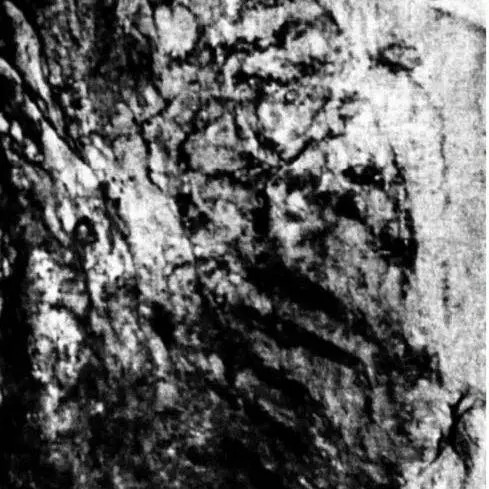
This most primitive series of lines drawn on the wall of Bacon Hole Cave comes from the Gower Peninsula, which humans first occupied around 40,000 years ago [George Nash]
What Was Found
Eight caves produced rock art dated by the team to at least 15,000 years ago — roughly 5,000 years earlier than the previously accepted earliest evidence of humans in Ireland (about 10,500 years ago). The discoveries include engravings on limestone walls, ochre and charcoal paintings, fingertip sketches pressed into soft clay, and "flutings" made by dragging fingers across soft cave surfaces.
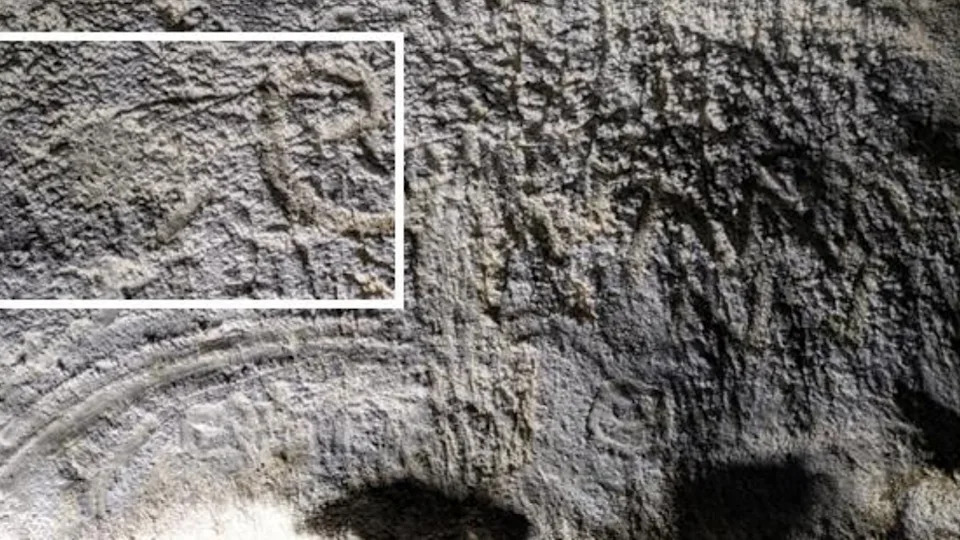
This image of a mammoth on the limestone wall of a south-west Ireland cave dates from at least 20,000 years after early humans arrived in Wales [George Nash - Lost Land Bridge Project]
How They Reached This Conclusion
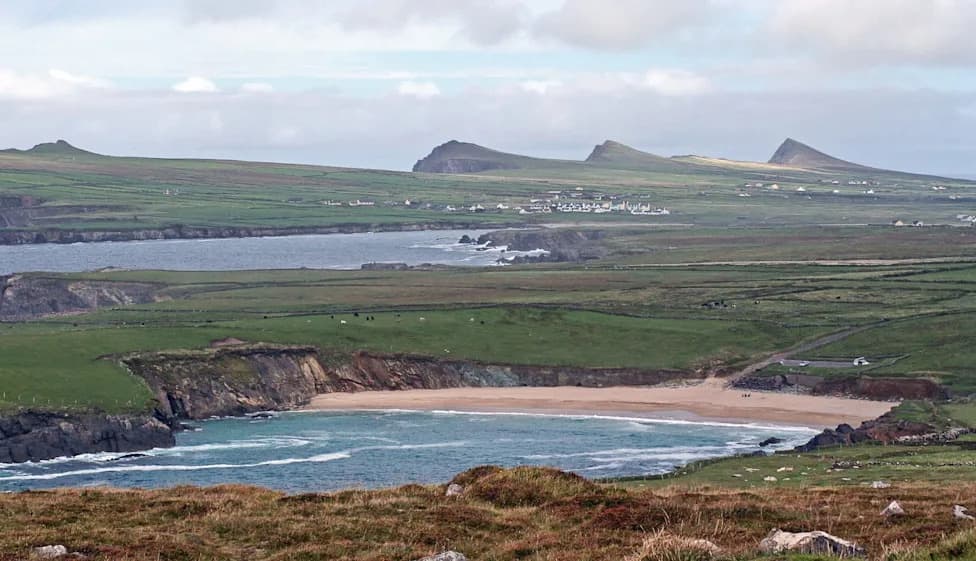
The researchers posit that during the last Ice Age, lower sea levels exposed a land corridor between modern Pembrokeshire and the Rosslare area of southeastern Ireland. Nash and colleagues argue that a roughly 46-mile (76 km) east–west plateau of forest and grassland would have supported large herbivores — such as wild horses, bison, reindeer and mammoth — and would have presented an attractive migration route for hunter-gatherer groups.
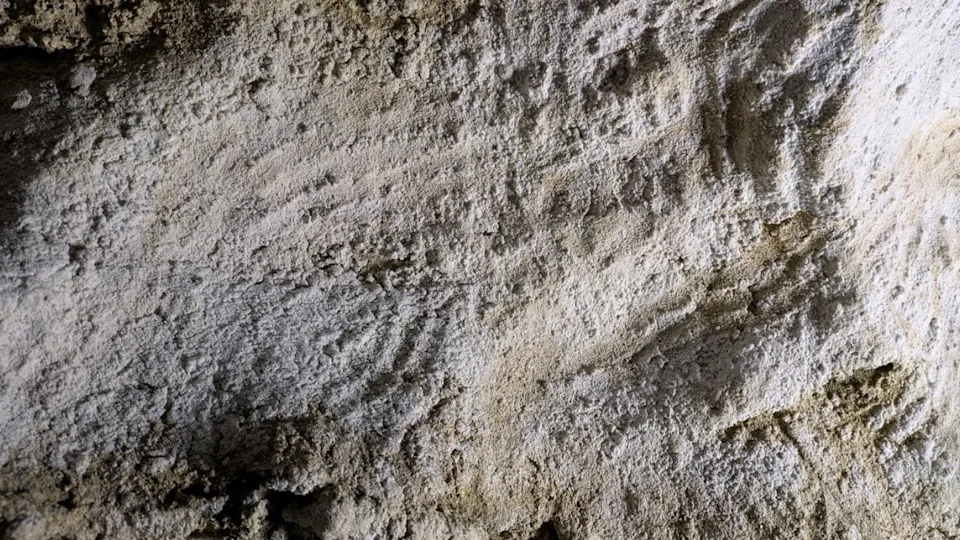
Probably not intended to be permanent at the time, made by three or four fingers gouged into soft layers of cave walls, flutings were probably early human children's initiation into interpretive rock art [George Nash - Lost Land Bridge Project]
"Absence of proof isn't proof of absence," Nash said, explaining why previous surveys may have missed these older sites.
Role of AI and Fieldwork
Advances in digital mapping and machine learning were central to the project. The team trained an algorithm on the characteristics of known Welsh cave sites, then applied it to Irish terrain to shortlist promising locations. Of 28 targeted caves, eight contained rock art of apparent Paleolithic antiquity. The precise locations remain confidential to protect the sites from vandalism and looting.
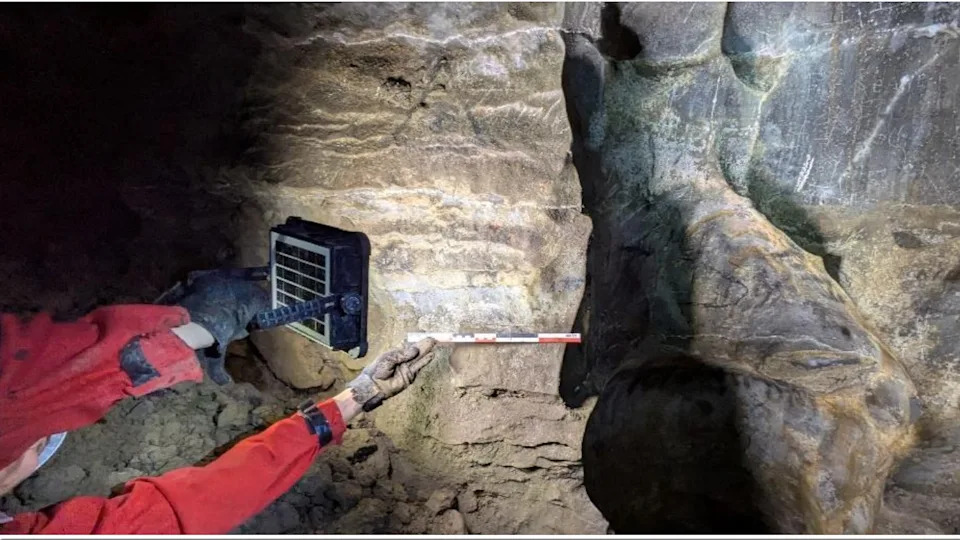
Nash says competition to live in these caves would have been intense [George Nash - Lost Land Bridge Project]
Context and Significance
The finds appear to continue a long artistic tradition first seen on the Gower Peninsula and other parts of southern Britain, where human occupation dates back tens of thousands of years. The Irish images span simple tally-like marks to more figurative depictions, suggesting continuity and evolution in symbolic behaviour as groups moved westward.
While dating cave art is challenging and the team is cautious about specific chronologies, these discoveries — if confirmed by peer review and independent dating — would push back Ireland's human history by millennia and reshape our understanding of migration and settlement in northwest Europe.
Note: The research is ongoing and the team is withholding exact cave locations to prevent damage. Further investigation and independent verification are needed to refine dates and cultural interpretations.
Help us improve.