California regulators approved changes to the state cap-and-trade program that authorize up to about $3.5 billion in free allowances for manufacturers and oil refiners that invest in emissions-reduction projects. The package also redirects funds — including $2 billion for utility-bill credits (2027–2030) and roughly $800 million to shield consumers — and is projected to significantly reduce annual revenues to the Greenhouse Gas Reduction Fund. Supporters point to job preservation and affordability; critics warn it weakens climate incentives. The board paused issuing the new allowances pending further review.
California Revises Cap-And-Trade Rules — $3.5B in Free Allowances Spurs Outcry
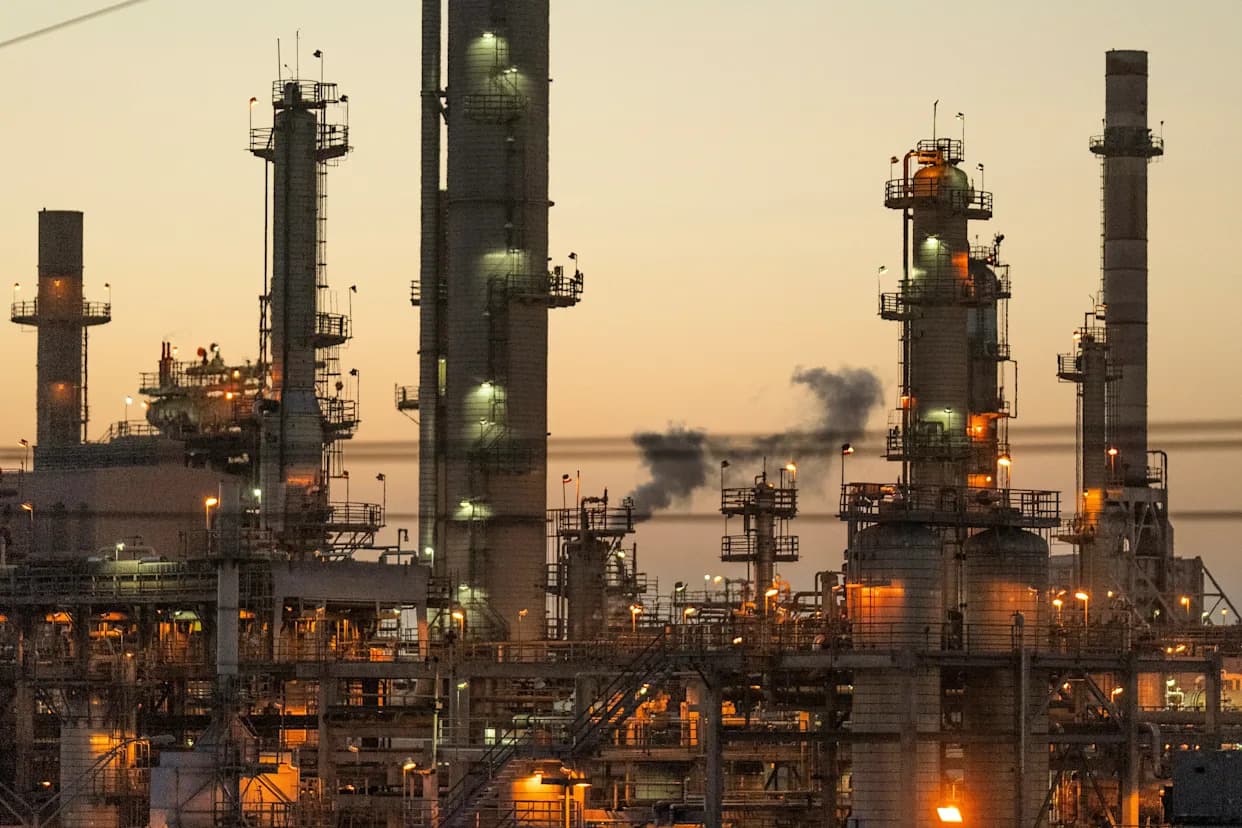
FILE - Lights illuminate an oil refinery in Carson, Calif., May 29, 2024. (AP Photo/Damian Dovarganes, File)(AP Photo/Damian Dovarganes)
SACRAMENTO, Calif. — California regulators on Friday finalized significant changes to the state’s flagship cap-and-trade program, prompting sharp criticism from environmental advocates and cautious praise from industry. The updates authorize up to roughly $3.5 billion in free emission allowances for manufacturers and oil refiners that invest in projects to reduce their emissions, while redirecting other revenues to consumer relief programs.
What Changed
The California Air Resources Board approved a package that: (1) allows up to about $3.5 billion in free allowances to companies—primarily manufacturers and refiners—that commit to emission-reduction projects; (2) directs an additional $2 billion in allowance-sale revenue from 2027 through 2030 to a utility bill credit program; and (3) sets aside roughly $800 million to help participating businesses limit cost impacts passed to consumers.
Why It Matters
Supporters say the incentives help preserve in-state industrial jobs and address affordability concerns as the state transitions to cleaner energy. Chair Lauren Sanchez of the Air Resources Board, a former top climate adviser to Governor Gavin Newsom, framed the changes as balancing affordability with climate ambition, saying the move keeps California "committed to driving long-term investments in clean energy jobs and reducing pollution in communities."
Critics argue the giveaways undermine the core purpose of cap-and-trade—creating a price signal that motivates emissions cuts—and will shrink funding for community climate, housing and transit programs. Before the vote, about $4 billion raised annually from allowance sales flowed into the Greenhouse Gas Reduction Fund (GGRF); analysts project the updates could roughly halve that revenue stream.
Context And Contention
The program was reauthorized through 2045 last year and the state has legally mandated targets to cut greenhouse gas emissions 40% below 1990 levels by 2030 and 85% by 2045. Last year’s legislative package also rebranded the program as "cap and invest" to highlight its role in funding climate investments, and adjusted the emissions cap to better align with statutory goals.
Deliberations intensified amid heavy lobbying from environmental groups and the oil industry, recent refinery closures that raised concerns about local jobs and energy reliability, and federal pushback on state climate rules. Board sessions stretched into a second day as dozens of stakeholders gave public comment.
Voices From Both Sides
Danny Cullenward, climate economist: "The state is not on track for its climate goals. Cutting our climate funding does not help address consumer cost concerns, and it doesn’t accelerate emission reductions."
Michelle Pariset, Public Advocates: "These are investments that determine whether a student can afford to take transit to school, whether a senior can get to a doctor’s appointment."
Jodie Muller, Western States Petroleum Association: "California refineries need long-term certainty to make the investments that keep energy reliable and affordable for consumers — and right now, that certainty stops at 2030."
Rock Zierman, California Independent Petroleum Association: "That means high GHG emissions, fewer jobs, more expensive gasoline, and lower tax revenue for schools, police, fire, and parks."
Next Steps
The board agreed to delay issuing allowances from the new manufacturer-and-refiner incentive program until the agency’s executive officer completes a closer review and proposes any necessary amendments. The outcome of that review, and subsequent decisions about how Greenhouse Gas Reduction Fund revenues are allocated, will shape how the program affects emissions trajectories, household energy costs, and local climate investments going forward.
Help us improve.