The U.S. Army used African Lion 2026 in southern Morocco to test AI-driven systems alongside conventional forces, demonstrating faster targeting and new robotic capabilities. Palantir's Project Maven — reportedly using Anthropic's Claude LLM — helped compress a targeting decision from hours to minutes while a human still approved the strike. Overland AI's ULTRA autonomous vehicle showed how robots can reduce troop exposure in high-risk missions, sparking renewed ethical debate about autonomous lethal systems.
AI Warfare Arrives: U.S. Army Tests Armed Robots, Drones and Project Maven at African Lion 2026
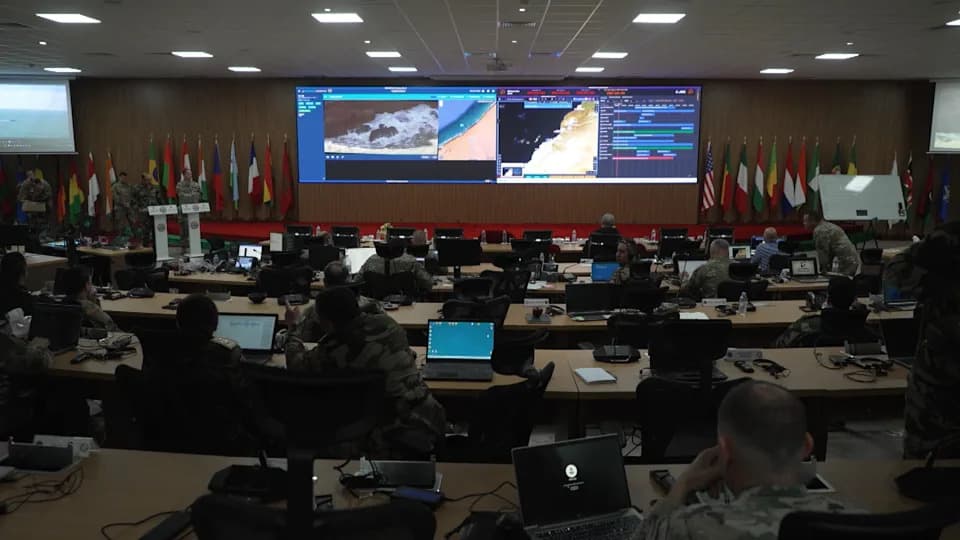
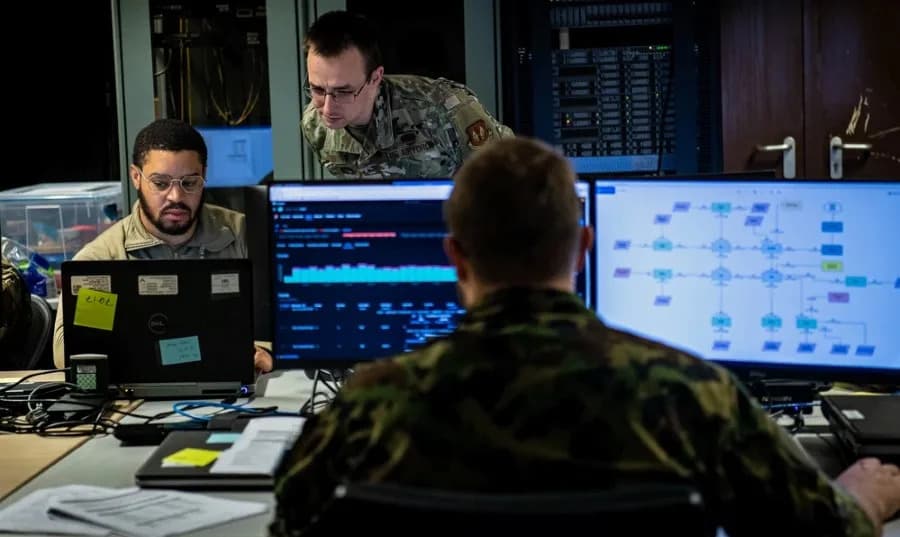
U.S. military personnel work in the Joint Operations Center in Agadir, Morocco, during the joint African Lion 2026 exercise, which used an AI-driven platform made by American defense tech firm Palantir. / Credit: CBS News
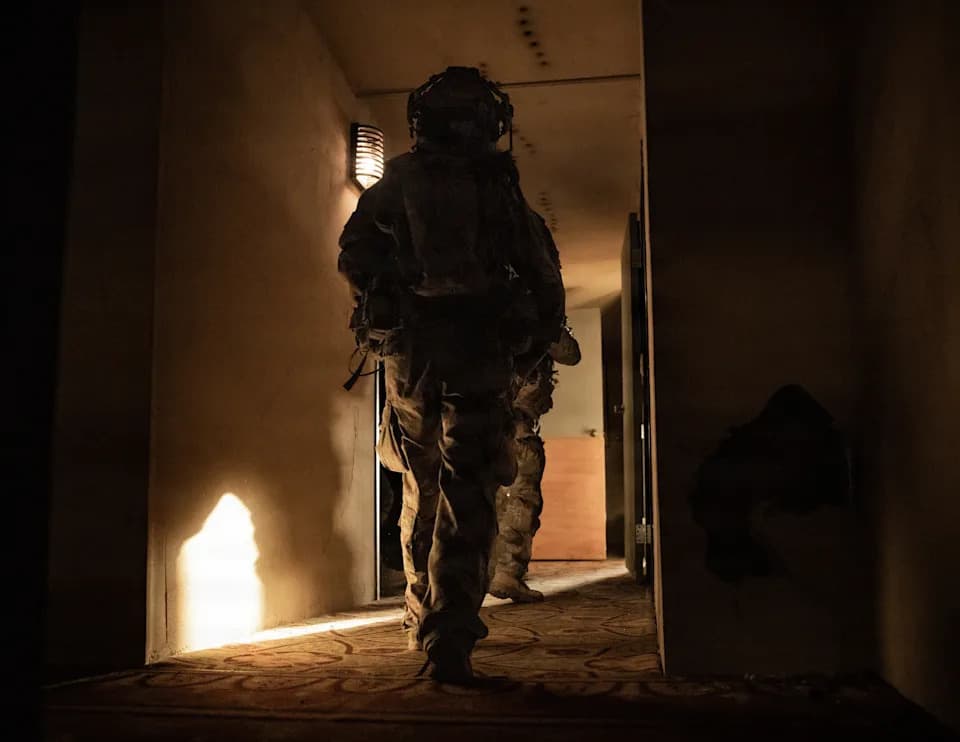
Tan Tan, Morocco — In the dry southern reaches of Morocco, where the Sahara meets the Atlantic, artillery blasts and gunfire shattered the desert silence as U.S. forces joined dozens of partner nations for African Lion 2026. Beyond conventional maneuvers, the exercise served as a major testbed for artificial intelligence-powered systems — from battlefield analytics to armed robots and drones.
AI On The Range: Speeding Decisions And Shifting Roles
American units and more than a dozen defense contractors showcased systems designed to accelerate battlefield decision-making and reduce soldier exposure to danger. On the sands, small robotic vehicles rolled with mounted weapons, drones carried explosive payloads, and a prototype quadcopter tested a nine-millimeter rifle.
Shortening The "Kill Chain"
One clear objective was shortening the so-called "kill chain" — the series of steps from detecting a target to delivering lethal force. U.S. Army Lt. Col. Ramon Leonguerrero told CBS News that operators in a Joint Operations Center in Agadir used an AI-driven platform built by Palantir to compress a targeting decision that once took hours down to minutes: "Five years ago, this might have taken two or three hours. We did it in three minutes." In that drill, a human still approved the target and ordered the artillery strike.
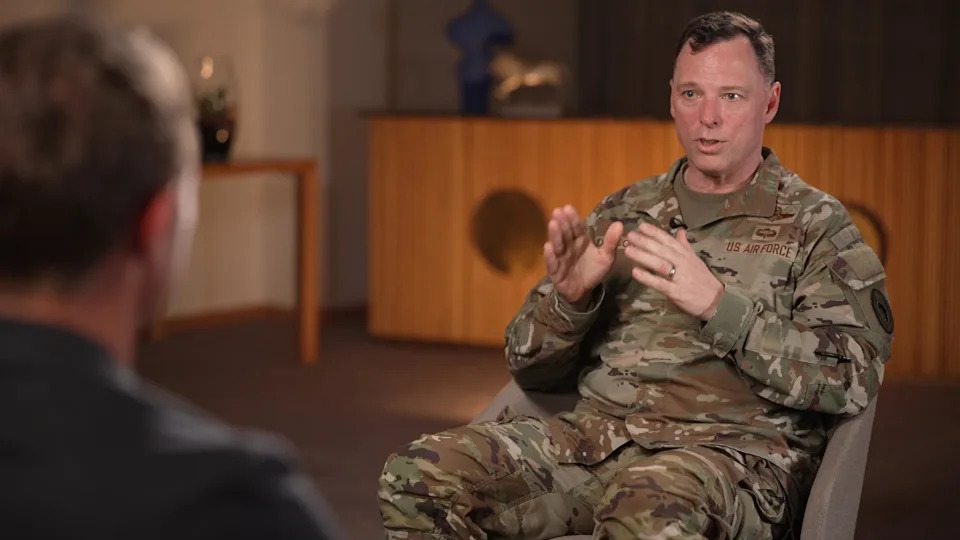
Gen. Dagvin R.M. Anderson, Commander of U.S. Africa Command, speaks with CBS News' Chris Livesay in Agadir, Morocco, in May 2026, amid the African Lion joint military exercise. / Credit: CBS News
Project Maven And Anthropic's Role
The backbone of much of the command-and-control work was the Pentagon's Project Maven, a data-ingestion and AI-prioritization initiative running on Palantir infrastructure. Multiple military and industry sources said Maven's user interface leveraged Anthropic's Claude large language model to help users query and synthesize what Lt. Col. Leonguerrero called "an ocean of data," enabling commanders to interact with battlefield intelligence in plain English.
Ethics, Oversight And The Reality Of Autonomy
The exercise underscored both the technological capabilities and the ethical debates surrounding autonomous systems. Defense Secretary Pete Hegseth has publicly criticized Anthropic and labeled it a potential supply-chain risk, while Anthropic has pushed for guardrails to prevent Claude from enabling mass domestic surveillance or powering fully autonomous weapons.
"We can never delegate the responsibility of the decisions over to a computer," said one U.S. soldier who spoke to CBS News on condition of anonymity. "Computers enable us currently... but I would never be comfortable delegating the decision that I hold as an officer."
Senior leaders acknowledged the moral questions while warning that the technology will not disappear. Gen. Dagvin R.M. Anderson, who oversees U.S. Africa Command, called ceding lethal authority to machines "ghoulish" and "disturbing," but also warned that refusing to adopt such tools could leave U.S. forces at a disadvantage.
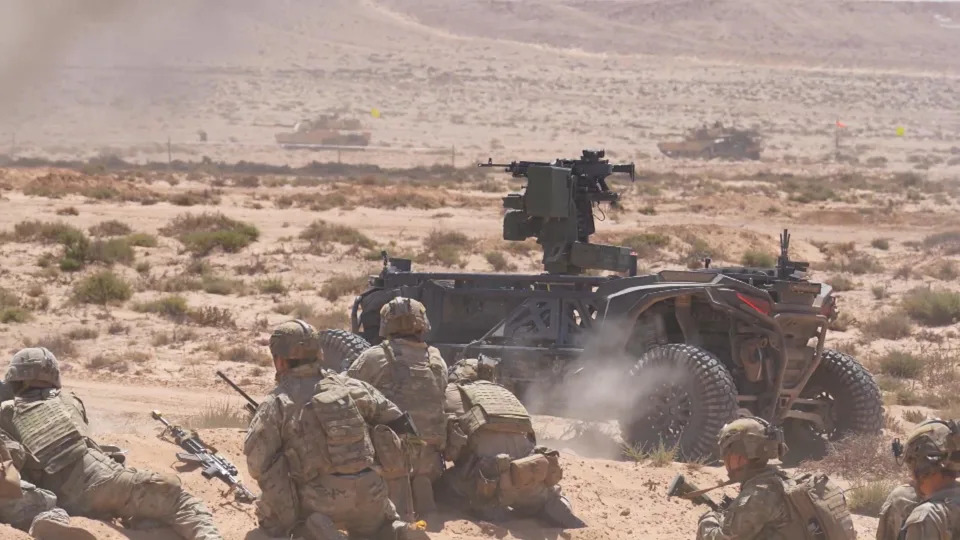
U.S. soldiers take part in the African Lion 2026 military exercise in Morocco, along with an ULTRA fully autonomous vehicle made by Seattle-based Overland AI. / Credit: CBS News
Robots To Protect Soldiers: Overland AI’s ULTRA
One prominent commercial system on display was Overland AI's ULTRA, a roughly five-foot-tall autonomous ground vehicle. Operated from a laptop, ULTRA can be directed to a waypoint and navigate autonomously while streaming sensor feeds back to the operator. During the exercise it carried a mounted machine gun and demonstrated missions such as providing covering fire, emplacing obstacles and supporting breaching operations.
Tim Bishop, Overland AI's director of business development, said the system can be used to protect soldiers by keeping them out of the most dangerous positions. For now the weapon is fired by a human operator, though Bishop acknowledged that automating that function is technically feasible in the future.
1st Lt. Vincent Gasparri, who leads the Bayonet Innovation Team with the 173rd Airborne Brigade, said replacing humans with robots in high-risk breaching operations could "undoubtedly" save lives. He estimated that one exercise replaced about 40 humans with two robots, emphasizing the operational advantages of speed, survivability and reduced exposure.
What This Means
African Lion 2026 highlighted a strategic crossroads: militaries can gain speed, information dominance and force protection through AI, but they must weigh those benefits against legal, moral and policy constraints. The technology demonstrated in Morocco is advancing rapidly, and commanders and policymakers will have to shape rules and oversight even as they adopt new tools.
Key facts: African Lion 2026 was the largest U.S.-led exercise in Africa, involving roughly 30 partner nations. Project Maven, Palantir, Anthropic's Claude, Overland AI and multiple private contractors all played visible roles in the drills.
Help us improve.