Hong Kong has begun phasing out tiny "shoebox" subdivided flats after a March law introduced minimum size, safety and hygiene standards. The rules ban units under 8 sq m and give registered owners until 2030 to renovate, but some landlords are already issuing evictions. Authorities estimate more than 220,000 residents live in these units; charities warn many low‑income tenants cannot afford alternative housing and will rely on government resettlement. Officials say plans to build about 196,000 public units in five years will help ease pressure, though vulnerable groups remain at risk.
Hong Kong’s 'Shoebox' Flat Reform Leaves Tens of Thousands of Low‑Income Residents in Limbo
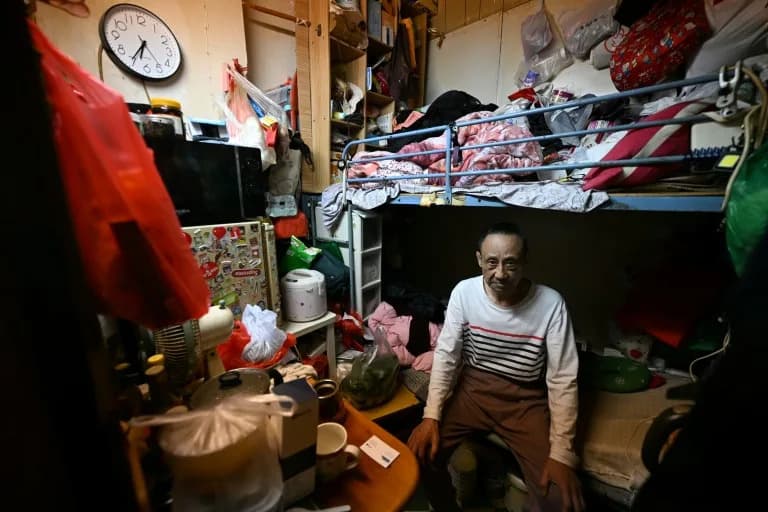
Guan Ci sits on his bed in his subdivided housing unit in Kowloon, Hong Kong (Peter PARKS)(Peter PARKS/AFP/AFP)
Lisa Lau sat on the narrow bed that fills most of her three‑square‑metre unit and watched a costume drama to distract herself from an impending eviction notice. Her compartment is one of nine tiny cubicles carved out of a single apartment in a 60‑year‑old building in Sham Shui Po, one of Hong Kong’s poorest districts.
New Rules, Tight Deadlines
In March, Hong Kong introduced regulations to phase out extremely small "shoebox" subdivided flats. The rules ban units smaller than eight square metres (86 square feet) and set minimum safety and hygiene standards — including at least one openable window and properly enclosed sink and toilet facilities. Owners who register under the new regime have until 2030 to bring units up to code, but some landlords have already begun issuing eviction notices.
Lives on Hold
Authorities estimate more than 220,000 people in the city of roughly 7.5 million live in subdivided flats, and about one‑third of those units need major renovation. Many residents are elderly or low‑income and cannot easily find or afford alternative housing near their social networks.
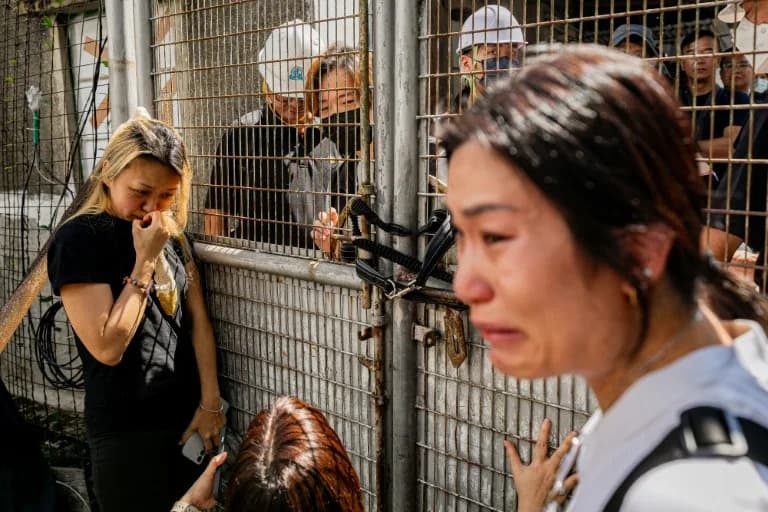
"I'll stay here day by day," Lau, 48, a welfare recipient living on about $930 a month, told AFP after receiving an eviction notice. "I don't know where to go. I'm scratching my head."
Government Response and Limits
The Housing Bureau says it has stepped up public housing delivery — aiming to produce about 196,000 public units over the next five years — and is speeding up procedures for people on the waiting list. Officials say this will reduce demand for subdivided flats and help moderate rents. The Bureau also said it is assisting households that have been displaced or are at immediate risk.
Charities and community groups welcome the improvement of dangerous living conditions but warn the new basic housing will still be unaffordable for many current tenants. The Society for Community Organisation estimates hundreds of households face forcible eviction and says the number vulnerable to displacement is likely higher than official tallies.
‘Coffin Homes’ and Other Exclusions
The new rules do not cover the notorious "coffin homes" — stacked plywood cubicles barely larger than a single bed in dilapidated hostels. Wan Hon‑cheung, 64, who has lived in a plywood box for a decade, still hopes for government measures that address people stuck in those worst‑case dwellings. Many residents report bedbugs, vermin and serious mobility problems in such units.
Human Cost and Next Steps
Some displaced residents have moved into public or transitional housing; others have taken temporary refuge in other substandard units. Community groups say a sustained expansion of affordable housing in central neighborhoods, better resettlement support, and careful enforcement that avoids sudden mass evictions are essential to prevent deeper hardship for the poorest households.
Key facts: New regulations introduced in March ban units under 8 sq m; owners who register have until 2030 to renovate; roughly 220,000 people live in subdivided flats; the government plans ~196,000 public units over five years; "coffin homes" are not covered by the new rules.
Help us improve.