Human Rights Watch says thousands of Cuban migrants deported from the U.S. are stranded in Mexico after alleging mistreatment in U.S. detention centers. The report, covering January 2025–March 2026, found 12,977 deportations to Mexico, including 4,353 Cubans; HRW interviewed 41 Cubans, 35 of whom said they lost green cards after convictions. Interviewees described inhumane detention conditions and abuse, and many now face legal and healthcare barriers in Mexican border cities such as Tapachula and Villahermosa.
Human Rights Watch: Deported Cuban Migrants Stranded in Mexico After Alleged Abuse in U.S. Detention
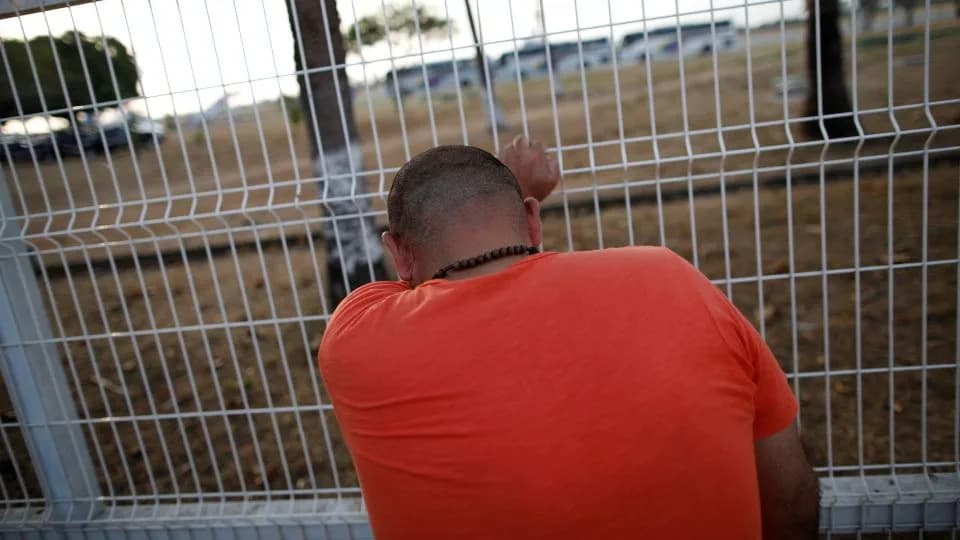
A man cries as Cuban migrants are deported at the airport of Tapachula, Mexico, in May 2019. - Andres Martinez Casares/Reuters
Human Rights Watch (HRW) reports that thousands of Cuban nationals deported from the United States are now stranded in Mexico, unable to regularize their status or access essential services after alleging mistreatment in U.S. immigration detention centers.
Report Overview
The HRW report, published Wednesday, reviews deportation data from January 2025 through March 2026 and is based on interviews with deported migrants and government officials. According to statistics obtained via Freedom of Information Act requests, Mexico received 12,977 deportees of various nationalities during that period; Cubans made up the largest single group with 4,353 people.

An aerial view shows trailers in the "Alligator Alcatraz" ICE detention center in Florida last summer. - Marco Bello/Reuters
Who HRW Interviewed
HRW interviewed 41 Cuban migrants. Many said they had lived in the U.S. for decades and were detained during routine contacts with Immigration and Customs Enforcement (ICE): at supervision appointments, at home, while travelling to work, or after serving prison sentences. Of the 41 interviewees, 35 said they lost their green cards after criminal convictions, most commonly for driving under the influence, document falsification, or minor drug offenses; some had more serious convictions, such as assault or weapons charges.
Allegations of Abuse in U.S. Detention
Interviewees described harsh conditions in detention. Fifteen people reported verbal or physical abuse, including beatings and prolonged isolation. The report includes named accounts:

President Trump visiting the temporary migrant detention center at "Alligator Alcatraz" last July. - Evelyn Hockstein/Reuters
Fermín, 52, described contaminated water, raw food and widespread illness at the Alligator Alcatraz facility in Florida.
Alejo, 50, said he spent 15 days in solitary confinement at a detention center in El Paso, Texas: 'I spent 15 days detained in the hole, a punishment cell, where you don't see the sunlight.'
HRW says these accounts are part of a broader pattern it has documented since 2025. The Trump administration has defended federal detention operations, asserting they meet standards; CNN has contacted ICE and the Department of Homeland Security for comment.
Arrivals and Challenges in Mexico
Deportees are typically returned to southern Mexican cities such as Tapachula (Chiapas) and Villahermosa (Tabasco). HRW reports that many arrive without identification, money or belongings. The most viable option for many is to apply for asylum in Mexico, a slow process that Mexican authorities have seen increase in recent years.

The silhouettes of Cuban migrants are seen inside a bus next to a Mexican Federal Police airplane as they are deported, at the airport of Tapachula, Mexico, on May 9, 2019. - Andres Martinez Casares/Reuters
Several interviewees reported chronic health conditions but were unable to obtain medical care or medicine because they lacked a CURP (Clave Única de Registro de Población), the alphanumeric ID commonly required by hospitals. HRW cites Emiliano, 47, who said he felt trapped in Villahermosa and feared violence from criminal groups in the area. Miguel Ángel, 67, told HRW officials at the Cuban consulate in Cancún said he would not be readmitted because he had been outside Cuba for more than 40 years and was a deportee.
Legal Limbo and International Responses
HRW warns that by accepting deportations of third-country nationals while offering limited asylum or residency alternatives, Mexico effectively leaves many migrants in an indefinite legal limbo. The report notes that the absence of deportation agreements with Cuba historically allowed long-term residents in the U.S. to remain; the pattern changed with tighter immigration enforcement in the current U.S. administration.
HRW said it contacted the Mexican National Migration Institute and the Mexican Commission for Refugee Assistance; CNN reached out to ICE, the Department of Homeland Security and the Cuban Ministry of Foreign Affairs for comment.
Context
The HRW report was released amid heightened tensions between Washington and Havana. Earlier this month, U.S. prosecutors indicted former Cuban President Raúl Castro on federal charges related to the 1996 downing of two civilian planes — a case Cuban officials condemned as politically motivated.
What HRW Recommends
HRW calls on U.S. and Mexican authorities to ensure humane detention conditions, protect detainees' rights to challenge deportation orders, expand access to asylum and residency pathways in Mexico for third-country nationals, and improve medical access for deportees who arrive without identity documents.
Help us improve.