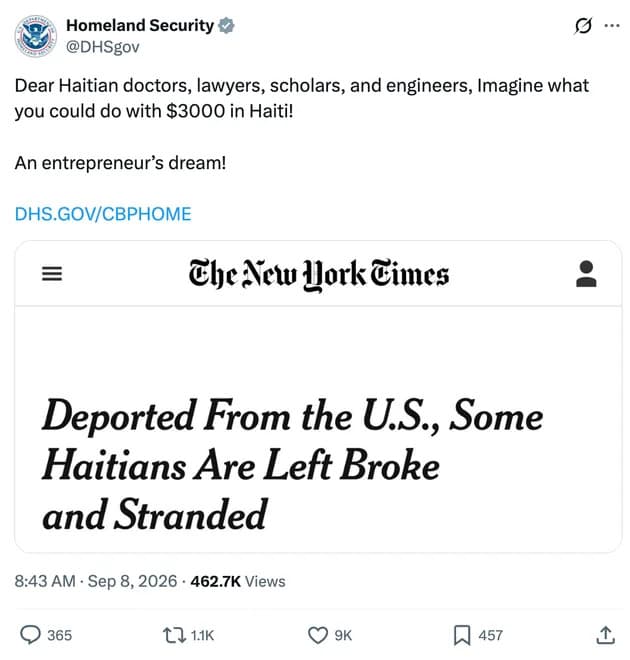
The "Fe y Esperanza" caravan, which left San Pedro Sula on September 20, has grown to over 600 migrants as it moves north through Mexico toward the U.S. border. Participants include people from Honduras, El Salvador, Guatemala, Ecuador and Haiti. The movement comes as the U.S. government has tightened border enforcement — including a national emergency declaration, troop deployments and asylum restrictions — and U.S. Border Patrol reported just 8,870 apprehensions in August 2026. Mexican authorities frequently intercept caravans, making the group’s final outcome uncertain.
Over 600 Migrants Travel North in 'Fe y Esperanza' Caravan as U.S. Tightens Border Controls
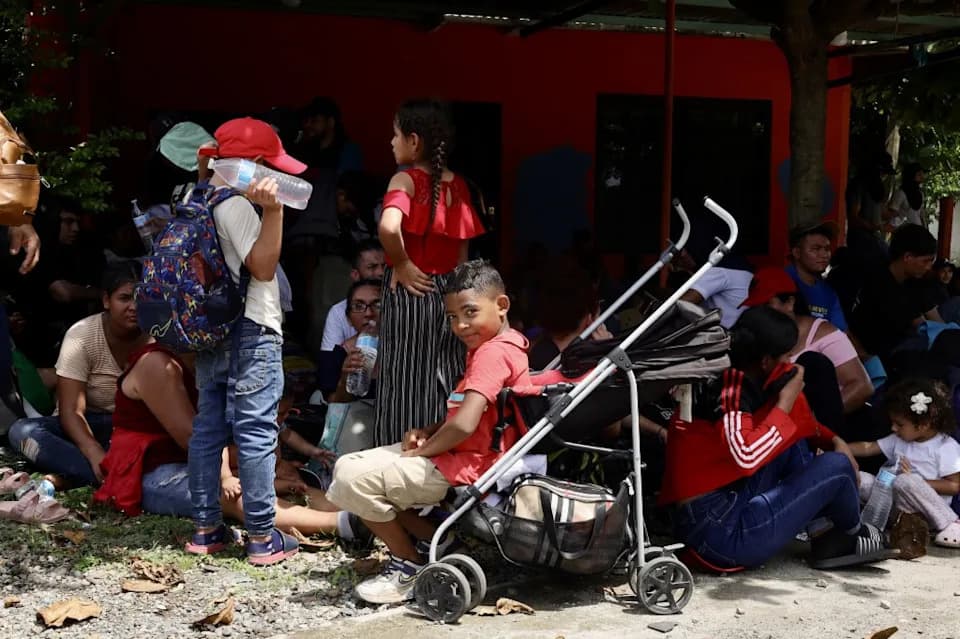
Honduran migrants take a break in a caravan toward the United States in Ciudad Hidalgo, Mexico, on September 24, 2026.
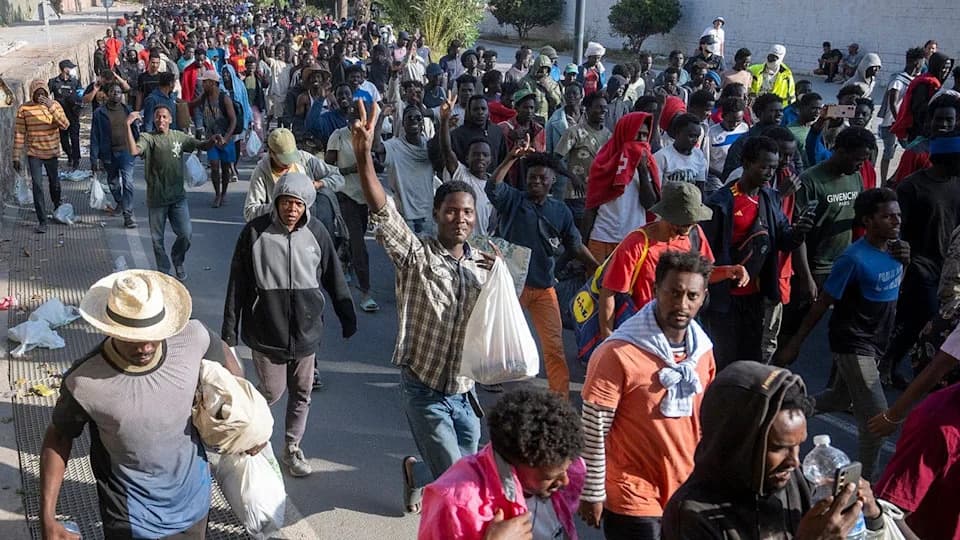
More than 600 migrants are traveling north through Mexico in a caravan calling itself "Fe y Esperanza" ("Faith and Hope"), a journey that began in Honduras and continues as the U.S. government enforces stricter border measures ahead of the November midterm elections.
The movement began on September 20, when between 200 and 400 people left San Pedro Sula in small groups and crossed toward the Guatemalan border, the Spanish news agency EFE reported. By the morning of Monday, September 28, the caravan had swelled to more than 600 people after regrouping in Tapachula, southern Mexico. Participants include nationals from Honduras, El Salvador, Guatemala, Ecuador and Haiti.
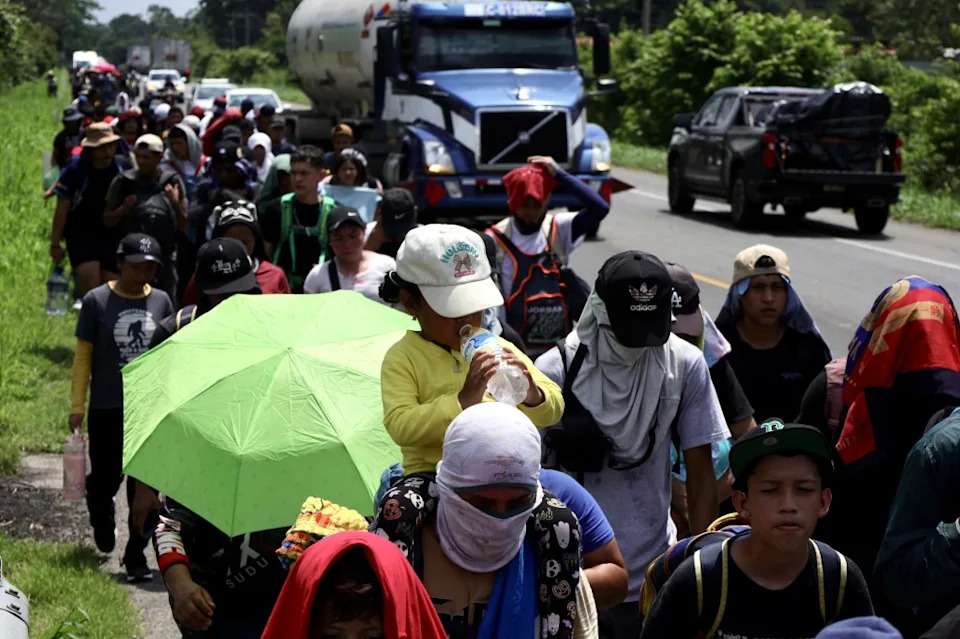
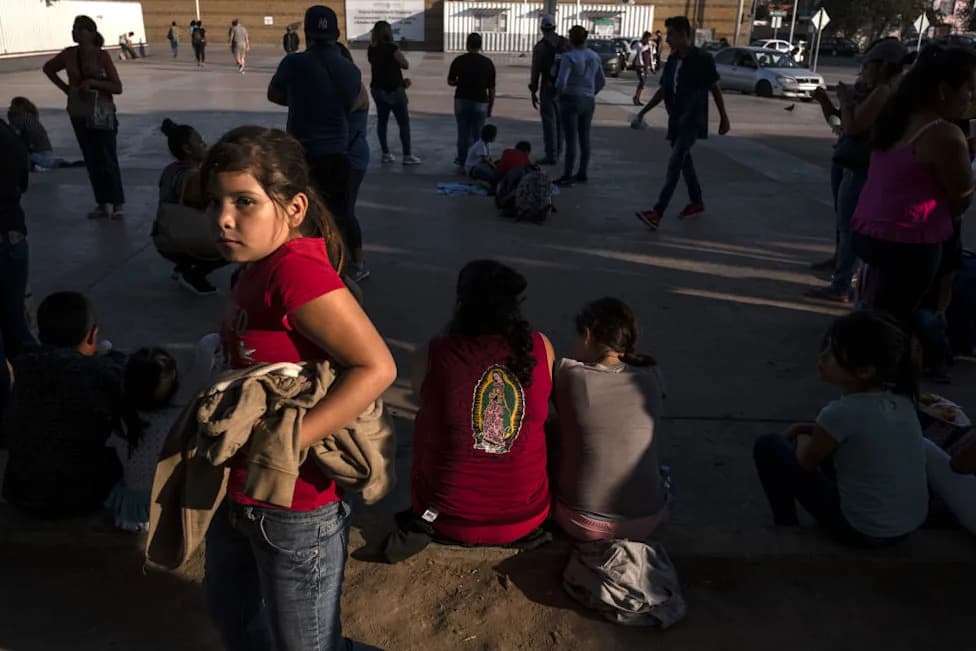
A girl traveling in a caravan drinks water while heading toward the United States in Ciudad Hidalgo, Mexico, on September 24, 2026.
U.S. Policy Context
The caravan arrives amid sweeping border policies implemented after President Donald Trump returned to office in January 2025. Those measures include a national emergency declaration at the southern border, deployment of active-duty troops and National Guard units to support operations, broader restrictions on asylum access, and a focus on detaining and deporting migrants rather than releasing them into the United States.
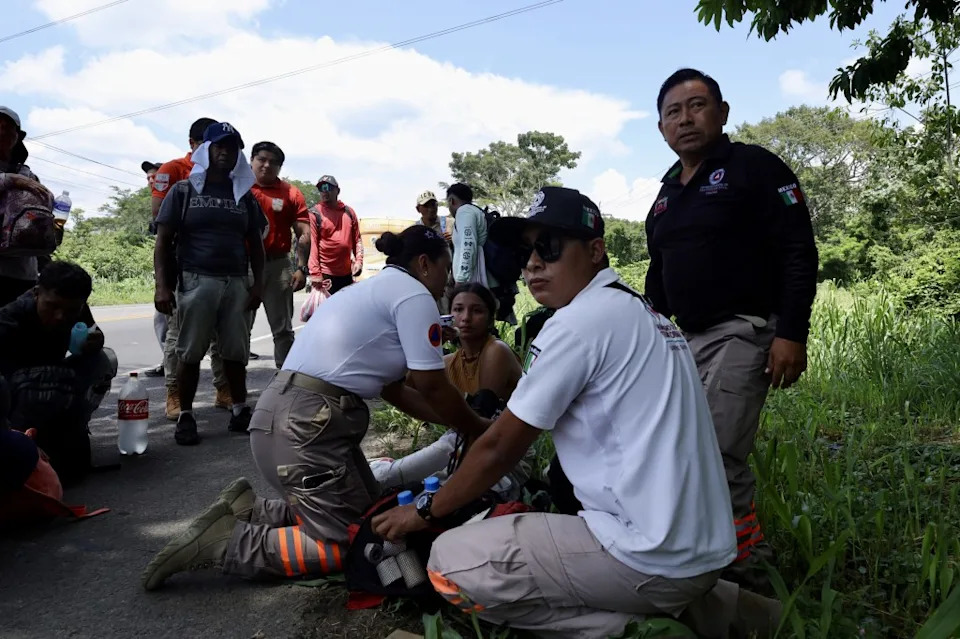
A Honduran migrant receives medical attention after suffering dehydration while traveling toward the United States in Ciudad Hidalgo, Mexico, on September 24, 2026.
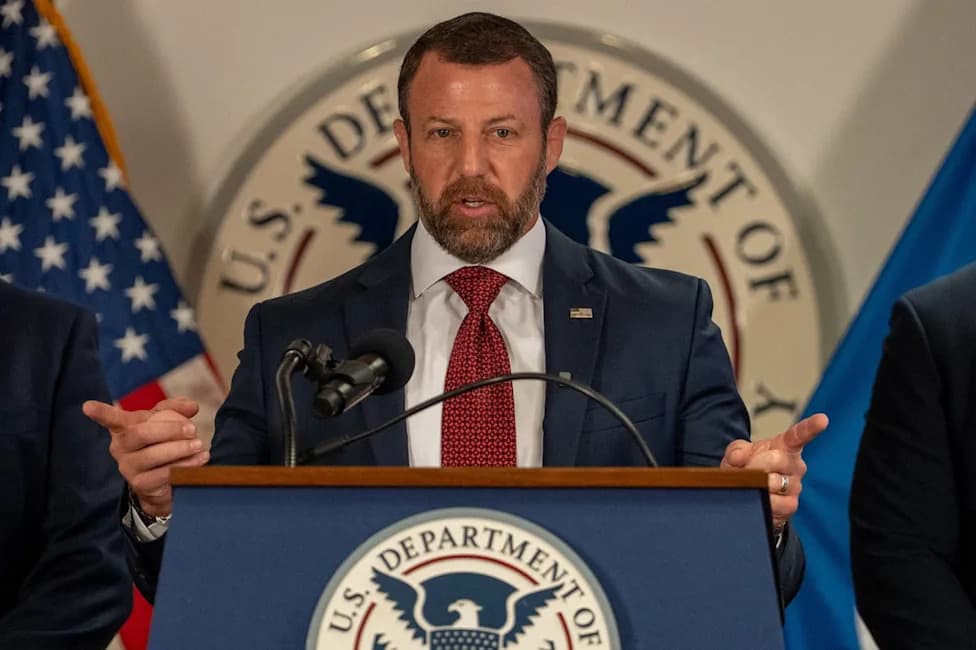
The Department of Homeland Security reported that U.S. Border Patrol recorded 8,870 apprehensions along the southwest border in August 2026 — roughly 94% below the monthly average during the Biden administration — and that no migrants were released that month, extending a 16-month streak of zero releases.
On the Route
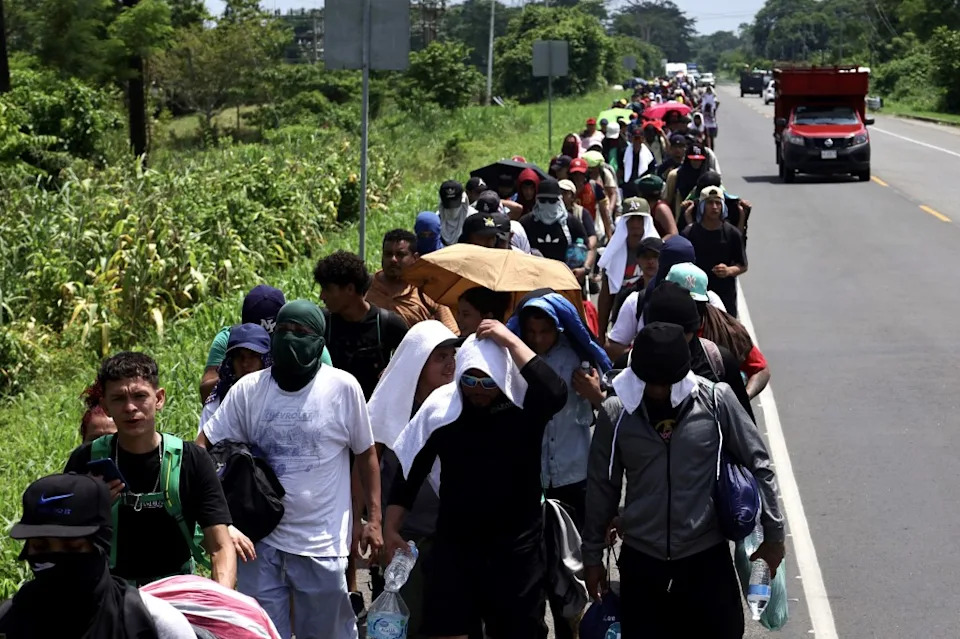
Migrants from Honduras walk along a highway in southern Mexico while traveling toward the United States in Ciudad Hidalgo, Mexico, on September 24, 2026.
Although the caravan has made progress, it remains hundreds of miles from the U.S. border. Mexican authorities often intercept or disperse such groups, detaining migrants or moving them elsewhere in Mexico, and past caravans have frequently arrived fragmented or not at all. EFE noted the group originally arrived in Tapachula with about 300 people and grew as migrants already in southern Mexico joined the movement.
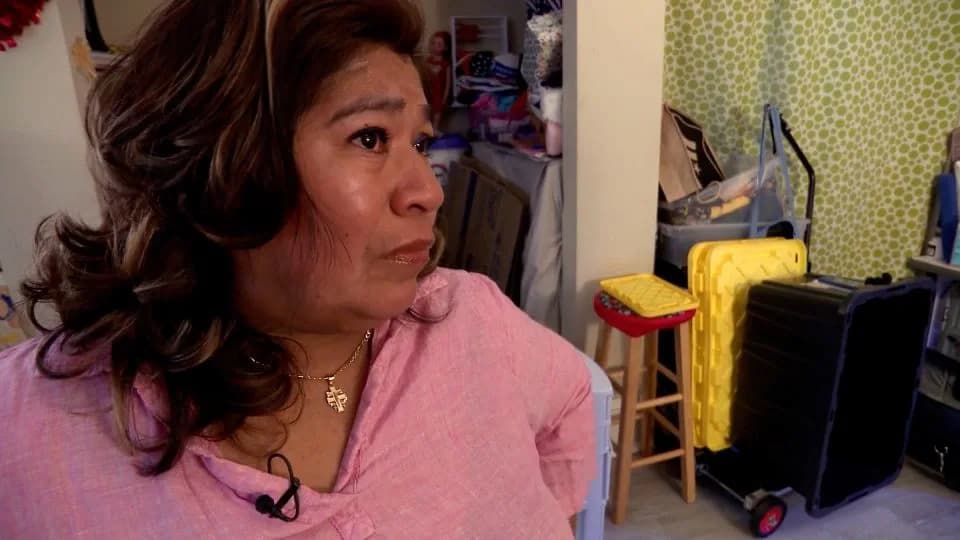
Migrants interviewed by EFE cited economic hardship as a primary motivation. One woman traveling with two children said there was no work available in Honduras. Another migrant acknowledged the difficulty of reaching the U.S. but said he would try nonetheless. One caravan member, José Zelaya of San Pedro Sula, said he left with seven family members and hopes to send money back home; he rejected the idea that the caravan is being directed by organizers, saying its only leaders are "hunger" and "necessity."
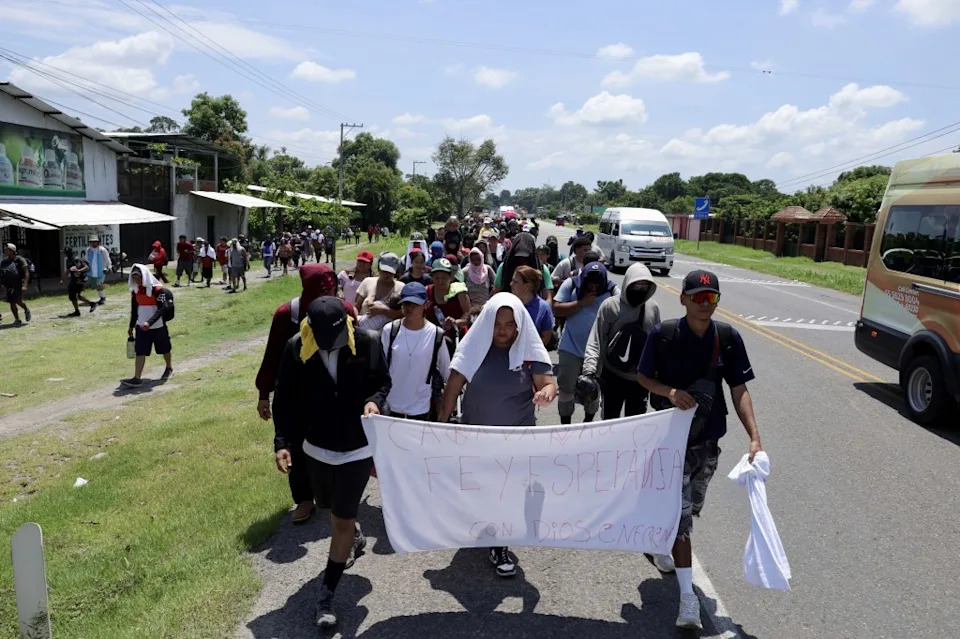
Migrants from Honduras advance through southern Mexico in an attempt to reach the United States border in Ciudad Hidalgo, Mexico, on September 24, 2026.
Local reports described health challenges along the route, including cases of dehydration requiring medical attention in Ciudad Hidalgo on September 24, 2026.
Legal And Diplomatic Notes
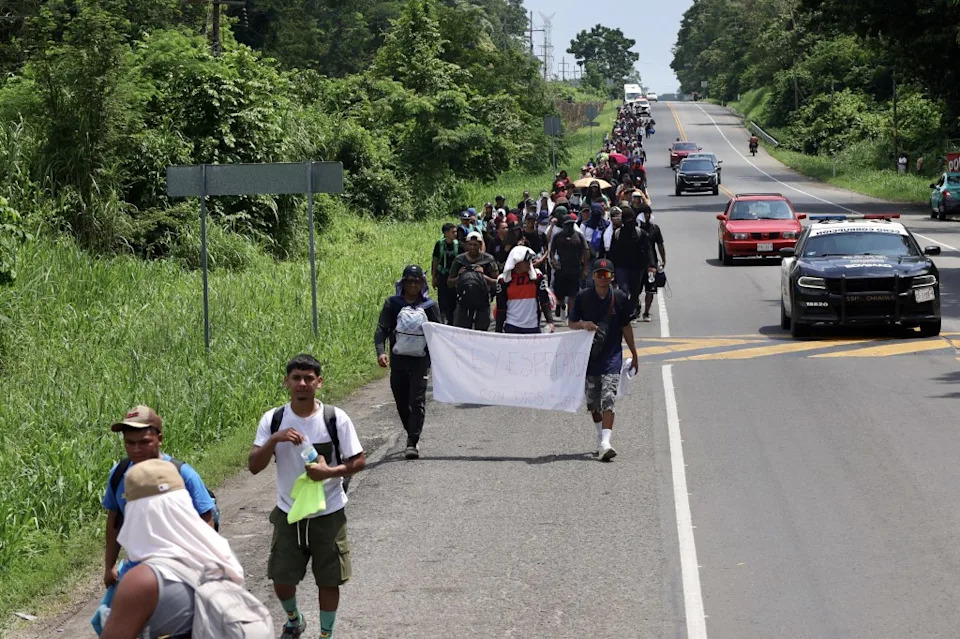
Migrants advance in a caravan after crossing into Mexico while traveling toward the United States in Ciudad Hidalgo, Mexico, on September 24, 2026.
Entry requirements vary regionally: Guatemala's Institute of Migration states Honduran nationals may enter Guatemala without a visa under the CA-4 regional agreement, while Mexico's National Migration Institute notes Hondurans generally need a visa to enter Mexico, subject to exemptions.
The U.S. Embassy in Tegucigalpa warned migrants on September 21 on X that "the borders of the United States are closed to those who violate the law" and cautioned against trusting human traffickers. The Department of Homeland Security also posted a video message on X addressing the caravan.
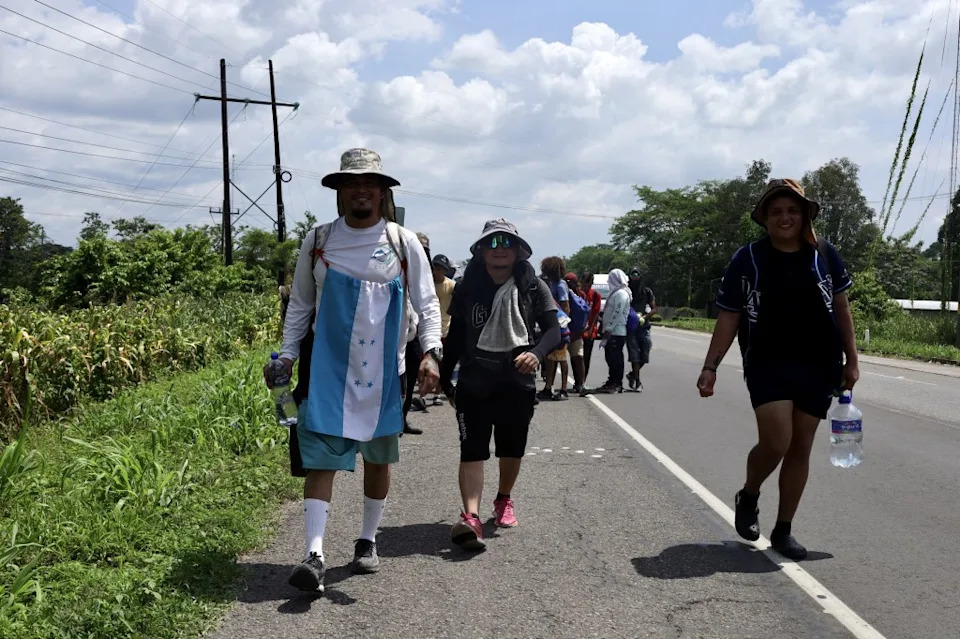
A migrant carrying a Honduran flag advances with a caravan while traveling toward the United States in Ciudad Hidalgo, Mexico, on September 24, 2026.
Political Reaction
The caravan has prompted political debate in the U.S. ahead of the midterms, with Republicans highlighting border security and immigration. Representative Nancy Mace wrote on X that migrants were "betting on a Democrat Congress in November," while former Representative Marjorie Taylor Greene accused political actors of exploiting the caravan's timing to influence voters.
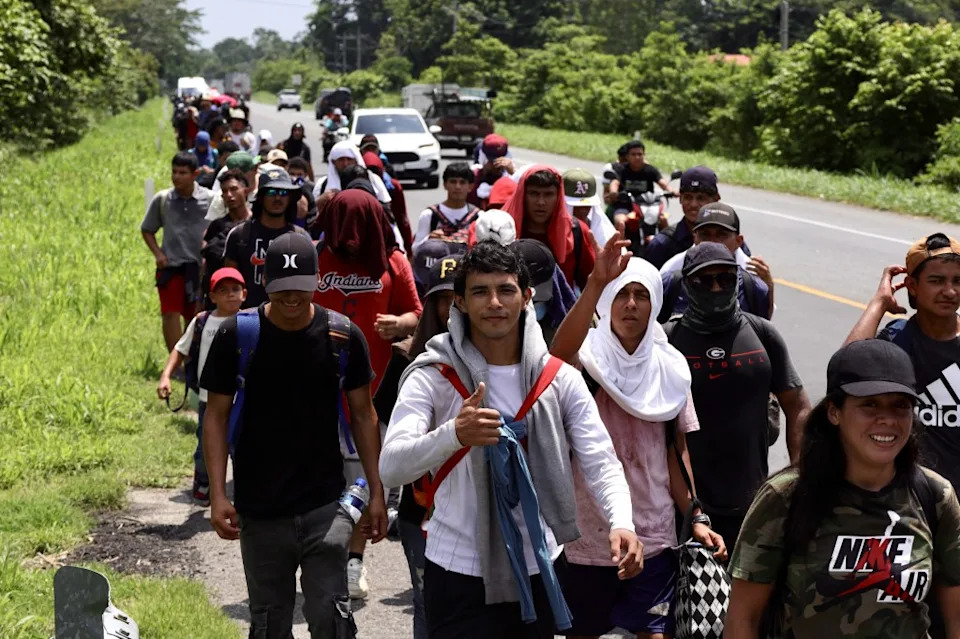
Migrants from Honduras advance through southern Mexico toward the United States in Ciudad Hidalgo, Mexico, on September 24, 2026.
Outlook
Given the caravan's distance from the U.S. border, Mexico's enforcement practices, and the changing composition of the group, it is uncertain how many migrants will reach northern Mexico or attempt to cross into the United States. Newsweek has contacted the White House, the Department of Homeland Security, U.S. Customs and Border Protection, and Mexico's government for comment.
Help us improve.