Human Rights Watch has urged the U.S. to pause deportations to Haiti, saying more than 450 people have been returned since July after Temporary Protected Status for roughly 330,000 Haitians ended. The group warns many deportees had long-standing ties in the U.S. and some had pending asylum claims, while Haiti faces escalating gang violence, widespread hunger and strained reception capacity. Citing U.N. data, HRW notes at least 3,050 killings in the first half of the year and nearly 1.5 million internally displaced, and it urged Congress to extend TPS through 2029.
Human Rights Watch Urges U.S. To Suspend Deportations To Haiti Amid Rising Violence And Hunger

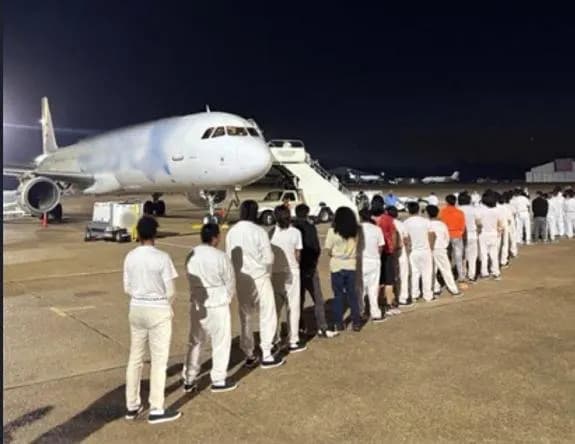
Between Aug. 20 and Thursday, U.S. Immigration and Customs Enforcement sent five flights carrying 474 people to Cap-Haitien, a city on Haiti's northern coast whose population has tripled amid rising criminal violence and hunger across the country, according to Human Rights Watch. File Photo by Mariano Macz/EPA
Human Rights Watch has urged the U.S. government to suspend deportations to Haiti, warning that hundreds of people have been returned to a country beset by escalating criminal violence, widespread food insecurity and severely limited capacity to receive and assist returnees.
In a statement released on Sept. 21, the group said more than 450 Haitians have been deported from the United States since July, when Temporary Protected Status (TPS) ended for roughly 330,000 Haitian nationals. Many of those returned had lived in the U.S. for years and some reported having pending asylum claims.
"The United States is sending people, some with pending asylum claims, to a country that has no capacity to protect them from violence, much less help them find food and shelter," said Nathalye Cotrino, senior researcher in Human Rights Watch's Americas Division.
Human Rights Watch documented a sharp increase in removals after the end of TPS. Between Aug. 20 and mid-September, U.S. Immigration and Customs Enforcement (ICE) operated five flights that carried 474 people to Cap-Haitien, on Haiti's northern coast — a city whose population has roughly tripled amid rising criminal violence and hunger. By contrast, the U.S. previously averaged roughly one deportation flight to Haiti per month.
Cap-Haitien has become the primary arrival point because Port-au-Prince's airport is widely regarded as unsafe. In early September, the Federal Aviation Administration extended restrictions until March 2, 2027, barring U.S. commercial operators and U.S.-registered civil aircraft from flying below 10,000 feet over Port-au-Prince.
The deportations come as Haiti's security and humanitarian crises deepen. Citing United Nations data, Human Rights Watch noted that at least 3,050 people were killed in violence during the first six months of the year, nearly 1.5 million people are internally displaced, and more than half the population requires humanitarian assistance.
The organization also said that, despite the partial April deployment of a U.N.-authorized force to counter criminal gangs, those groups have expanded operations beyond Port-au-Prince into rural areas in at least five of Haiti's 10 departments.
Human Rights Watch urged U.S. authorities to halt deportations while returns remain unsafe and called on the U.S. Senate to approve legislation already passed by the House that would extend TPS for Haitians through 2029.
Help us improve.