The article explains why conservative media have focused recent attacks on Jennifer Siebel Newsom, highlighting how archived clips of the 51-year-old filmmaker were resurfaced and often edited to portray her as elitist and "woke." Experts say the push is a strategic effort to create a new line of criticism against Governor Gavin Newsom ahead of a potential presidential run. The piece places the attacks in the context of modern viral media, partisan messaging, and growing scrutiny of political spouses.
Why Conservative Media Has Targeted Jennifer Siebel Newsom — And What It Reveals About Modern Political Attacks
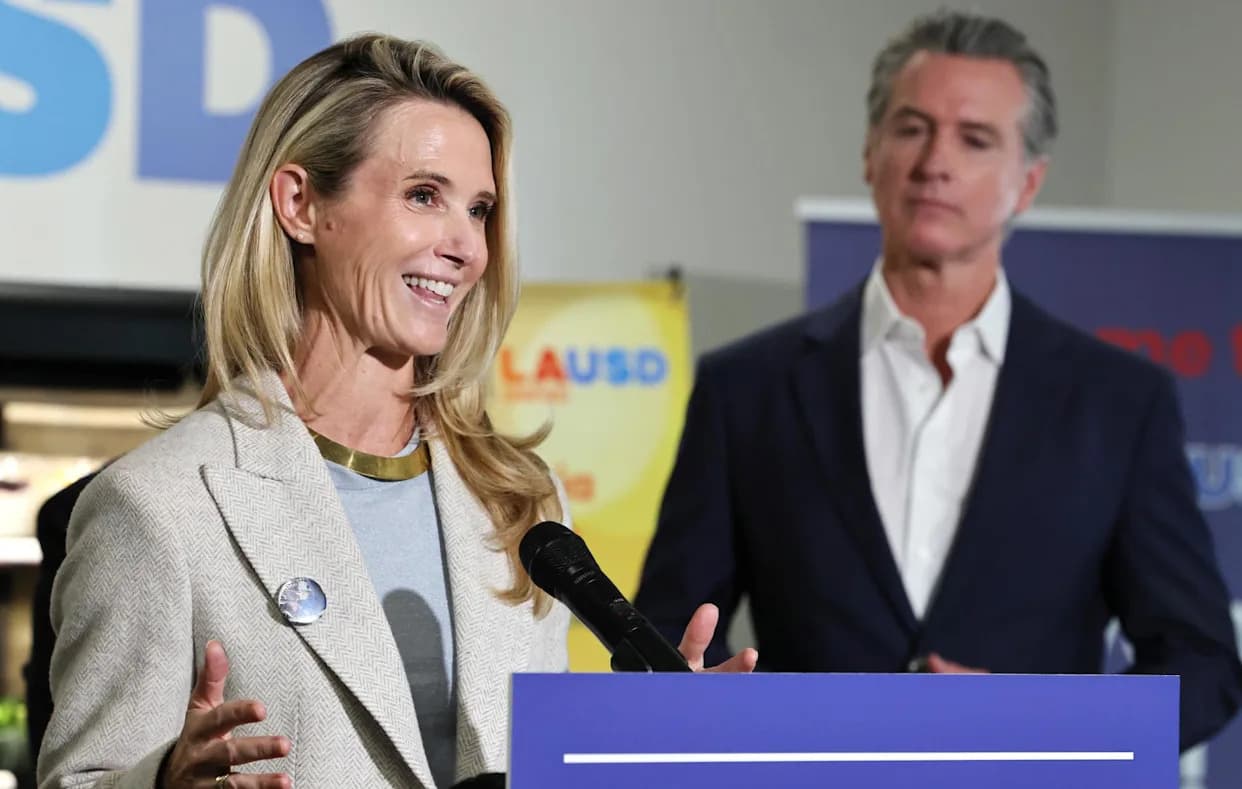
Jennifer Siebel Newsom speaks on 8 October 2025 in Los Angeles, California.Photograph: Mario Tama/Getty Images(Photograph: Mario Tama/Getty Images)
Conservative outlets and influencers have recently amplified old clips of Jennifer Siebel Newsom, the documentary filmmaker and wife of California Governor Gavin Newsom, portraying her as out of touch, "woke," and elitist. The renewed scrutiny has moved quickly from social media to cable and talk radio, fueling wider public interest and debate.
What Happened
In early April, researcher and writer Kyle Tharp noted that conservative media were "aggressively resurfacing" archived footage of the 51-year-old Siebel Newsom. The clips — some selectively edited — were shared widely across social platforms and picked up by prominent conservatives such as Megyn Kelly, Donald Trump Jr., and commentator Steve Hilton. The attention produced a sharp spike in Google searches and online discussion about her.
Why She's Become a Target
Strategists and experts say several factors make Siebel Newsom an attractive target for conservatives trying to shape the political conversation around her husband’s potential presidential ambitions:
- Her public profile as an outspoken filmmaker whose work addresses gender, masculinity, and media representation.
- Her visible adoption of the title "first partner," a nontraditional label that critics portray as elitist by design.
- Her advocacy on gender equity and equal pay, issues that are polarizing in today’s partisan media environment.
How The Clips Spread
Observers point to the mechanics of modern media: short, emotionally charged clips travel quickly online and can be repurposed or edited to emphasize particular moments. Debbie Walsh, director of the Center for American Women and Politics, noted that political spouses are no longer treated as off-limits and that social media accelerates and magnifies attacks, often stripping context.
'It’s easier for this stuff to spread and you can put out a clip and take someone out of context and blow it up into something,' Walsh said.
Notable Moments Used Against Her
Conservative commentators have emphasized several clips, including remarks about gender stereotypes and a sensitive moment in which Siebel Newsom spoke to inmates at San Quentin State Prison about the death of her eight-year-old sister. That personal anecdote was weaponized by some critics; Megyn Kelly, for example, called her a "nutcase" in response to the San Quentin clip.
Responses and Context
Democratic strategist Mike Nellis characterized the wave of criticism as a deliberate effort to generate a new line of attack against Gavin Newsom, arguing that it helps conservatives avoid discussing broader voter concerns such as the economy and foreign policy. Mackenzie Smith, a spokesperson for Siebel Newsom, told Politico that the attacks are part of a pattern in which "the MAGA world is once again trying to distract from its own failures by targeting women." Smith added that defending women and children should not be labeled radical.
What This Means
The controversy illustrates several broader trends in U.S. politics: spouses of high-profile politicians can no longer expect privacy or immunity from partisanship; social media makes context-free clips viral; and messaging teams on both sides may weaponize personal moments to shape early narratives in presidential contests. While many Americans remain preoccupied with economic and daily concerns, these manufactured controversies can still steer media cycles and influence perceptions.
Note: The offices of the governor and the first partner did not respond to a request for comment for this article.
Help us improve.