Gad Saad argues in Suicidal Empathy: Dying to Be Kind that excessive, misdirected compassion—what he calls "suicidal empathy"—is eroding common sense and weakening Western societies. He cites the global reaction to the Oct. 7 Hamas massacre, the spread of DEI and gender ideology from campuses into public life, and rising antisemitism as evidence of this trend. Saad, a Lebanese-born scholar who settled in Canada, warns that reversing these cultural shifts will require sustained, long-term effort.
Gad Saad: 'Suicidal Empathy' Is Driving the West Toward Collapse — New Book Warns of Misplaced Compassion
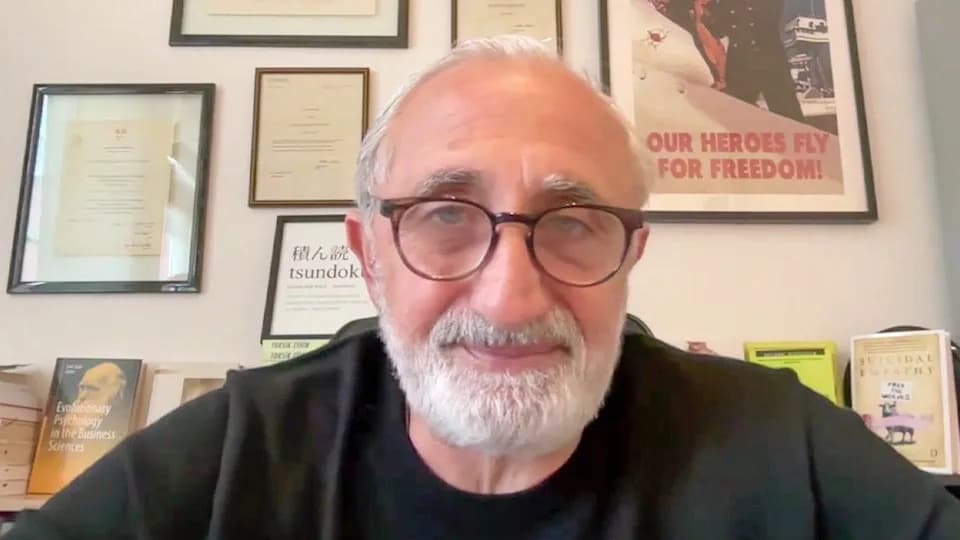
Author and professor Gad Saad is warning that Western civilization could be on the brink of collapse because of misguided empathy.(Fox News)
Gad Saad, the evolutionary psychologist and author, warns in his new book Suicidal Empathy: Dying to Be Kind that an excess of performative compassion is undermining common sense and destabilizing Western culture. Saad says misplaced empathy—when virtue-signaling overrides evidence, reality and moral clarity—can produce what he calls "civilizational seppuku."
Saad told Fox News Digital that he is not condemning empathy itself but invoking Aristotle’s admonition that virtues are best practiced in moderation. He argues that when empathy becomes hyperactivated or is directed at the wrong targets, it ceases to be a virtue and becomes dangerously counterproductive.
"If you're not in the least bit empathetic, you're likely to be a psychopath. If you are too empathetic—if it hyperactivates, if it targets the wrong people in the wrong circumstances—then that becomes suicidal empathy," Saad said.
He points to the global response to the Oct. 7 Hamas massacre in Israel as an example. Saad says sympathy for the victims—whom he described as "1,200 mainly Jewish people," the single deadliest day for Jews since the Holocaust—shifted rapidly as criticism of Israel's military response in Gaza grew.
Saad argues these ideological shifts began on university campuses and later spread into politics, the media and the broader culture. He warns that this trend has produced an unwillingness to assert previously straightforward concepts—such as biological sex—without deferring to evolving ideological frameworks.

Anti-Israel students occupy a central lawn at Columbia University in New York City on April 21, 2024, as part of a campus protest.
Saad criticized a moment from Justice Ketanji Brown Jackson's 2022 confirmation hearing, when she responded to a question about defining "woman" by saying, "I'm not a biologist." Saad mocked the reply as emblematic of a broader reluctance to recognize obvious realities without invoking specialized expertise.
Beyond abstract debate, Saad says the consequences can be concrete and dangerous. He cautioned that normalizing Jew-hatred is a sign of moral decay and expressed alarm at what he perceives as a rising wave of antisemitism.
Saad's background informs his perspective: born in Lebanon, he and his family fled the 1975 civil war and settled in Canada. He says he saw little antisemitism there until the late 1990s and believes incidents have accelerated since 1998. Saad left his position at Concordia University on leave in 2024 amid an environment he describes as increasingly hostile to outspoken Jewish academics.
Currently a scholar at the Declaration of Independence Center for the Study of American Freedom at the University of Mississippi, Saad will become a distinguished professor there next year. He cautions that political changes—such as a new administration—cannot alone reverse deep cultural trends: sustained, medium- and long-term efforts are required.
Saad also noted that many professors remain reluctant to speak publicly. He said he receives private messages praising his work but that many correspondents request anonymity, a sign, he believes, of how fraught campus and public debate have become.
Bottom Line: Saad frames the debate as a cultural struggle over whether empathy serves humanity or, when misapplied, contributes to its decline. His book calls for tempering empathy with critical thinking, courage and an insistence on truth.
Help us improve.