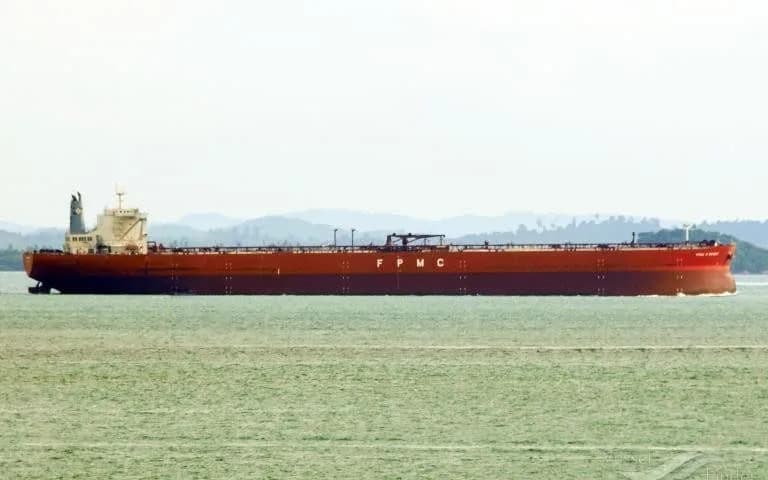
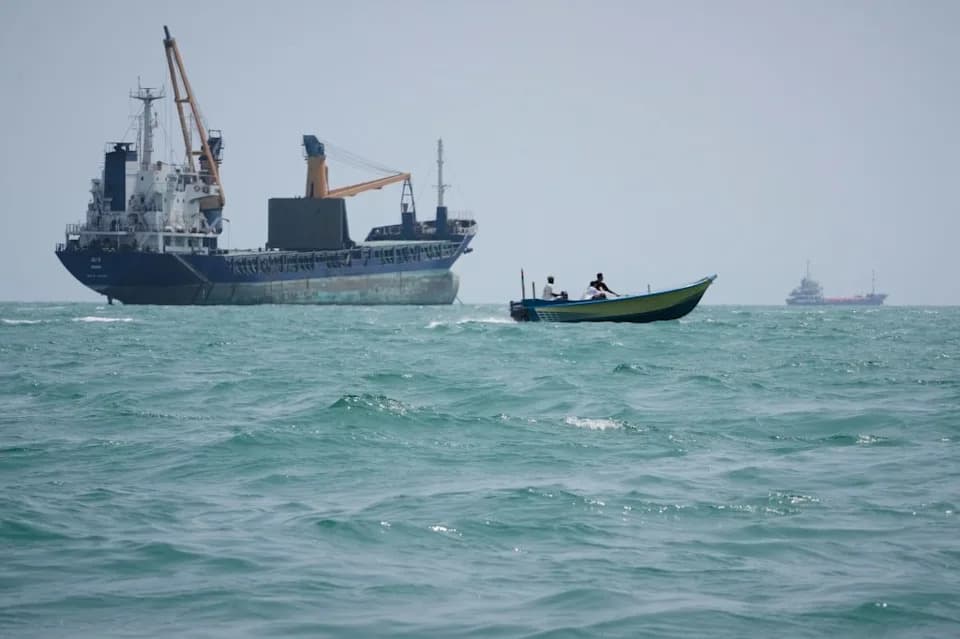
Key Developments: An abrupt AIS blackout near Fujairah coincided with US–Iran talks, prompting warnings of jamming, deliberate shutdowns or cyber interference. Despite the outage, Fujairah loaded 1.35 million barrels on May 24 aboard a single VLCC bound for South Korea. Iran's newly created Persian Gulf Strait Authority, overseen by the IRGC, now requires ship data and payments for "safe passage," a move analysts say gives Tehran non‑nuclear leverage over shipping.
Fujairah AIS Blackout Disrupts Gulf Shipping as 1.35M-Barrel VLCC Departs Amid US–Iran Talks
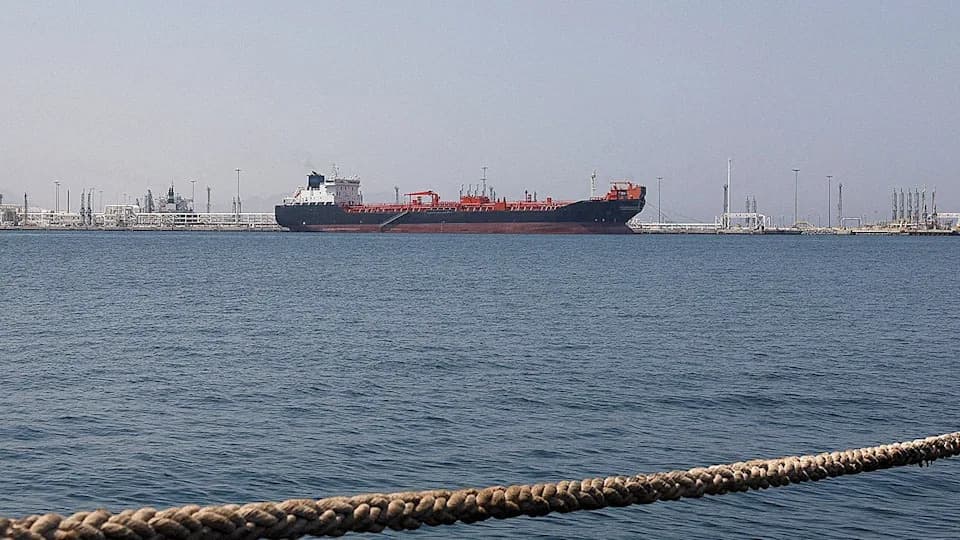
A tanker sits at the Port of Fujairah, as the U.S.-Israel conflict with Iran limits marine traffic in the Strait of Hormuz.(Reuters Photos)
Maritime tracking transmissions abruptly collapsed near Fujairah, the United Arab Emirates' main oil hub, sparking concern across Persian Gulf shipping lanes just hours after U.S. President Donald Trump announced progress in bilateral talks with Iran, according to maritime intelligence firm Windward AI.
What Happened
Windward first detected a sudden loss of Automatic Identification System (AIS) signals in the approaches to Fujairah. The firm warned the outage could indicate electronic warfare, deliberate AIS shutdowns, jamming or intensive cyber interference near the port.
"Fujairah goes dark: AIS transmissions collapse after Iran's PGSA announcement," Windward said in a post shared on X, adding that "vessels are still in the area. They are loading less, and a meaningful number have gone dark."
Shipping And Oil Flow
Despite the blackout and heightened tensions, Fujairah moved 1.35 million barrels of crude on May 24 aboard a single very large crude carrier (VLCC) bound for South Korea — the first notable sign of flow resuming from the port since the outage. Windward cautioned that one cargo does not signal a full return to normal operations and described a tense, "ceasefire posture" with a blockade-like footprint forming in the area.
New Authority And Regional Response
The disruption and the tanker transfer followed Iran's May 20 launch of the Persian Gulf Strait Authority (PGSA). Overseen by the Islamic Revolutionary Guard Corps (IRGC) Navy, the PGSA requires ships to submit vessel, cargo, insurance and crew information — and to make mandatory payments — in order to receive what Tehran calls "safe passage."
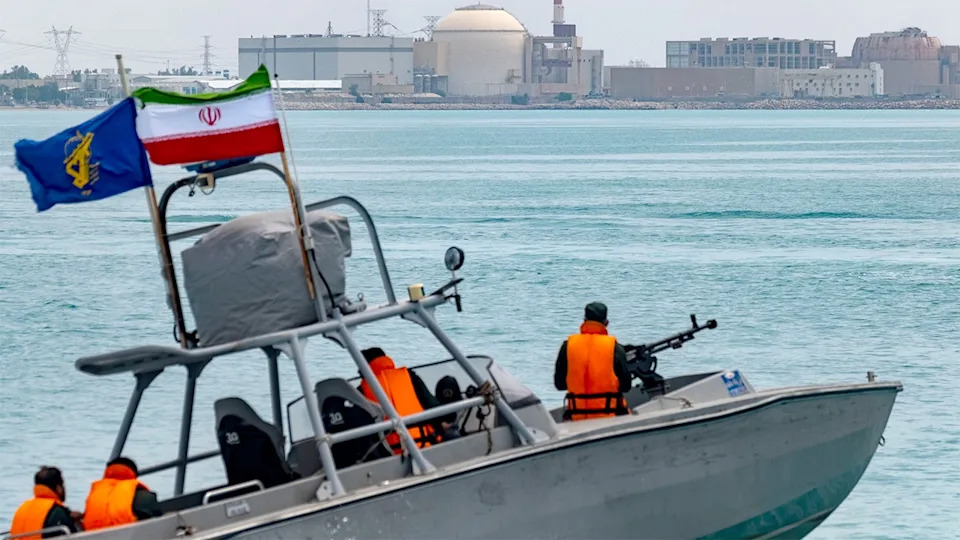
An Islamic Revolutionary Guard Corps speedboat sails in the Persian Gulf near the Bushehr nuclear power plant during a marine parade marking Persian Gulf National Day in Bushehr, Iran, on April 29, 2024.
Iran reiterated its claim to sovereign control over the Strait of Hormuz. In a post on X, IRGC military spokesperson Ibrahim Al‑Fiqar said: "We reaffirm that the Strait of Hormuz will remain under full Iranian administration and sovereignty, even in the event of reaching any future agreement." He added that deciding transit routes, timing and maritime licenses is a sovereign prerogative reserved for Tehran.
Analysts' View
Regional analysts and experts told Fox News Digital that Iran's territorial assertions have at times reached into waters linked to Oman and the UAE. Alex Vatanka, director of the Iran Program at the Middle East Institute, characterized enforcement as part of an IRGC asymmetric playbook: fast boats, drones, radar tracking, coastal missiles and selective intimidation rather than constant physical interdiction.
Vatanka and other observers warned the PGSA functions as a non-nuclear leverage tool: a mechanism to pressure rivals, favor allies and institutionalize IRGC oversight of a critical energy route. They described reports of quiet "facilitation payments," preferential treatment for friendly states and ambiguous penalties for noncompliance — from delays and harassment to drone surveillance and possible interceptions.
Implications
Shipping companies, insurers and energy markets are watching closely. An AIS blackout near a major oil hub raises immediate safety and security concerns for vessels and cargoes, while the PGSA's new regulatory framework could introduce additional commercial and geopolitical friction across one of the world's busiest chokepoints.
Timeline: PGSA launched May 20; AIS blackout detected near Fujairah around May 24; port moved 1.35 million barrels on a single VLCC on May 24.
Help us improve.